
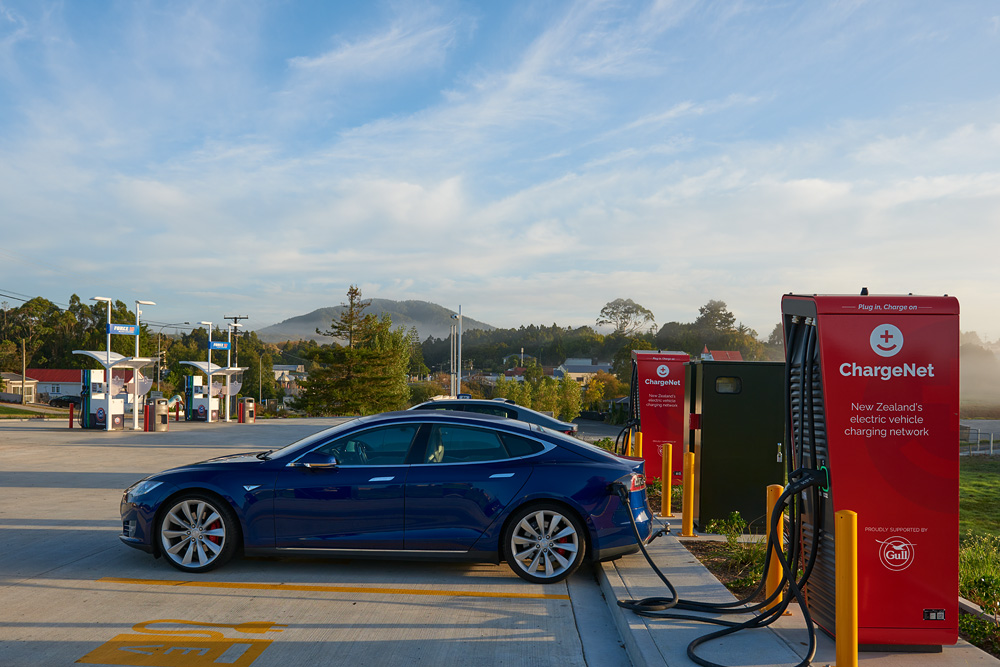
The rollout will deliver 2,574 new charge points, including 1,374 DC fast chargers and 1,200 AC chargers. DC systems are intended for high-turnover locations such as highways, offering charging times of 20 to 60 minutes, while AC units will be installed in locations suited to longer dwell times, including workplaces and residential areas.
The concessionary loans, administered via National Infrastructure Funding and Financing, cover up to 50 per cent of project capital costs and carry a maximum tenure of 13 years. The financing model is designed to accelerate private sector investment while limiting public expenditure.
Deployment will be split between urban and regional areas, with approximately half of the chargers located in major cities including Auckland, Wellington and Christchurch, and the remainder distributed nationwide.
New Zealand currently operates just over 1,800 public charge points, one of the lowest charger-to-EV ratios in the OECD. Including projects underway and the newly announced investment, the total network is expected to reach around 4,550 charge points. The Government has set a target of 10,000 public chargers by 2030.
Energy and Climate Change Minister Simon Watts said the expansion supports both emissions reduction and cost savings for consumers, noting that EVs produce ‘at least 60 per cent fewer lifecycle emissions than petrol vehicles.’
“Many New Zealanders have thought about getting an EV, even before the fuel challenges we’re currently facing. But research shows that the lack of public chargers is holding many back from making the switch to an EV,” said Transport Minister Chris Bishop.
“The private sector is reluctant to invest in charging infrastructure until there’s sufficient demand, but demand won’t grow until the lack of public chargers stops putting buyers off,” Bishop added.
“Concessionary loans bring forward private investment in public EV charging infrastructure by lowering the cost of capital, while keeping the taxpayer’s contribution to a minimum,” he said.
“A better charging network means more New Zealanders can take advantage of it, and that’s good for household budgets and our emissions profile alike,” Watts added.