
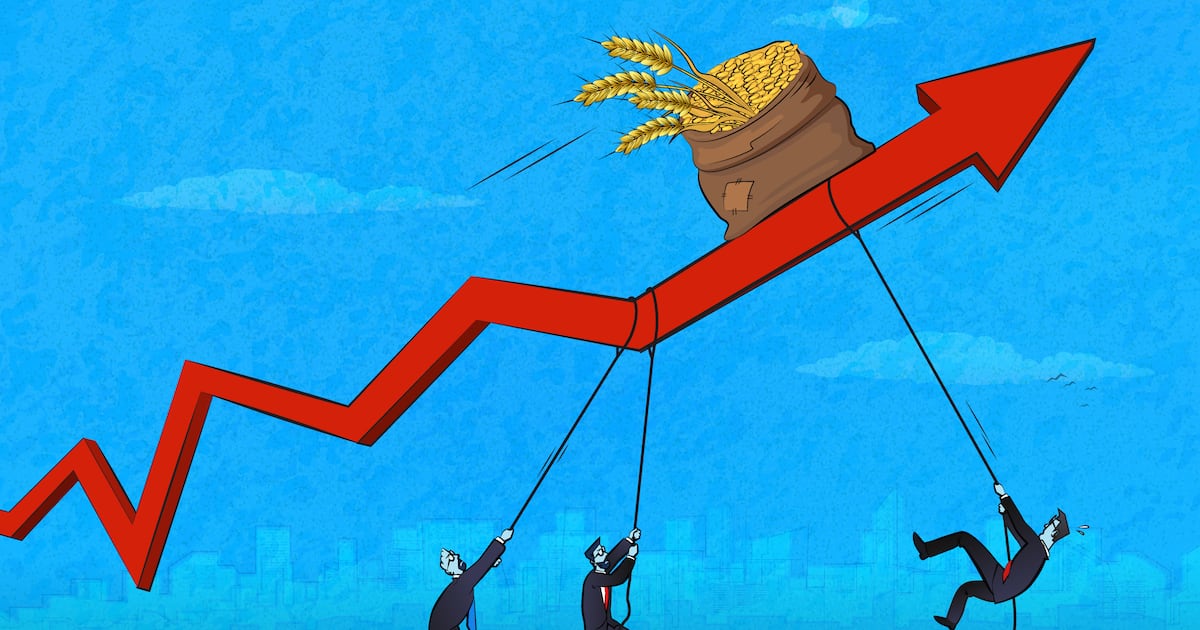
Inflation is likely to rise from 2.7 per cent in February towards 3.5-4 per cent through March and April on foot of US president Donald Trump’s ultimatum to Iran that he would strike the country’s energy infrastructure, Bank of Ireland has warned.
Equity markets saw a fresh sell-off on Monday morning as investors reacted to the threat, which Trump had said the US would carry out should traffic through the Strait of Hormuz fail to resume.
Trump has since “postponed” the strikes for a five day period following what he called “productive conversations” about a “complete and total resolution” to the conflict in the Middle East. Oil prices plummeted, but the situation remains fluid.
Speaking before Trump’s postponement, Bank of Ireland chief economist Conall Mac Coille said Brent crude oil prices were likely to fall from $113 (€97.50) per barrel presently to $89 per barrel by the end of 2026.
However, he said the impact of higher petrol, diesel and home heating oil prices are still likely to push up consumer prices.
A tax rebate scheme for hauliers, a double fuel allowance payment and a reduction in excise duty to cut fuel prices at the pumps are all expected to be agreed by the Government on Monday, but the measures will initially be in place for only a number of weeks.
Mac Coille said the move to cut excise duties “may dilute some of the upward impact” on inflation next month, while Ireland’s household savings rate of 12 per cent in in the last quarter of 2025 indicates many households will have room to sustain “real spending”.
“That said, the clear risk to our forecast for Irish consumer spending to grow by 2.3 per cent in real terms in 2026 now lies to the downside, given the pressure on real incomes,” he said.
Irish petrol and diesel prices have now both increased to, or above, €2 per litre. Furthermore, home heating oil prices have increased from €490 for 500 litres, to €880 currently.
“We estimate this is likely to lift Irish consumer price index (CPI) inflation by more than 1 percentage point, from 2.7 per cent in February, to 3.5-4 per cent range through March and April,” Mac Coille said.
 The difficult choices that could dramatically increase housing supply in Dublin
“This is before any offsetting government measures on excise duties may be implemented. Any action here may effect April’s CPI inflation figure, but not March’s, as the data are collected in the second week of the month.
“Of course, in time both household energy bills, foods and other prices affected by energy costs and supply-chain disruption may rise too – depending on how events in the Middle East may unfold.”
Bank of Ireland had forecast Irish consumer spending would grow by 2.3 per cent in real terms in 2026. “Clearly, the risk to this projection is to the downside as real incomes may be eroded by higher CPI inflation,” Mac Coille said.
“That said, potential cuts to Ireland’s elevated household savings rate and Government policy actions may mitigate the impact.
[ Irish inflation at 2.7% ahead of expected price surge from Iran conflictOpens in new window ]
“Notably, Irish consumer spending expanded by 5 per cent in 2023 and 2.9 per cent in 2024, despite CPI inflation of 6.3 per cent and 2.1 per cent respectively, albeit sustained by pent-up demand coming out of the Covid-19 pandemic.”
Mac Coille said events of the past couple of days are likely to lead to three rate hikes from both the Bank of England and the European Central Bank (ECB) by the end of the year, most likely starting on April 30th.
“Options are now fully pricing in an ECB rate hike on April 30th and the deposit rate to rise to 2.75 per cent by end-2026, with a 45 per cent probability of a further increase to 3 per cent,” he said.