
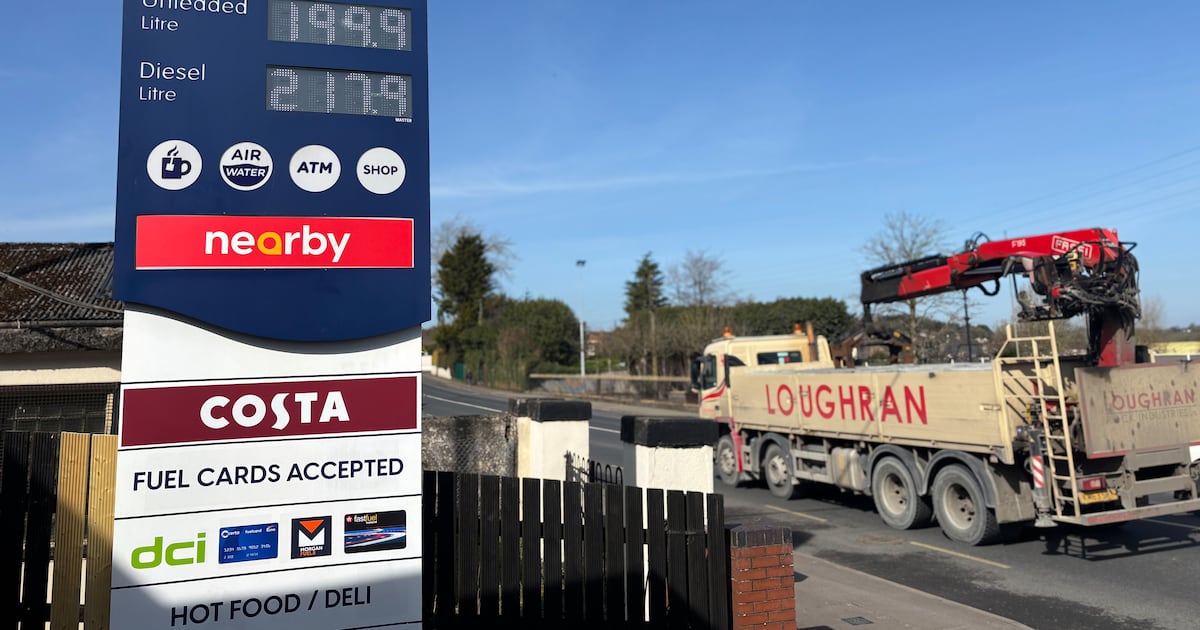
The Government is set to cut the price of diesel and petrol from 12am on Wednesday.
Minister for Finance Simon Harris will bring forward proposals at Tuesday’s Cabinet meeting to cut excise duty on diesel by 20 cent and on petrol by 15 cent until the end of May.
These excise measures will take effect from 12am on Wednesday, subject to a financial resolution being passed in the Dáil.
Additionally, expected changes to the National Oil Reserve Agency (Nora) levy will mean an effective cut in Government levies of an extra 2c each on diesel and petrol. The timing of the changes to this levy have not yet been announced. The changes to the Nora levy require primary legislation, but Government sources have said that it will be pushed through the Oireachtas this week.
The changes were agreed at a meeting of Coalition party leaders on Monday night, attended by Taoiseach Micheál Martin, Harris, and Seán Canney representing Independent TDs in Government.
There will also be a diesel rebate scheme for hauliers and bus operators, which will be backdated to January and keep supply chains functioning.
The measures will be temporary but will be reviewed.
It is also understood that the fuel allowance, currently worth €38 per week, will be doubled to €76 per week for the 470,000 people in receipt of the allowance. The season was due to end on March 31st, but is now being extended into April.
Earlier on Monday, Martin had pledged there would be short-term targeted measures to ease the pressure on the public caused by rising energy prices.
Martin earlier responded to concerns raised by Sinn Féin that the mooted tax rebate for hauliers would limit scope for cutting excise on diesel for other motorists, with the Taoiseach stressing the importance of the haulage industry.
Speaking at a press conference at a housing development site in Dublin, Martin said: “We will be looking at, first of all, it’s an immediate set of measures, short term, targeted in terms of the immediate pressures on the public.”
He said that more broadly the Government would be looking at “energy efficiency” when asked if steps such as increased grants for solar power or reducing speed limits on motorways would be looked at, though he also said: “We already have a very proactive grant system.”
Oil prices fell in the wake of US president Donald Trump’s announcement that he was postponing threatened attacks on Iran’s energy infrastructure.
Asked if the Government would take such oil price reductions into account when considering support measures, Martin replied: “I’m not getting into specifics of that kind. The figures are volatile. We know that. They’ve been up and down, but if you look at it cumulatively over the last number of weeks, they’ve had impact.”
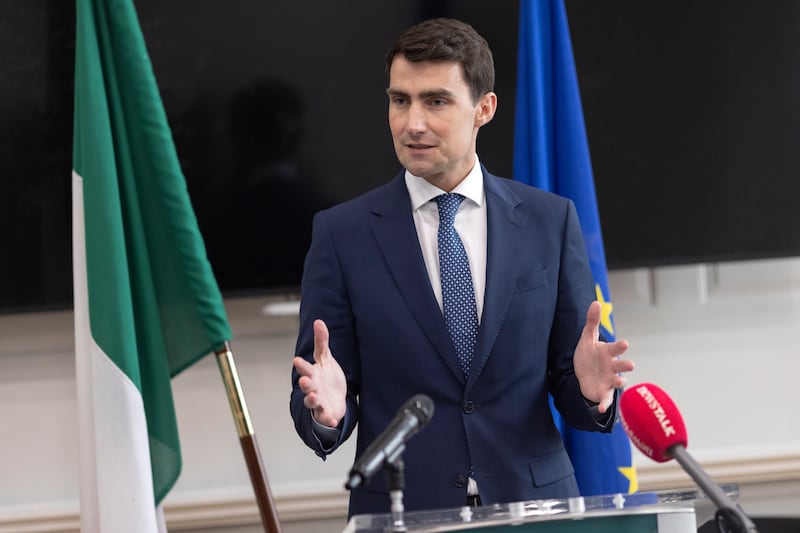 Minister for Public Expenditure Jack Chambers. Photograph: Chris Maddaloni
Earlier, Minister for Public Expenditure Jack Chambers said the Government’s supports to help ease rising energy prices would be strictly limited and withdrawn as quickly as possible.
Warning of the scale of the crisis, he said the Middle East conflict threatened “the biggest impact on the global economy for decades if it continues”, and had “huge ramifications for the growth trajectory of every economy in Europe and the world”.
During an interview on Newstalk on Monday, Sinn Féin finance spokesman Pearse Doherty said the rebate for hauliers and transport operators would mean “that less support will be given to the general public because it all comes out of the same pot”.
He argued for maximum cuts to excise duty instead, saying: “The way that you support hauliers, transport operators and the general public is giving them the reduction at the pump.
“Immediately you give all three the reduction and you cut excise duty by the maximum amount.”