
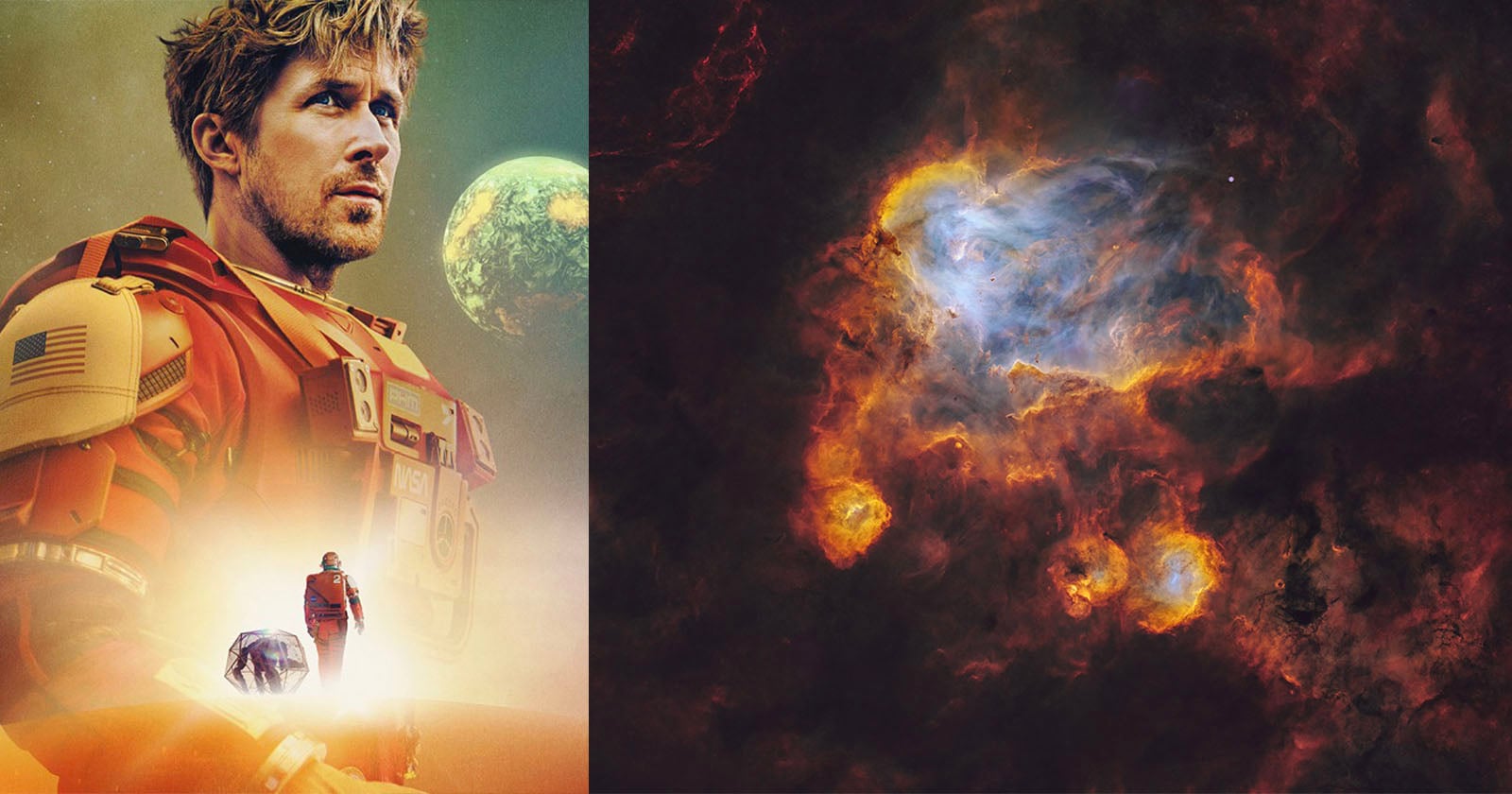
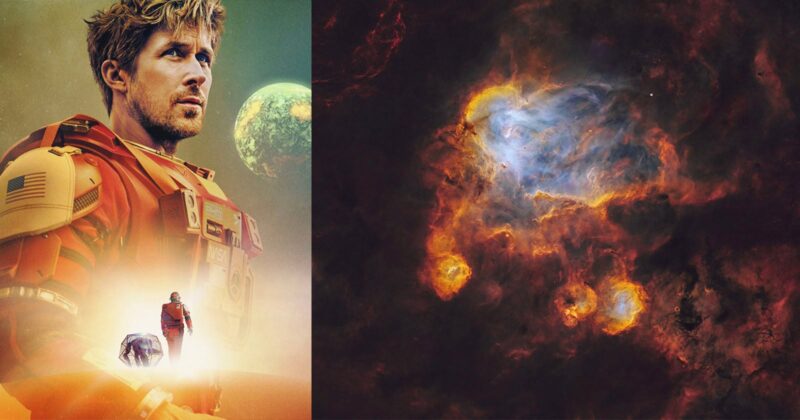
 Rod Prazeres’ images appear during the end credits.
A photographer has expressed his delight as his images of deep space objects appear in theaters worldwide during the end credits of Project Hail Mary.
The new blockbuster stars Ryan Gosling as Dr. Ryland Grace, who awakens on a spacecraft suffering from amnesia and has to piece together what he’s doing there. When the credits roll at the end of the sci-fi epic, photographer Rod Prazeres’ images of far-off galaxies dazzle in the background.
“It all started with an unexpected Instagram message from a production company in Los Angeles,” Prazeres explains. “They were working on a sci-fi film and asked if I’d be open to licensing some of my work for a sequence.”
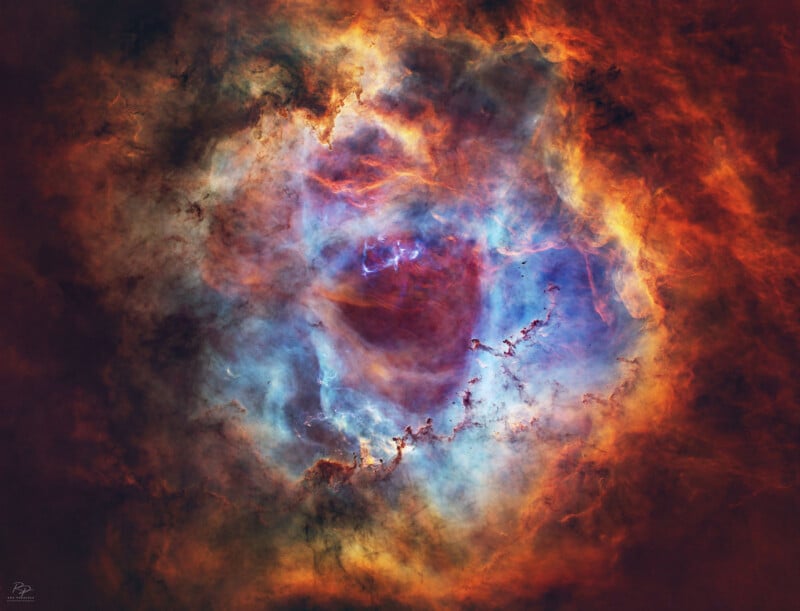 One of Prazeres’ stunning deep space photos.
 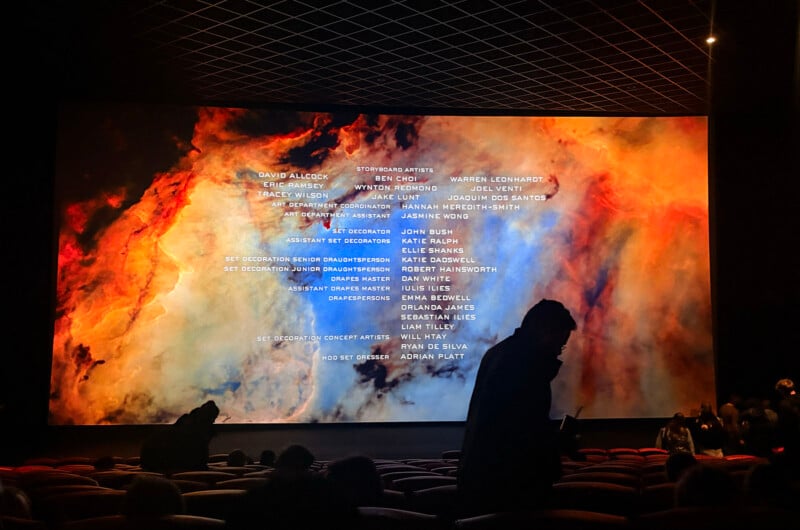 It’s worth staying until the end to see them. | Photo by Matt Growcoot
The photographer from Brisbane, Australia, tells PetaPixel that he’s been shooting the stars since July 2023. After three years of becoming passionate about astrophotography, the message from Hollywood was very exciting.
“I remember thinking, ‘this can’t be real’,” Prazeres writes on his website. “For months, I couldn’t really tell anyone. When something like this is still moving, you don’t want to speak too early.”
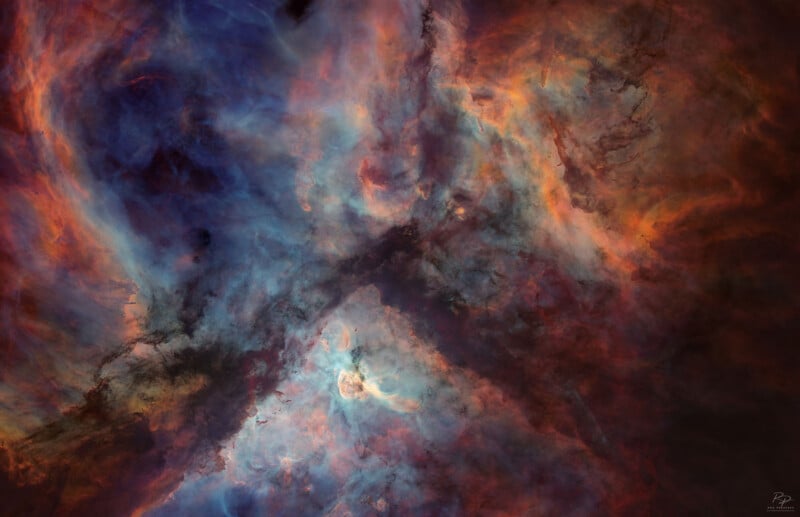
Initially, Prazeres thought his pictures would be used in a different sequence, but over the course of production the creative needs of the Project Hail Mary team changed and he worked with the team that was putting together the end credits.
“At one point they even asked how I capture these images, which was one of those moments that made it feel very real, very fast,” Prazeres says, who adds that in a world of AI and CGI, it’s great that the producers wanted the real thing.
“It meant a lot to know they were genuinely excited to use real astronomical data and real structures from the night sky, rather than generating something from scratch,” Prazeres writes. “It felt like a win not just for me, but for the astrophotography community too.”
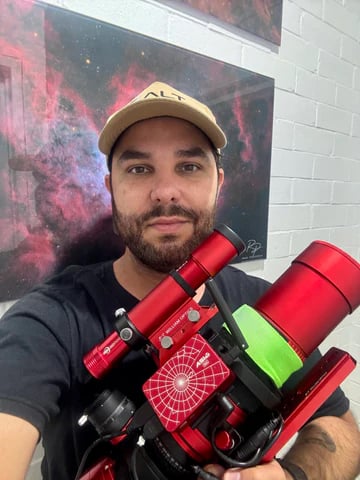 Rod Prazeres
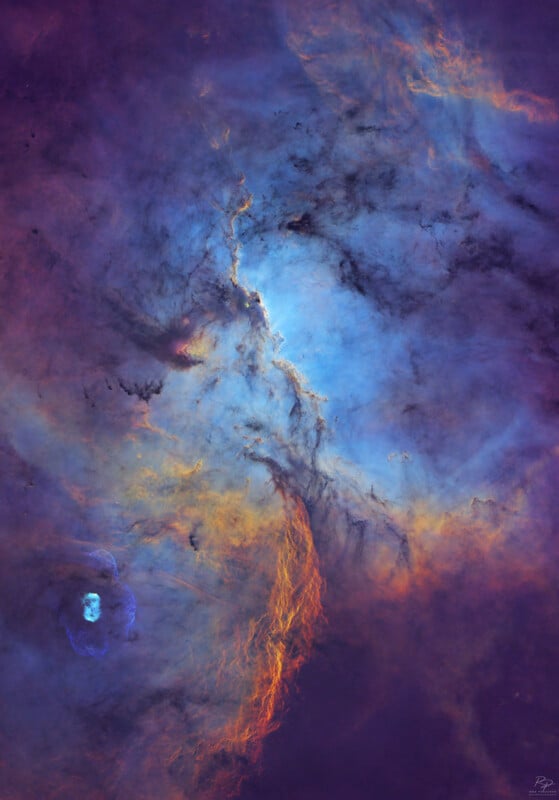
Prazeres captured most of the photos from his backyard in Brisbane. “This is part of what makes the whole thing feel so surreal to me,” he tells PetaPixel. “There’s something pretty amazing about photographing deep space from suburban skies and then seeing that work on a cinema screen.”
How Does He Capture the Images?
On his website, Prazeres explains that he delivered starless versions of the pictures so that bright stars weren’t “competing for attention” at the end of the film. “The underlying structures and color are still built from real captured data,” he adds.
The photographer captures the images via a motorized mount that tracks the sky as Earth rotates, moving in sync with Earth’s rotation so his target stays perfectly framed and steady.
He then takes hundreds of long exposures — as long as five to 10 minutes — across multiple nights. “I’ll usually shoot through special narrowband filters (for example Hydrogen alpha and Oxygen III), which isolate specific wavelengths of light emitted by the gas in nebulae and help reveal structure that is otherwise far too faint to record cleanly,” he says.
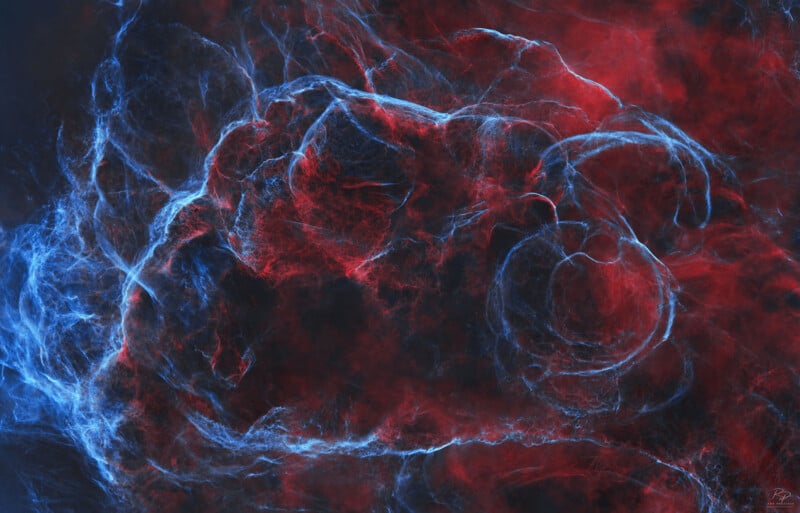
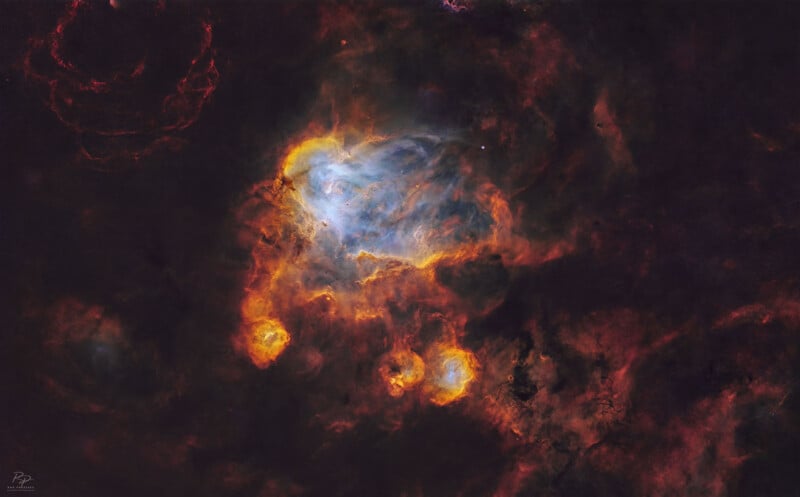
The individual frames are then calibrated for things like sensor noise, dust shadows, and optical artifacts. They are then aligned and stacked to further eliminate noise. This processing reveals faint structures far away in the Universe that are almost hidden in the data. Prazeres says that no generative AI “of any kind” is used during the process.
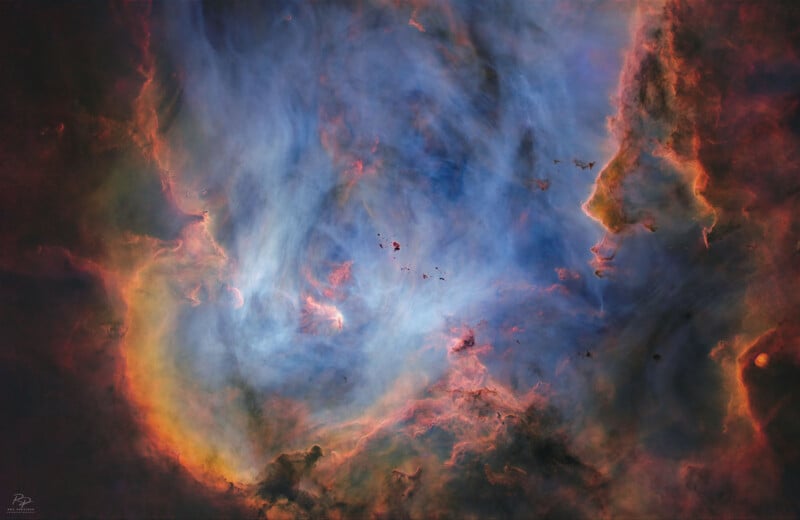
If you’d like to buy a print of one of the photos that appear in Project Hail Mary, you can find them here. More of Prazeres’ work can be found on his Instagram or website.
Image credits: Photographs by Rod Prazeres