
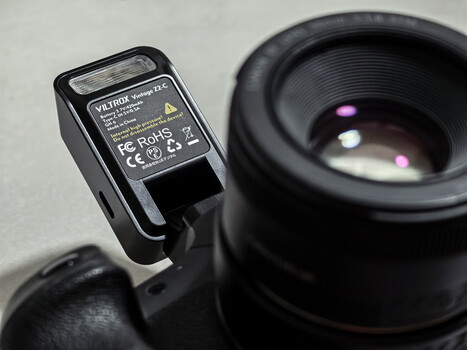
For as far as I can recall, I have always been somewhat skeptical about using flashes for my personal work, specifically the casual, street-documentary style shooting that I tend to do whenever I simply feel like bringing a camera out. Ironically, when it comes to my commercial work, where everything is more controlled with purpose, I am not shy about using flashes to shape the lighting of the final image.
This stigma likely comes from my personal boundary around using flash for street shooting. To me, flash immediately makes the photographer conspicuous, causing people either to go out of their way to be photographed or to avoid you completely. The only exception I can think of is Bruce Gilden, whose work shows that this approach can be done well. While my subjects tend to be non-human most of the time, even when they appear, they are usually there as context or scale — far from the usual f/8 with hyperfocal distance and sticking the camera and flash right up to somebody’s nose. With that in mind, I will try to share my thoughts on the Viltrox Vintage Z2 TTL on-camera flash from my own way of seeing and photographing.
Build Quality
Despite naming itself “Vintage,” in my opinion, there is actually nothing particularly vintage about the design language. The Viltrox Vintage Z2 follows a very clean, modern, minimalistic, and straightforward design; it has only three buttons, a USB-C port, and a hinge on its body. The left-side button handles both power and test flash functions. Meanwhile, the “+” and “–” buttons in the middle adjust the flash power manually. The flash unit measures just 66.7 mm × 38.5 mm × 33.4 mm with a weight of only 52 g, making the flash extremely compact. It adds almost no noticeable load to the camera or hot shoe, which makes it easy to carry around as part of a lightweight everyday setup. The body itself does feel like it is made from relatively cheap plastic with a glossy surface, which I am not really a fan of, as it tends to get scratched rather easily. That said, the overall construction is surprisingly solid. Nothing wobbles, creaks, or squeaks even when pressure is applied sideways. There are also no visible screws on the exterior, which contributes to its clean appearance.
The hinge mechanism, in particular, feels well made and snaps into place confidently. While it does hold itself midway, there is no practical reason to do so because of the way the flash tube is angled. A halfway position would most likely direct the flash toward the ground and potentially introduce unwanted flare. Honestly, I do appreciate the downward-folding hinge, because when folded, it protects the flash tube during transportation and makes the unit easier to store in a camera bag with the camera without needing to detach it from the hot shoe. On the other hand, that also means the flash head itself does not articulate upward. The maximum angle is either forward or downward, which means there is no way to bounce the flash for a wider spread. This probably hints that the flash is designed primarily for direct illumination rather than more controlled lighting techniques.
Notice that the flash is still on even in folded position.
Flash angle at maximum unfolded position.
Finally, the flash carries a safety warning stating “Internal High Pressure – Do Not Disassemble.” I suspect this refers to the high voltage stored inside the flash capacitor. Like most photographic flashes, the unit stores electrical energy internally to fire the flash tube, and opening the device could expose charged components, causing electric shock.
Features
Despite its small size, the Viltrox Vintage Z2 packs all the features you will ever need for a compact on-camera flash. It has a guide number of 6 (GN6), translating to roughly 10 Ws at full power. While it might not sound like much, it works really well as a small fill flash. From my testing, it is capable of filling subjects for up to 10 m, though this is highly dependent on ambient lighting conditions. The flash duration is rather impressive, ranging from T0.5 1/16500s to 1/50000s. Though the overall power output is modest, the short flash duration can be used to freeze motion effectively in certain situations. Color temperature is rated at 6500K ±200K, which is fairly neutral and close to daylight. In most cases, it should blend reasonably well with natural ambient light without introducing obvious color shifts. The flash head is fixed to cover an approximate 28mm focal length, with no zoom mechanism. This again reinforces the idea that the Z2 is designed as a simple, compact, and effective tool.
There is no need for disposable batteries, as it draws power from its built-in 420 mAh rechargeable battery, which takes roughly 70 minutes to fully charge. Viltrox claims up to 700 full-power flashes per charge, which I would imagine is more than enough for most casual shooting sessions, as you will not be using full power most of the time. From my testing, I have yet to reach its limit despite shooting for days. In terms of control, the Z2 offers a five-stop manual power adjustment in M mode, allowing the user to manually fine-tune the output for more consistent lighting. This level of control is particularly useful for users who prefer working in controlled situations where exposure is tricky. If you prefer more convenience, the flash also includes an instant-response TTL mode that automatically adjusts flash output using real-time metering. Switching between TTL and manual mode can be easily achieved by pressing both the “+” and “–” buttons at the same time, making it easy to move between automatic and controlled lighting when needed.
Flash set at maximum power.
A indicates the flash is in TTL mode.
Real-World Experience
In practice, the Viltrox Vintage Z2 does not disappoint at all. In fact, it performs largely as expected for a flash of this size. The recycle time is fairly quick, especially impressive at lower power levels. At 1/8 power and below, the refresh feels instantaneous, while 1/4 power is still very quick. At 1/2 and full 1/1 power, the recycle time is relatively slow — roughly one to two seconds. Not great, but reasonable for casual shooting applications. When the situation demands a faster refresh rate, I would recommend using a wider aperture or slightly higher ISO to compensate for the lack of flash power. In return, you will also get a shorter flash duration, though the look may be different — that is the compromise you will have to deal with when using such a portable tool.
Red light indicating the flash is not ready to fire yet.
The flash coverage, as discussed earlier, is fixed at around 28mm, which works well to give a pleasant look for street photography and general casual use without being way too spread out or too harsh. Despite being fixed at 28mm, I do not find any issue in shooting at a wider 16mm focal length or even longer focal lengths such as 50mm. At longer focal lengths above 100mm, the flash may struggle to reach very distant subjects unless you are in a darker environment, as there is no zoom function. It does provide even illumination and is sufficient for basic macro usage. Despite being considerably weak in terms of output, the flash is still strong enough to provide fill light for moderately distant subjects in daylight conditions. Speaking of daylight usage, I could not get high-speed sync to work on my Canon EOS R5, which limits its daytime usage in some ways. However, on my Leica CL, I could push the shutter speed up to 1/400s before encountering sync issues.
Image shot at 100mm macro.
Theoretically, a flash rated at a guide number of 6 has quite a limited usable range. This is because guide number is derived from the multiplication of distance and aperture. Meaning if we are shooting at f/2.8, we could only get a distance of roughly 2.1 meters. Taking into account factors such as light falloff, diffusion, flash angle, and lens shading, the most pleasing results tend to occur when the subject is much closer than the theoretical limit — consistent with the results from my experiment. The flash indeed produces the best rendering when the subject is roughly within an arm’s length, typically around one meter, especially when shooting around f/2.8. That said, despite having such a small flash tube, the light quality is much more pleasing than I initially expected — probably something to do with the screen they put in front of the tube to spread the light. Another thing I noticed is the flash duration. It is fast enough to freeze subjects quite effectively throughout the power settings, at least for casual shooting, where you are not freezing water droplets mid-air.
In terms of usability, I do think the unfolded height is well considered, as lifting the flash up does provide enough clearance for it to fire directly at the subject without being obstructed by the lens, while still keeping the design compact. I did notice, though, that folding the flash down does not automatically disable it. I think this could have been a convenient design choice to improve the overall usability experience — folding the flash to put it into a “sleep” mode rather than requiring the user to power it on and off manually every time. Also, switching off the camera will not automatically switch off the flash.
Flash is folded but still ready to fire.
Although the flash is not officially available in a Panasonic/Leica version, the single-pin contact still works for basic triggering, which means it can still function in a simple manual flash setup. Do note that you will lose access to the TTL mode if you are using it this way. Personally, it is not a problem for me because I rarely use TTL (Auto) mode and tend to prefer working in manual power control. Switching between the two modes is simple — pressing the “+” and “–” buttons together activates TTL mode, indicated by the “A” light, while repeating the same action disables it and returns the flash to manual mode.
Viltrox Vintage Z2 Canon used on Leica.
The flash also includes a small diffuser, although I personally do not find it particularly necessary. Given the size of the flash head, the light source is already quite small and direct. In many cases, it may actually make more sense to simply embrace that direct-flash look. Finally, the flash does not support wireless triggering, as it is clearly designed primarily as a simple on-camera flash rather than part of a larger lighting system.
Flash unit with detachable plastic diffuser.
How it looks.
SummaryWhat I LikedCompact and lightweight design – The extremely small form factor makes it easy to carry around without adding noticeable bulk to the camera.Good battery life – The built-in rechargeable battery simplifies the workflow and removes the need to constantly manage spare rechargeable cells.USB-C charging – A convenient and modern charging method that integrates easily with existing cables and power sources.Solid overall construction – Aside from the main hinge mechanism, there are no moving parts, and the unit feels structurally stable in use.Well-considered unfolded height – The flash sits high enough above the camera to provide reasonably even illumination.Simple operation – With only three buttons, the interface is straightforward and easy to understand.Surprisingly soft light output – Even without a diffuser, the light quality is relatively gentle for such a small direct flash.Very fast flash duration – The short flash duration helps freeze motion effectively.
What Could Be ImprovedMore durable surface finish – A matte texture might resist scratches better than the current reflective surface.Faster recycle time at higher power – Flash refresh speed from around 1/2 power and above could be improved.Zoom capability – A zoom function would help concentrate the light for tighter focal lengths such as 50mm and beyond, improving versatility.Higher flash output – Additional power is always welcome to expand its usefulness in more challenging lighting situations.High-speed sync (HSS) – Adding HSS support would significantly increase flexibility when shooting in bright conditions.Auto power with hinge – It would be convenient if the flash turned on when unfolded and powered off when folded, turning the hinge into a natural on/off mechanism.Final Thoughts
The Viltrox Vintage Z2 ultimately feels like a small but surprisingly capable tool when used within its intended limits. I can easily see it being useful for casual portrait or wedding photography, and even certain fashion shoots where that direct, on-camera flash aesthetic is part of the visual style. For everyday photography, it works particularly well too, if you need some light fill for documentary-style shooting. Available in Sony, Fujifilm, Nikon, and Canon variants and priced at $35.99, its price, size, simplicity, and built-in battery make it an easy recommendation for photographers who simply want a small flash for occasional use. If you want to deepen your understanding of flash and light shaping, Fundamentals of Lighting is an excellent place to start.