
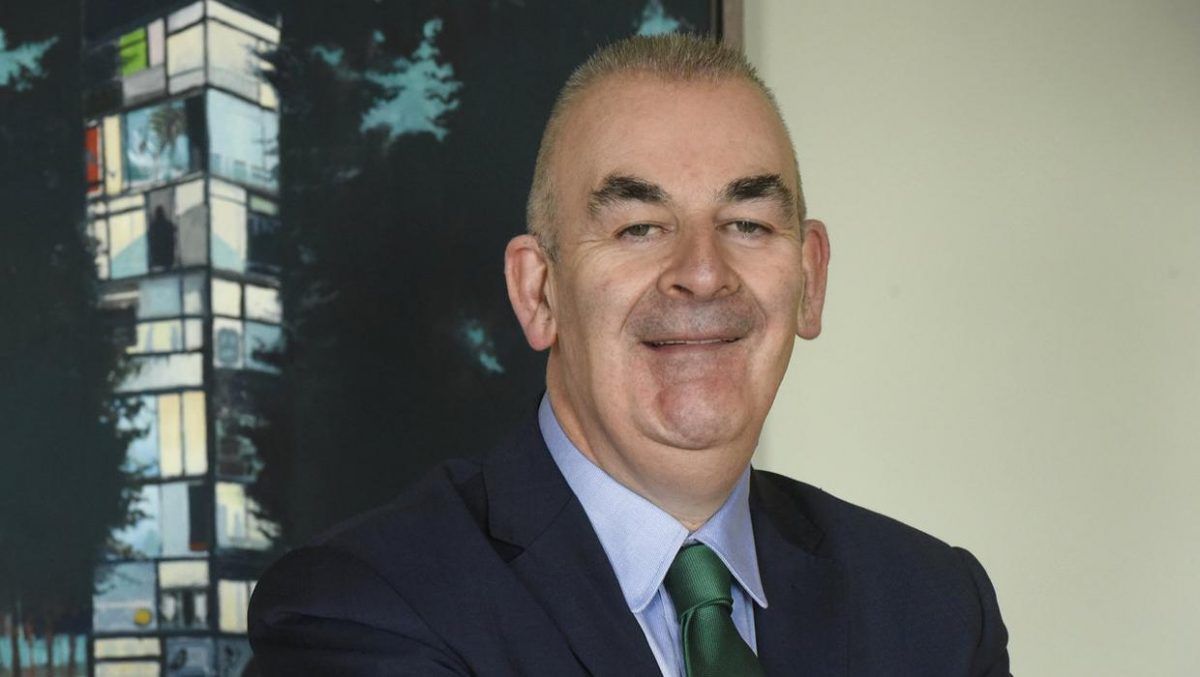
One of Ireland’s best-known teaching leaders says more than 70 rural primary schools are under threat of closure if the current trend in rural depopulation continues.
General Secretary of the Irish National Teachers’ Organisation (INTO), John Boyle, hails from Mullaghduff in West Donegal.
Boyle makes the claim in an edition of TG4’s flagship current affairs programme Iniúchadh TG4 which examines the impact of rural decline in remote parts of Ireland.
The documentary Bánú na Tuaithe (Rural Depopulation) presented by the award-winning investigative journalist Kevin Magee and airing tomorrow evening (Wed) at 9.30 pm, explores the pressing question: Is rural Ireland really dying?
According to the latest data from the Department of Education and Youth, the number of children enrolling in primary schools across the country fell by 6,470 last year.
Eleven primary schools have closed permanently since last June due to falling rolls, with others now facing an uncertain future. According to the INTO, the problem is getting worse.
Mr Boyle said: “If things continue the way they are, more than 70 schools will come under pressure. These small schools are located at the heart of the area, at the heart of the community, and if they close them, like the post office and other places, there will be no heart left in these communities. It is therefore extremely important to the Irish National Teachers’ Organisation that the government properly supports small schools.”
One obvious solution is to decrease the teacher-pupil ratio in specific schools that are under threat, according to Mr Boyle. “They have to support small schools, and they can do that by reducing the number of children in classes. The class sizes in this country are larger than anywhere else in Europe ” – he said in Irish.
As well as the impact on schools, the documentary examines how rural depopulation is affecting cultural and sporting life in parts of Ireland after what the GAA termed “the decimation and erosion of rural life .”
South Kerry GAA board carried out an analysis of the decline in school enrolment numbers in its area. It calculated that there has been a 41 per cent fall in the combined primary school population at 13 national schools in the 28-year period from 1993 to 2021. The board has predicted that certain clubs “will have major difficulty fielding underage teams” in the future.
South Kerry GAA board chair Joseph McCrohan said: “If you want to measure a GAA club and you want to measure what’s going to happen to a GAA club in the next number of years, take a look at the primary school. If you’ve kids in primary school, you’ll have football teams, hurling teams. If you don’t, you’re in trouble. ”
This year, five south Kerry clubs, Reenard, Waterville, Dromid, Cahersiveen and Valentia had to join together to field an under -14 boys’ team.
GAA footballer Caoimhín Ó Fearghail from Cashel GAA in Newtowncashel in County Longford told the programme that seven players or 30 per cent of the team that won the Longford County Intermediate Championship in 2009 are now living broad. “Lots of the lads have gone to Australia, America and Canada. Every rural club is struggling for numbers, and the club is worried about that — that people will want out or that they will emigrate” – he said in Irish.
According to the latest 2022 census figures, the population of Ireland at 5.149 million was up 8% per cent on the previous 2016 figure.
Sustainable rural development expert Professor Mary O’Shaughnessy from Cork University’s Business School says overall population growth figures can mask the extent of population decline in some rural areas.
“The population in Ireland is at its highest since the 1850s and when we look at the population distribution, we can see that there’s been population growth in both urban and rural areas. But when we look at it more closely , what we do find is that the rural areas that appear to have grown are those that are closest to urban centers or closest to our cities.
“But there continues to be a decline in the numbers of population in rural regions that are more remote, that are more peripheral, that are particularly located along the western seaboard, and that are also in some parts of rural Midlands as well,” said Professor O’Shaughnessey.
Donegal teaching leader says 70 primary schools are under threat was last modified: March 24th, 2026 by Staff Writer
Tags: