
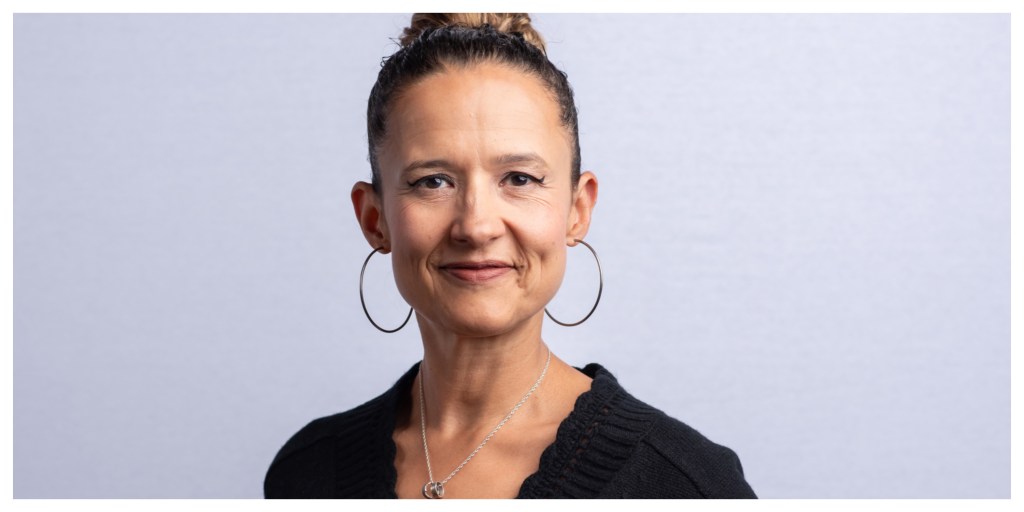
Hollywood and high-end TV are “taking steps backwards in terms of the quality of representation we are seeing.”
That was the verdict of ex-Channel 4 drama boss and North Road executive Caroline Hollick, who told a Series Mania panel she is not happy that “films about women having nervous breakdowns” are back in fashion.
Hollick was speaking on a panel questioning whether negative stereotypes have returned because of the growth of AI and microdrama, but she said she worries more about the traditional gatekeepers.
“I am more concerned about high-end TV and Hollywood taking steps backwards not only in terms of taking down DEI initiatives but in terms of the quality of representation we are seeing,” she said.
While there are “incredible female film directors out there,” Hollick, who commissioned 50% female creators during her time at Channel 4, said at a recent film fest there were “four or five films about women having nervous breakdowns.” “It’s not that they’re not beautifully made and performed, but we have to be vigilant in the stories we are telling about women.”
On the TV side, and without naming names, Hollick called out a show that sounded very much like Sky and Peacock’s The Day of the Jackal, which she said could do better on female representation. “The male lead ran around Europe shooting people and had a hot wife at home living in Spain,” she said. “The female lead went back home to her husband who tapped his watch and said, ‘What time do you call this?’ Obviously I’m paraphrasing but if you dig deep into female representation in that show we should be doing better than that.”
In a “risk-averse environment,” Hollick blamed commissioners “reverting back to tried and tested writers who are often white, middle class, middle aged men.”
Hollick called for a “female version of The Secret Agent,” the Wagner Moura-starring hit Brazilian movie that was Oscar nominated. She urged commissioners to greenlight at least 50% women creatives, which will help avoid “cultural stereotypes getting perpetuated at every level.”
Hollick was ostensibly on a panel to discuss negative stereotypes in microdrama but said she feels this will improve over time, comparing stereotypes in microdrama today to what slasher horror was like in the 1980s.
“[Slasher horror] was women in negligees covered in blood and the Black character dying in the first five minutes, but it evolved to [diverse films like] The Babadook, Get Out and Sinners,” she added. “That took 40 years and I think people are already making microdramas more representative.”
She cited Issa Rae’s Awkward Black Girl as a diverse, short-form web series that catapulted its creator to superstardom and said commissioners need to get wise to short-form shows for younger audiences. “We have to learn from that and stop making remakes of Jane Austen,” she said. “I’m all about targeting talent in a format young people are watching. It’s on us legacy media to catch up a bit.”
Recycling the stereotypes of the past
Elizabeth Le Hot, the CEO of France’s Adami who has previously written a report on AI for the French culture ministry, was far more critical of the influence of AI and short-form on stereotypes.
“AI amplifies stereotypes on a massive scale,” she said. “They are based on decades-old, biased representations of women and as a result they do not challenge the biases. They recycle the stereotypes of the past.”
Hollick also spoke on the panel alongside BAFTA-nommed producer Nadine Marsh-Edwards, who said “we should call people out when they make things that are inappropriate.”
She celebrated Netflix’s upcoming Pride and Prejudice adaptation for doing things in an “ironic, knowing way.” “We have to ask for higher standards,” she added. “If we don’t watch certain shows then they won’t get made again. We have to come up with storylines that are a bit broader.”
The Series Mania forum kicks off today and finishes Thursday. Russell T. Davies, Hugo Blick, Disney Europe boss Angela Jain and HBO’s Sarah Aubrey are set to address the fest in the coming days.