
The Irish public is “pretty prudent” and “quite pragmatic” on defence and security if international challenges are explained, the British-Irish Parliamentary Assembly (Bipa) has been told.
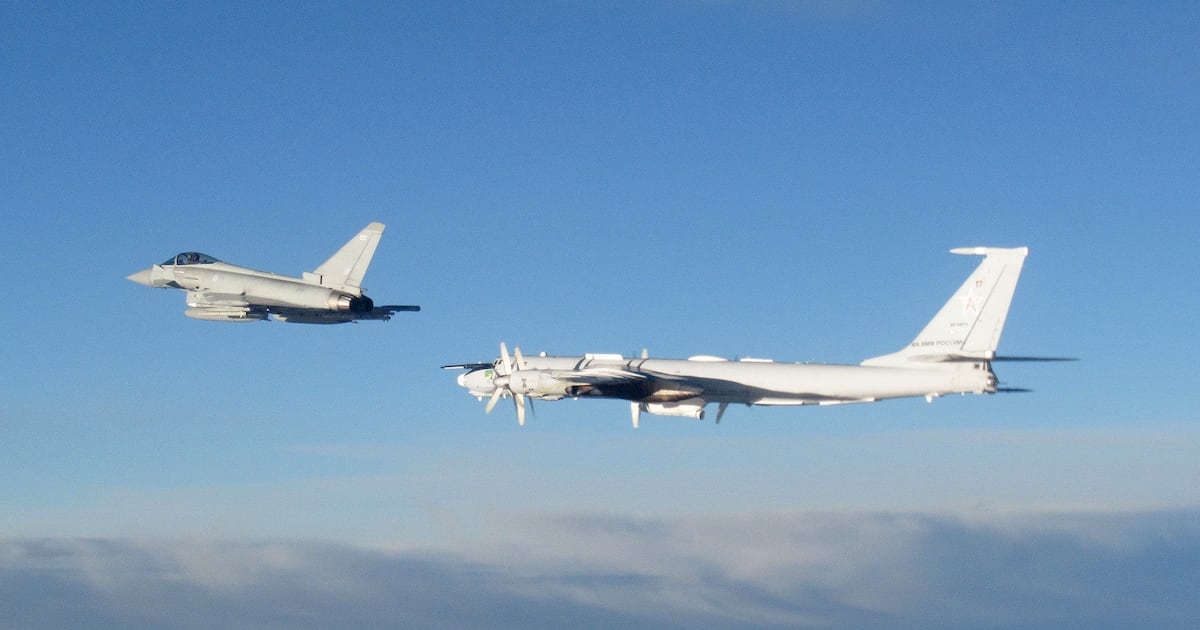
Speaking to the body in Tralee, Co Kerry on Tuesday, Prof Andrew Cottey of University College Cork said issues such as the fact the Royal Air Force is responsible for Irish air security are less bothersome to public opinion than many think.
“There is a pragmatic centre ground on many of these issues,” Cottey, the holder of the Jean Monnet Chair in European Political Integration, told the inter-parliamentary body.
“Defence and security co-operation makes sense for both Ireland and the United Kingdom. Both have different national security policies – Ireland’s military neutrality and the UK’s membership of Nato are both long-standing policies,” he said.
“Each policy has deeply embedded domestic support and is unlikely to change. Despite these differences, though, in national approaches to security and defence, there is room for co-operation.”
Given Russian aggression and growing US unreliability, he said “there is a strong case that European democracies such as Ireland and the UK need to work together more closely to defend their common values and interests”.
The challenge created by the need to secure the seas around Ireland and into the Atlantic requires not just greater UK-Ireland co-operation, but also with the Nordic states, the Netherlands and France, he said on the final day of the parliamentary assembly meeting.
The development of bilateral security and defence co-operation with the UK “may be viewed as part of a larger process of the normalisation of relations between the two countries”.
“Security and defence co-operation is a normal thing, one which would be expected between friendly neighbours.”
[ Does Ireland’s neutrality leave room for increased defence spending?Opens in new window ]
Bipa, which has existed since the early 1990s, meets every six months and includes TDs and senators, MPs and members of the House of Lords, legislators from Stormont, Welsh and Scottish parliaments, along with the Isle of Man and Channel Islands.
Ulster Unionist MLA, and former Royal Navy submariner, Steve Aiken said Ireland would only ever get the training and information it needs properly to defend itself if it joins the North Atlantic Treaty Organisation (Nato).
Ireland is dependent on the UK for worst-case security challenges “but we don’t have much of the Royal Navy, or the Royal Air Force left. Trying to depend on something that’s not likely to be there is going to be a critical issue”.
“The answer to that is again Nato,” said the former UUP leader, who has long been critical of Ireland’s level of defence spending. The public needs to show, and be shown, “the realism of what is required”, he said.
Independent Senator Gerard Craughwell described Crotty’s lecture as “one of the most wonderful breaths of fresh air”.
“Many of my colleagues here will talk about the great neutral state of Ireland and they will in some way tie the triple lock into that nonsense. They are totally unrelated. We are not neutral. We are militarily unaligned,” he said. Now facing abolition, Ireland’s triple lock requires UN approval before Irish troops are sent abroad on peacekeeping missions.
However, Social Democrats TD Sinead Gibney said the Irish public was proud of the State’s peacekeeping tradition “and a crucial and integral part of that is the triple lock, which was part of the Nice and Lisbon treaty negotiations”.
“It cemented what had already been a tradition of only ever engaging in peacekeeping with the United Nations helmet, with the UN blue beret. To suggest that the triple lock is nonsense, that Irish neutrality is not connected to it, is really problematic,” she said.