
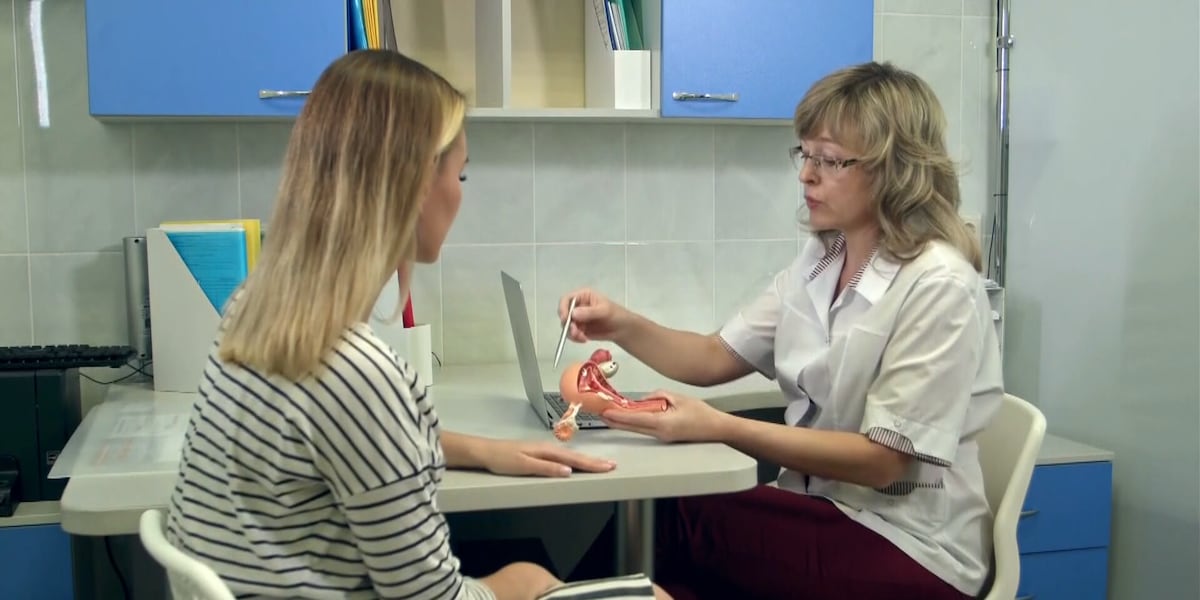
WILMINGTON, N.C. (WECT) – Endometriosis is a painful and often misunderstood condition that can disrupt daily life, mental health, and fertility. Yet it frequently takes years for patients to get answers.
“Delaying diagnosis is a major concern with endometriosis,” said Novant Health OB-GYN Dr. Somya Navejar. “It can take an average of 4 to 11 years for a woman to be diagnosed from the onset of their symptoms.”
March is Endometriosis Awareness Month, a time when health experts and patients hope to see faster symptom recognition and greater support for those living with the disease.
Endometriosis happens when tissue similar to the lining of the uterus grows in places it shouldn’t.
“Endometriosis is when the tissue that lines the inside of the uterus is abnormally found in other parts of the pelvis,” Navejar said. That can include the fallopian tubes, ovaries, pelvic sidewall, bowel, or bladder.
That tissue responds to estrogen, she explained, meaning it can become inflamed as hormone levels change across the menstrual cycle.
One reason endometriosis can be hard to catch: symptoms don’t show up on routine tests.
“It’s not something that necessarily shows up on a blood test. It’s not going to show up on our Pap smear,” Navejar said. “It really relies on women explaining their symptoms and their healthcare provider understanding the disease.”
Endometriosis symptoms can vary, but Navejar said common signs include:
Pelvic pain, especially before or during a menstrual cyclePainful intercoursePainful bowel movementsPainful urinationInfertility
Navejar said it can be difficult to distinguish endometriosis from menstrual cramps. But one clue: whether over-the-counter medication helps.
“Do Tylenol or ibuprofen help relieve your symptoms?” she said. “If not, it could be something more severe like endometriosis.”
For Casey Berna, a licensed clinical social worker in Wilmington, North Carolina, and an endometriosis patient advocate, symptoms started before her first period.
“Like so many other patients, my road to diagnosis was delayed and very long,” Berna said.
She said her symptoms continued into high school, and by college, she felt “very ill.” But instead of answers, Berna said she heard explanations that didn’t fit.
“I kept going to so many doctors who would tell me it’s anxiety or irritable bowel syndrome,” she said.
Berna said the repeated misdiagnoses took a toll.
“It was very frustrating not having answers as to why I was feeling awful, why it was hard for me to go to school, to go to work, to function like everyone else,” she said. “I was often made to feel that I had a low pain tolerance or I had mental health issues.”
She said the impact wasn’t just physical.
“There is such a huge impact on our mental health, on our capacity to thrive, to go to school, to work,” Berna said. “It’s frustrating and also really harmful in a lot of ways.”
Berna said she was eventually diagnosed in her mid-20s after infertility, but even then, she didn’t fully understand what it meant.
“When I got that diagnosis, it was very much said nonchalantly,” she said. “And I even then didn’t understand what it meant to be an endometriosis patient or the extent of the disease that I had.”
Historically, endometriosis was often confirmed with surgery. Navejar said that reliance contributed to delays.
“A big part of this is that traditionally OB-GYNs have relied on surgery to officially diagnose endometriosis,” she said.
Now, she said, many medical organizations are shifting toward clinical diagnosis — recognizing symptoms and exam findings sooner so patients can start treatment.
“So talking with a patient about their symptoms, doing a physical exam, and giving them a presumptive diagnosis… so that we’re not delaying access to care,” Navejar said. FDA-approved medications
Navejar said treatment options have expanded in recent years.
“Even in just the last 10 years, we do have new FDA-approved medications that are approved specifically for endometriosis,” she said. “We also have advanced surgical options… minimally invasive surgeries such as robotic laparoscopy, which can improve recovery times.”
Berna said surgery with an excision specialist later revealed how extensive her disease was.
“My first excision surgery was four hours long, and it was impacting every organ in my pelvis,” she said. “It was very validating to know that it wasn’t in my head.”
Navejar said awareness can help people recognize red flags and advocate for themselves.
“So much of getting an endometriosis diagnosis relies on a patient’s symptoms, their clinical history, what they’re experiencing day in and out,” she said. “The more we can raise public awareness, the more women have the information to really advocate for themselves and empower themselves.”
Navejar encourages patients to keep a menstrual calendar and bring it to annual appointments.
“What day did your period start? How bad was the pain? What other symptoms… were you experiencing?” she said.
If pain is disrupting daily life, she said it’s time to seek care.
“If you’re staying home, missing out on things due to pain, that’s really the time to go seek care,” Navejar said.
And for those who feel dismissed, Navejar recommends persistence.
“Advocate for yourself. You know your body the best,” she said. “If you’re not getting answers… seek a second opinion.”
Berna said the long search for answers can be “really tolling” on mental health.
“We know that endometriosis is associated with anxiety and depression,” she said.
She also pointed to a BBC survey of endometriosis patients.
“The BBC did a study where they surveyed thousands and thousands of endometriosis patients, and almost half of them expressed suicidal ideations,” Berna said.
Berna said being in pain and being told nothing is wrong can change how patients relate to their bodies.
“When we go from doctor to doctor and are told that nothing’s wrong, it has a profound impact on trusting our body,” she said. “We spend so much time feeling invalidated, and then we have to act as if nothing’s wrong, which is also really traumatic.”
Over time, she said she’s had a better quality of life, but also noted that many patients face other diagnoses alongside endometriosis.
“With endometriosis, there are so many comorbidities that come with it,” she said, citing adenomyosis, fibroids, and other conditions.
If someone thinks they may have endometriosis, Berna urges them to take their symptoms seriously and seek community.
“Listen to your body, connect with others in the community,” she said. “Don’t let anyone else tell you that what you’re feeling isn’t real.”
Berna said one challenge is that many people simply don’t know what endometriosis is, which can make support harder.
“I think people don’t know how to support others with endometriosis,” she said.
Copyright 2026 WECT. All rights reserved.