
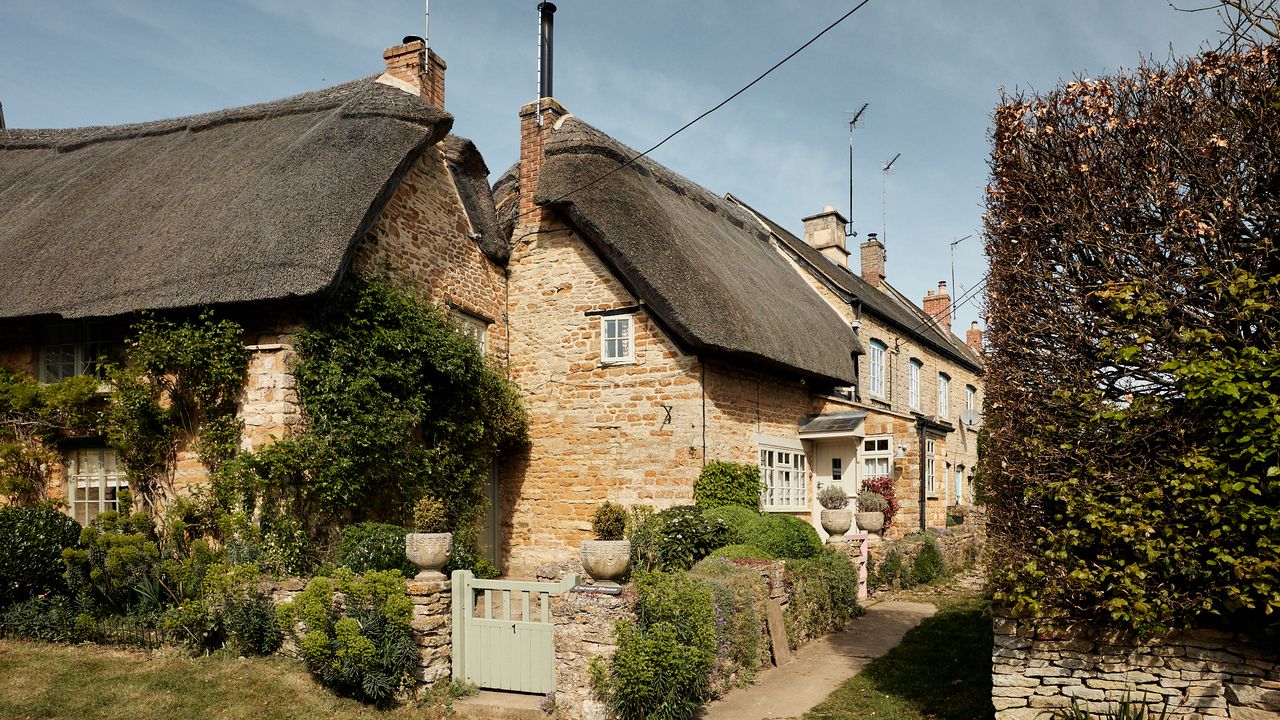
If it were possible to have a conversation with almost any of the previous inhabitants of this charming cottage in the Cotswolds, they would probably be surprised to learn that such a house could be a serious object of desire. One-up, one-down, with tiny proportions and small windows (and until very recently, no indoor bathroom), this has been a distinctly humble dwelling for its entire 450-year history. But in the 21st century, the imperfections of the cottage are also what constitute its considerable charm, and what may have been inconveniences for earlier generations are now wonderfully romantic. The Grade II-listed house has been fortunate in its latest occupant, the interior designer Victoria Barker of Studio Faeger, who bought it in 2017 and undertook a sympathetic renovation that brought all of its latent desirability to the fore.
The cottage is one of the first to have been built in the small village of Kingham, which is now one of the most covetable areas of the Cotswolds thanks to the nearby train line to London and the proximity to Daylesford and Soho Farmhouse. ‘I had originally wanted a cottage in London,’ she explains, ‘but I kept looking further and further out until I got out here. When this one popped up I immediately went to see it, offered on it the same day, and was accepted by the evening.’ There’s no doubt that the cottage was a bit of a project. ‘All the features of the house had been hidden in the 1970s; the original floor had been covered in sad tiles, there was a false ceiling and the walls were boarded over.’ Even 50 years ago, it seems, the appeal of the cottage had not yet become universal.
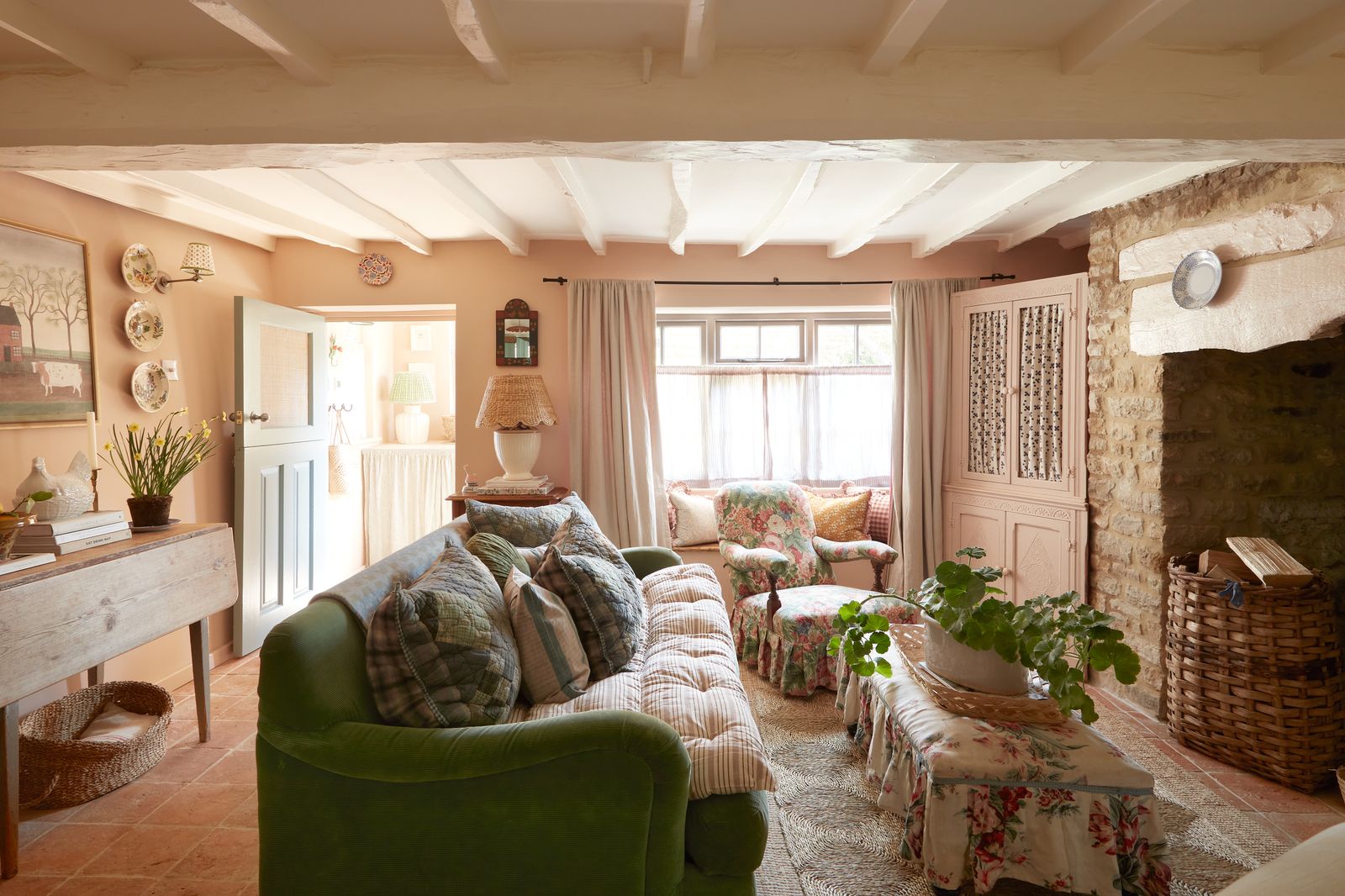
The front door opens into the sitting room, which is painted in Farrow & Ball’s ‘Setting Plaster’. The ceiling and original beams are painted in ‘Pointing’ to help bounce the light through the room. The timber lintel over the inglenook, which was set alight by a previous owner and had suffered a heavy burn mark, is also painted in ‘Setting Plaster’. The sofa is upholstered in sage green corduroy with a mattress cover from Cutter Brooks and handmade quilted cushions. The armchair was an Ebay find and the footstool is from Pato Interiors, both covered in their original chintz fabric.
Tom Griffiths
Victoria set about restoring the interior architecture, taking down the boards to reveal the beautiful beams and the lath and plaster walls upstairs, treating the ubiquitous woodworm, and replacing the smashed up old floor with reclaimed pamment tiles. The house needed to function as both a weekend retreat for Victoria, her boyfriend, and Otty the Vizsla, but also a holiday rental, so it was absolutely necessary to create more space. A small extension at the back of the cottage now houses the compact kitchen and a bathroom with a shower (no more walking to the loo outside on cold winter evenings). The first floor, an attic room which was in effect already split into two by the beams that hold up the roof, was officially divided into two bedrooms. Amazingly, the whole project only took seven weeks.
The quirks, of course, have not been completely ironed out, but they don’t really need to be. In the kitchen, for example, there is the disadvantage that its size only really allows for three units. But by extending the storage to the walls and ceiling with plate racks and hooks for hanging baskets, Victoria has found a practical solution that also adds to the cottagey feel of the space. ‘I actually find it quite convenient in some ways,’ she reflects. ‘When you’re loading the dishwasher, you really don’t have to move at all.’ More challenging is the existence of only one built-in cupboard in the entire rest of the house, in the main bedroom. ‘Clothes storage is a nightmare,’ she admits ruefully.