
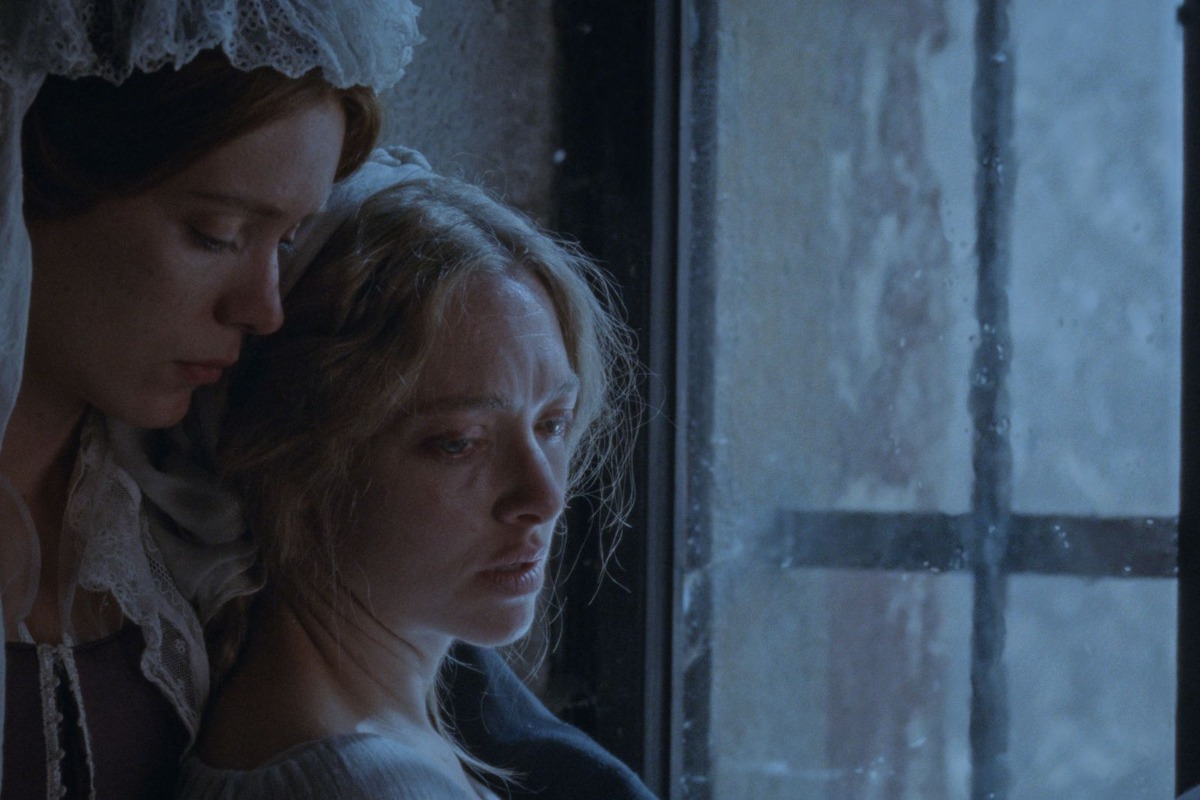
How do you turn a vow of abstinence into the year’s most intoxicating music? Amanda Seyfried makes piety feel dangerous and you might not be ready for the aftershock.
Premiered in Venice, “The Testament of Ann Lee” turns the life of the Shaker founder into a kinetic musical drama, and it reaches German cinemas on March 12, 2026. Amanda Seyfried anchors the film as a woman whose faith and fury ricochet from industrial Manchester to a raw New York frontier. Director Mona Fastvold threads Shaker hymns through William Rexer’s tactile, timeworn images while Daniel Blumberg’s score builds an insistent pulse. The result is a study of belief, celibacy, and communal longing that feels theatrical in scale yet intimate in its emotional aftershocks.
An epic that took Venice by storm
Amanda Seyfried leads The Testament of Ann Lee, a historical epic that’s been humming with a quiet buzz since its debut at the Venice Film Festival. The film welds personal struggle, communal awakening, and a musical pulse into a 130-minute odyssey. Anticipation is high ahead of its German release on March 12, 2026 (following a warm festival run).
A journey through history and belief
The narrative follows Ann Lee, the 18th-century founder of the Shaker movement, from Manchester’s mills to New York’s open horizons (the pivotal voyage occurs in 1774). Her faith, reshaped by grief, champions celibacy and gender equality, ideals that cleave through custom and comfort alike. Seyfried grounds these convictions in flesh-and-blood detail, tracing the line between private pain and public revelation with exquisite control.
The brilliance behind the lens
Director Mona Fastvold frames belief as texture and motion, stitching in haunting Shaker hymns that composer Daniel Blumberg turns into a rhythmic engine. Cinematographer William Rexer renders timber, cloth, and faces with tactile clarity, so the century’s grit shares the frame with its improbable grandeur. The film’s sweeping ambition echoes Fastvold’s kinship with Brady Corbet on Der Brutalist, yet carves its own path.
A musical unlike the rest
This is not a jukebox musical. The songs rise from labor, ritual, and rupture, deepening character rather than decorating the frame. Seyfried’s performance favors restraint over showmanship, closer to the contained intensity of Les Misérables than the sparkle of Mamma Mia!. Melodies function as testimony, letting choruses carry doctrine, doubt, and desire in one breath.
A visceral experience of utopia and struggle
What emerges is a story of bodies pushed to their limits and spirits testing the edge of utopia. Fastvold captures the tremor between exhaustion and transcendence, where pounding feet and whispered vows share the same reckoning. The film feels physical—salt, sweat, splinters—yet it hums with mystery; isn’t that the kind of cinema that lingers long after the credits?