
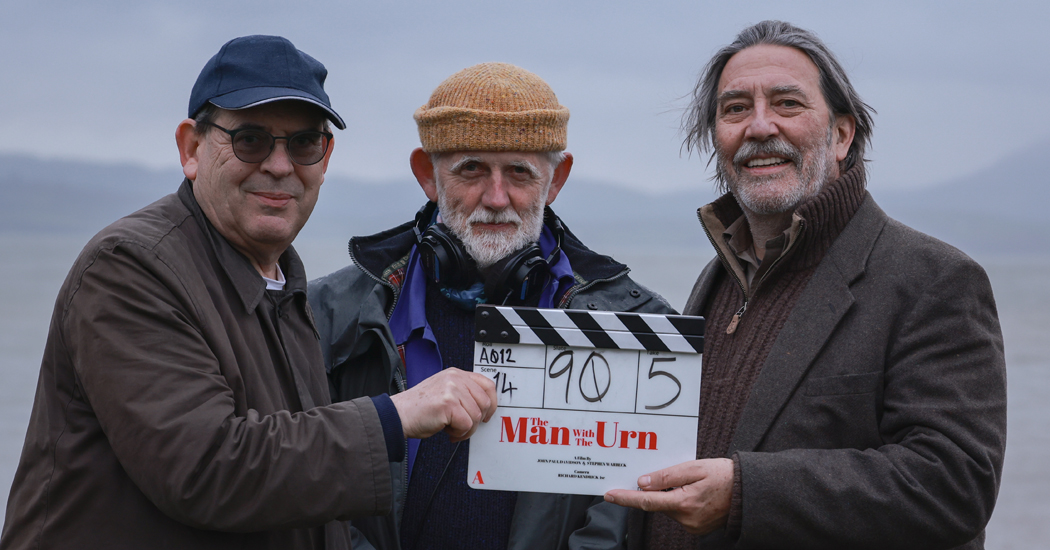
Pictured: Directors John-Paul Davidson, Stephen Warbeck and Oscar-nominated actor Ciarán Hinds
The cast and filmmakers of the new comedy The Three Urns have hailed the generous Donegal people and our stunning scenery after shooting in more than 40 locations last spring.
Lead actor Ciarán Hinds says he felt the welcome in every corner.
The cast and crew’s base in Ramelton, he said, was a delight.
“We were very welcome there,” says Hinds.
“Sometimes you have a little trepidation about disturbing the people who live [at a location] but they were quite delighted I think. Not quite the circus coming to town but something that hasn’t happened in that area before.”
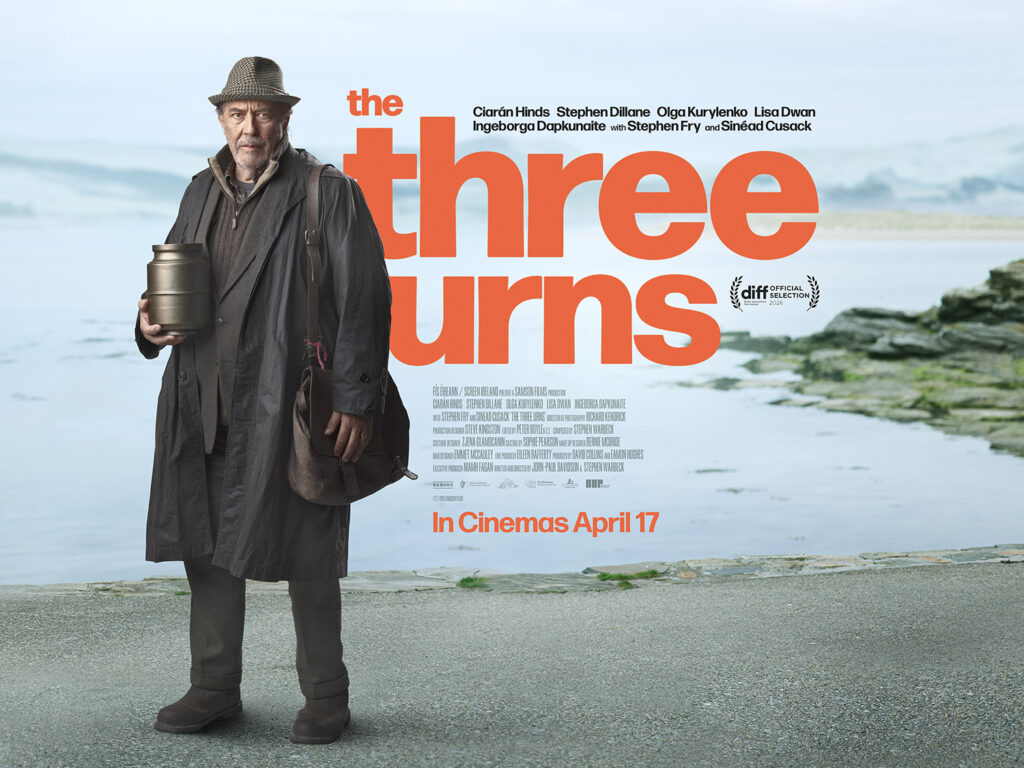
The road-trip film, which stars Hinds alongside Olga Kurylenko and Stephen Dillane, with Stephen Fry also featuring, arrives in cinemas on 17th April and uses Donegal as both a backdrop and an emotional landscape.
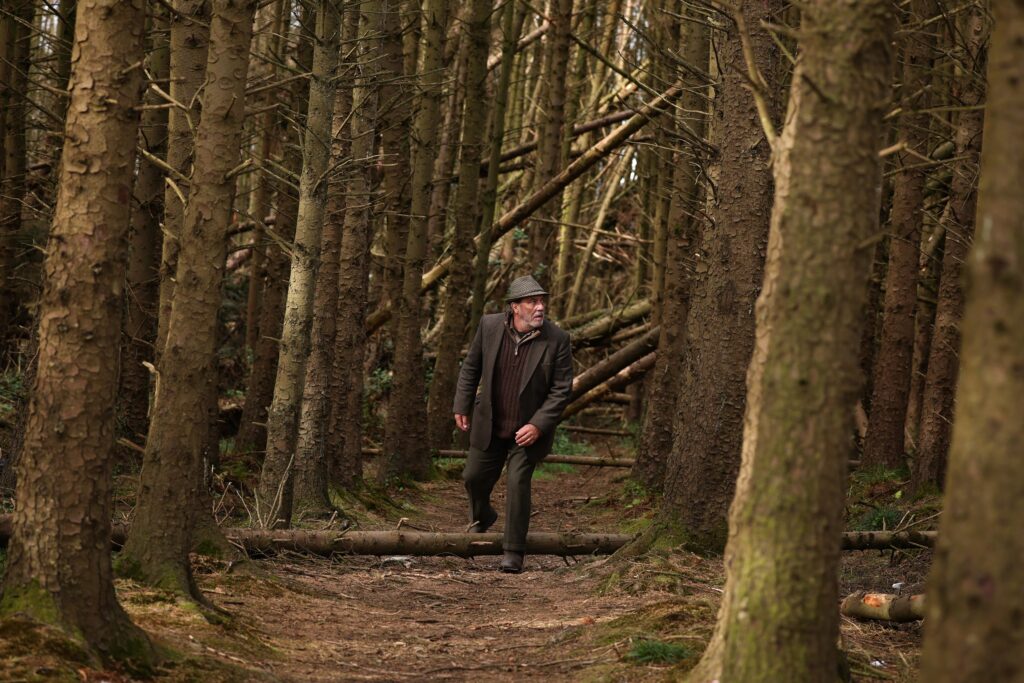
The Three Urns follows Mr O’Connor, played by Hinds, as he returns to the country of his birth to scatter the ashes of his beloved wife. Along the way, a series of encounters gradually rekindles his love of life.
Writer-directors John-Paul Davidson and Stephen Warbeck told Donegal Daily that they always knew the story belonged on Ireland’s west coast, but it was Donegal that finally captured their imagination.
“We had looked at places from Connemara through to Donegal and we fell in love with the wildness, beauty and sense of isolation that Donegal has.”
Once that choice was made, the county began to shape the film in deeper ways.
“The landscapes play a very important role not only because it is a physical journey but also they become a metaphor for what Mr O’Connor is experiencing.
“He is charged by his dead wife to visit places that meant so much to them both.
“So the film becomes a pilgrimage, an act of remembrance, and in the process he meets all these new people in strange and beautiful circumstances that Donegal has in droves. The locations that we found became crucial parts of the script which we adjusted as we found them.”
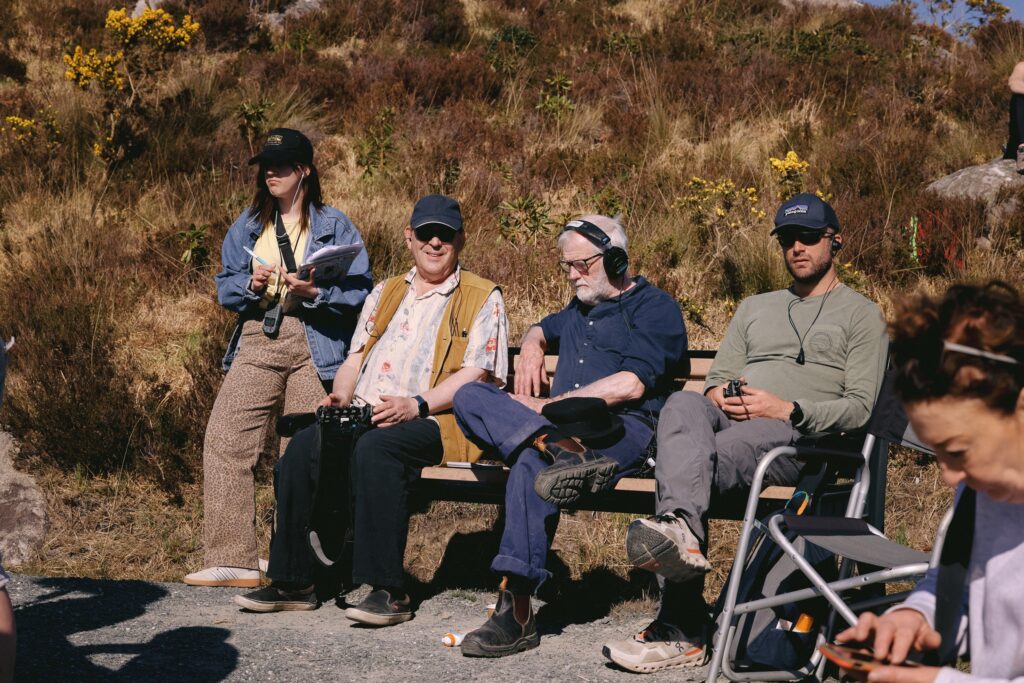
Behind the scenes of The Three Urns in Donegal in 2025.
With assistance from the Donegal Film Office, the production took place in Ramelton, Raphoe, Dunfanaghy and Buncrana over four weeks.
Some of Donegal’s most striking landmarks also feature prominently, including Glenveagh Castle, Beltany and Grianán of Aileach.
Davidson and Warbeck were so captured by the ancient Beltany Stones in Raphoe that they wrote them into the script as a pivotal moment in the journey.
An Grianán of Aileach was another spectacular location and Doe Castle also became central to one strand of the story.
“We found the perfect denouement to The Priest’s story at Doe Castle. It has the most beautiful setting and its dilapidation which we made more eccentric with our set dressing reflected the two priests’ inner states,” they said.
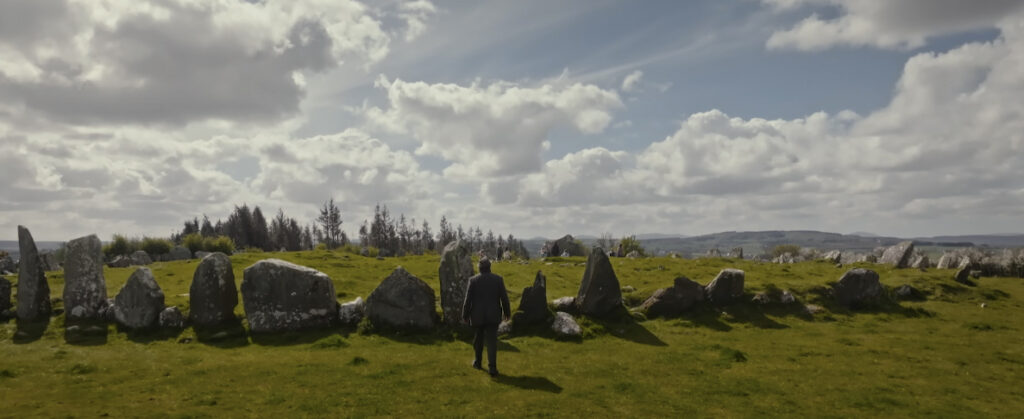
Beltany Stone Circle in ‘The Three Urns’
The film also carries a deeply personal resonance for Davidson.
The place where Mr O’Connor ultimately scatters his wife’s ashes is the same place where Davidson scattered the ashes of both his parents.
“From my point of view, there is a sense of reconnection. My dad died 40 years ago and this film is a homecoming,” he said.
Donegal’s atmosphere also helped define the film’s tone: open-hearted, reflective and gently humorous.
“The idea of hospitality, acceptance of strangers into one’s home, is at the heart of the film,” said Davidson.
“My mother came to Ireland as a refugee from Nazi Germany and was overwhelmed by the generosity and kindness of the Irish. My father, whom she met in Belfast, holidayed in Donegal in the 1930’s when he was a young man and he recounted how much he enjoyed the humour and storytelling in Donegal. We wanted to capture that feeling.”
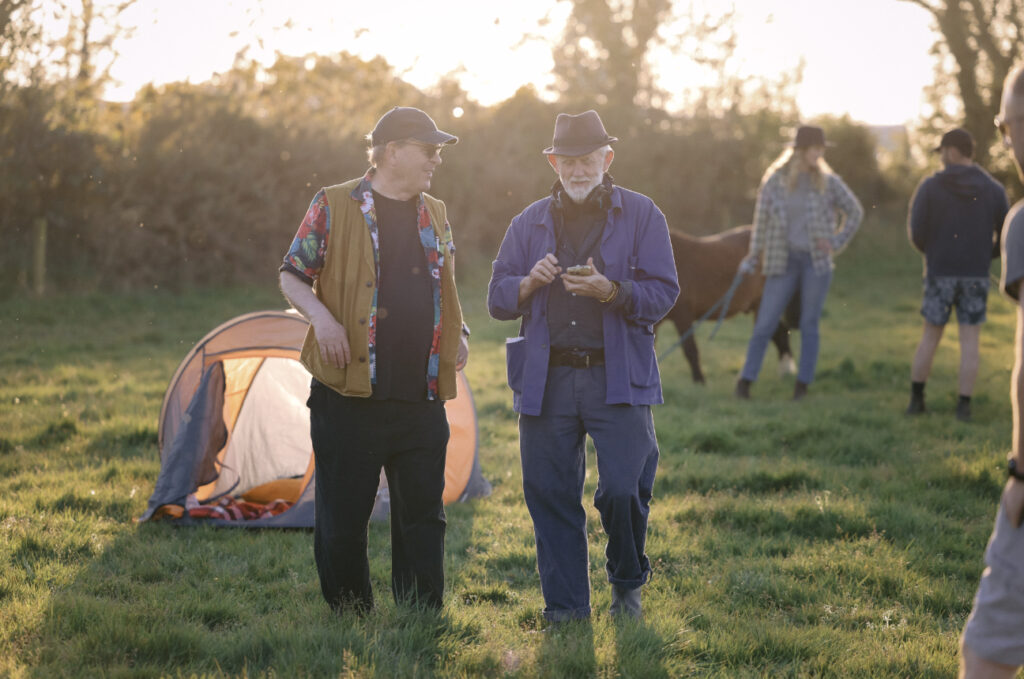
Directors and writers John-Paul Davidson (The Man in the Hat, Seve: The Movie) and Stephen Warbeck (The Man in The Hat, Shakespeare in
Love, Billy Elliot)
The Three Urns
Director of photography Richard Kendrick is keen to praise the range that Donegal gave the production.
“Donegal gave us a great scope for different locations, both exterior and interior,” he says. “It is always a case of managing the exteriors as the weather can be very changeable. In general we were very lucky with the weather which helped.”
For Davidson and Warbeck, even the weather played its part in reinforcing the mood of the story.
“The weather which was gorgeous throughout our shoot and the flowering gorse imbued Donegal and our film with a warmth and spring sense of rebirth which was entirely in keeping with the mood of the film,” they said.
Actor Lalor Roddy, who plays a priest, was equally delighted to see the county captured on screen, saying he was “happy to see Donegal shining bright and being recorded for prosperity in this beautiful movie, looking glorious”, although on the one day that fine weather was called for he admits “it lashed.”
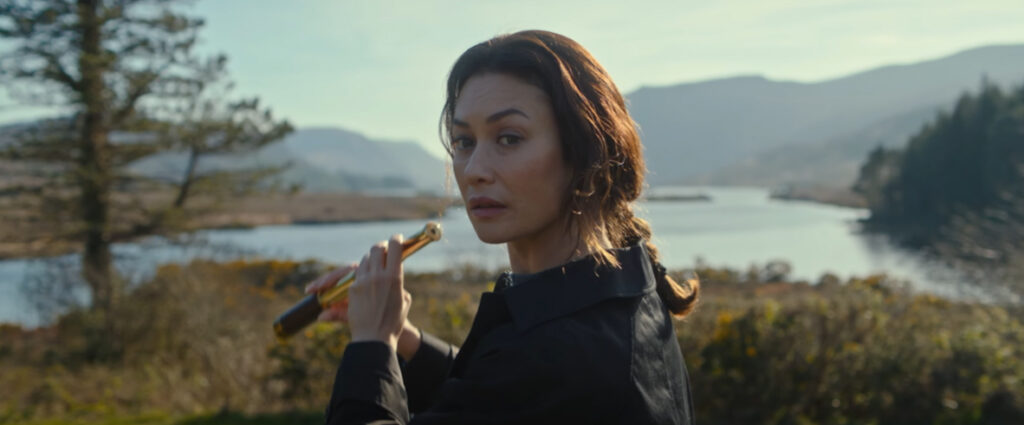
Olga Kurylenko at Glenveagh National Park in ‘The Three Urns’
Ukrainian-French actress Olga Kurylenko (Quantum of Solace) left with warm compliments about the county.
“The landscapes were mesmerising. I was also astonished with people’s kindness. I don’t lie so I wouldn’t even mention this if it wasn’t true, but truly, the kindness of people around and on set was one that I rarely see and experience. I’m very grateful to have worked in such wonderful conditions.”
For local audiences, Davidson and Warbeck hope they will take pride in seeing the county on screen.
“They will certainly be struck by the beauty of the county, and they might even spot some truly outstanding places they maybe don’t already know.”
And for international viewers, they hope Donegal will leave a lasting impression for both its scenery and spirit.
“We hope they take away a sense of the wild beauty of the north west of Ireland and we very much hope that the film gives them a glimpse of the warmth of the people and the music.”
The Three Urns is released nationwide on April 17th, including Century Letterkenny and Eclipse Cinemas Bundoran and Lifford.
Inside ‘The Three Urns’ – Stars and filmmakers heap praise on Donegal was last modified: March 25th, 2026 by Rachel McLaughlin
Tags: