
Main PointsIran has rejected a 15-point US proposal for ending the war in the Middle East. Iran imposed five conditions of its own, including a conclusion of the war on all fronts, payment of war damages and sovereignty over the Strait of Hormuz.Irish consumers face months of rising prices as the conflict squeezes oil supplies and fuels inflation, ESRI and Central Bank warn.Key Reads
Sarah Burns – 2 minutes ago
The conflict is causing a rise in tourist cancellations and a dive in new bookings in Cyprus and to a lesser extent other countries whose economies rely heavily on summer visitors.
Daily cancellation rates for short-term rentals in Cyprus shot up from around 15 per cent before the conflict to as high as 100 per cent in the days after, according to data from US-based AirDNA, which tracks such bookings.
That figure has since dropped, but remained around 45 per cent by March 21st. Greece and Turkey saw slight rises in cancellation rates too.
Cyprus’ Hoteliers Association has seen a near 40 per cent drop in March bookings and a similar reduction in April, the association’s director general Christos Angelides said.
Sarah Burns – 16 minutes ago
US president Donald Trump has also posted on Truth Social to again criticise Nato countries and say the US does not need its help with the war in Iran.
“NATO NATIONS HAVE DONE ABSOLUTELY NOTHING TO HELP WITH THE LUNATIC NATION, NOW MILITARILY DECIMATED, OF IRAN,” he said.
“THE U.S.A. NEEDS NOTHING FROM NATO, BUT ‘NEVER FORGET’ THIS VERY IMPORTANT POINT IN TIME!”
Sarah Burns – 43 minutes ago
Israel says it has killed the commander of Iran’s Islamic Revolutionary Guards Corps (IRGC)’s Navy, Alireza Tangsiri.
Defence Minister Israel Katz said Tangsiri was “directly responsible for the terrorist act of bombing and blocking the Strait of Hormuz”, and has been “blown up”.
According to a statement from Katz’s office, Tangsiri was killed in a “precise and deadly” attack and a number of other “senior Navy command officials” have also been killed.
Iran has not yet commented.
Sarah Burns – 48 minutes ago
US president Donald Trump has said Iranian negotiators were “begging” for a deal despite what he described as having been “militarily obliterated,” rejecting Tehran’s public stance that it is only reviewing Washington’s proposal.
“The Iranian negotiators are very different and “strange”,” he said in a Truth Social post on Thursday.
“They are “begging” us to make a deal, which they should be doing since they have been militarily obliterated, with zero chance of a comeback, and yet they publicly state that they are only “looking at our proposal.” WRONG!!! They better get serious soon, before it is too late, because once that happens, there is NO TURNING BACK, and it won’t be pretty!”
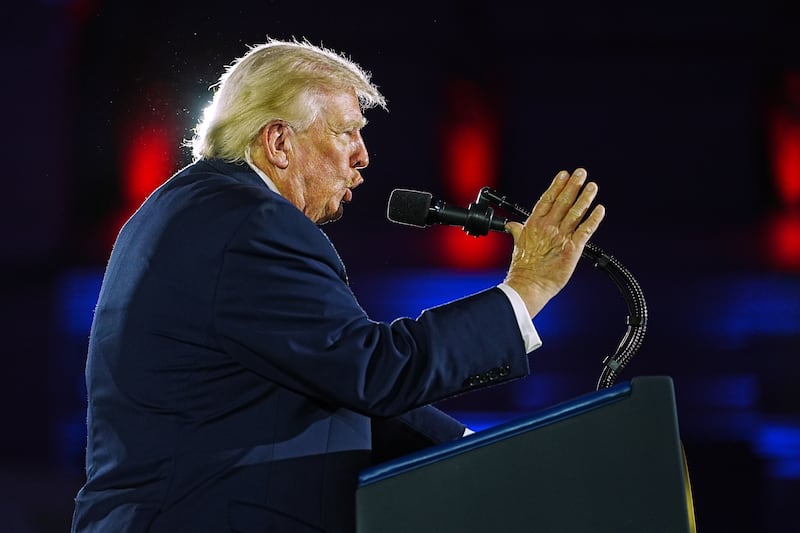 US resident Donald Trump said Iranian negotiators were “begging” for a deal. Photograph: Julia Demaree Nikhinson/AP Footage from the scene captures the aftermath of an Israeli airstrike on the Ras al Ain neighbourhood in the Lebanese city of Baalbek. Video: Sally Hayden
Cyprus will cut VAT on electricity bills, reduce fuel taxes and subsidise tourism industry salaries amid a fear of cost increases due to the Iran conflict, its president Nikos Christodoulides has said.
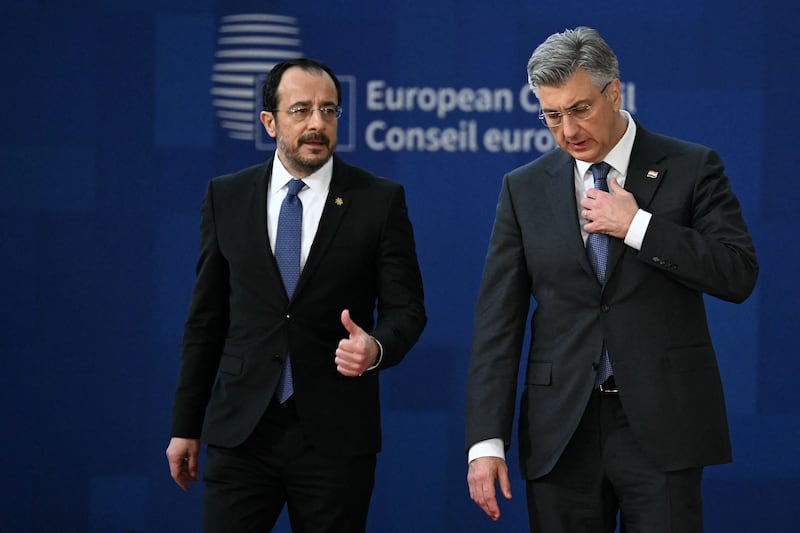 Cyprus’ president Nikos Christodoulides (left) and Croatia’s prime minister Andrej Plenkovic at an EU Summit in Brussels this month. Photograph: Nicolas Tucat/AFP via Getty Images
Sarah Burns – 2 hours ago
Eurozone banks have limited direct exposure to the war in the Middle East, but the conflict could still generate systemic stress given interconnected vulnerabilities, European Central Bank vice president Luis de Guindos said on Thursday.
Financial markets have come under stress in recent weeks from the impact of the US and Israeli war on Iran, but the selloff outside the Middle East has been limited, even as some assets remain overvalued.
“Spillovers to the euro area financial sector have so far remained contained,” de Guindos said in a speech.
“Direct bank exposures to the region are limited, and the banking system is well positioned with strong profitability and robust capital and liquidity buffers.”
De Guindos argued that even market infrastructure operators, like central counterparties whose services include energy markets, have managed margin requirements effectively, despite the volatility.
Still, there was a broader risk, given interconnections in the financial system, said de Guindos, whose roles at the ECB include monitoring financial stability.
“Amid already elevated global uncertainty, this conflict could trigger the unravelling of interconnected vulnerabilities and cause systemic stress,” he said.
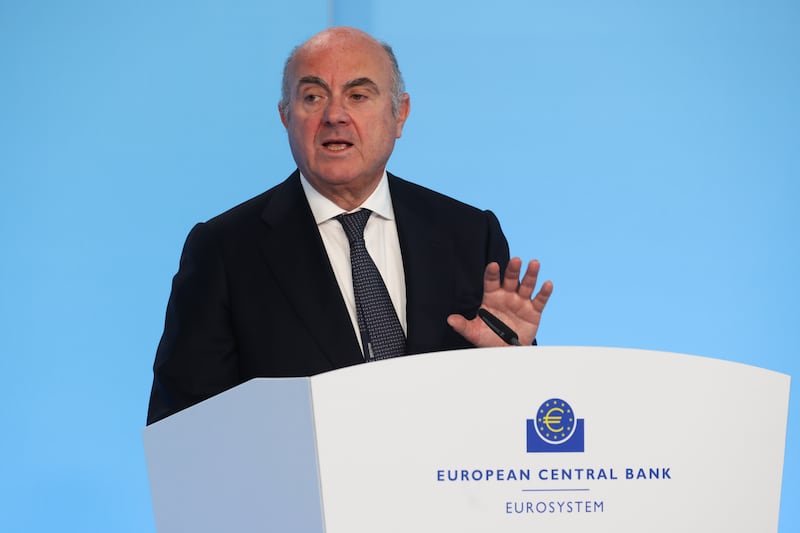 Luis de Guindos, vice president of the European Central Bank (ECB), at a news conference in Frankfurt this month. Photograph: Alex Kraus/Bloomberg
Sarah Burns – 3 hours ago
US president Donald Trump and Chinese leader Xi Jinping will hold their highly anticipated summit in Beijing between May 14th and 15th, following a delay that brought fresh uncertainty to relations between the world’s largest economies.
White House press secretary Karoline Leavitt announced the rescheduled dates on Wednesday and said Xi would visit Washington at a date later this year.
Trump was due to visit China later this month but the US president postponed the meeting to remain in Washington and focus his attention on the war with Iran. The war brought fresh strains to US-China ties, even as the two economies sought to navigate lingering issues from a trade detente struck last year and simmering tensions over Taiwan. Iran is a major trading partner for China, the world’s biggest crude importer.
Leavitt said the administration has “always estimated approximately four-to-six weeks” for the conflict when asked if the new dates indicated Trump would look to wind down the war by that point. She sidestepped a question about whether concluding the war was a precondition for rescheduling the summit.
“There was a discussion about the rescheduling of the meeting between the president and president Xi. President Xi understood that it’s very important for the president to be here throughout these combat operations right now. He understood, obviously, the request to postpone and accepted it, which is why we have new dates on the books,” Leavitt said.
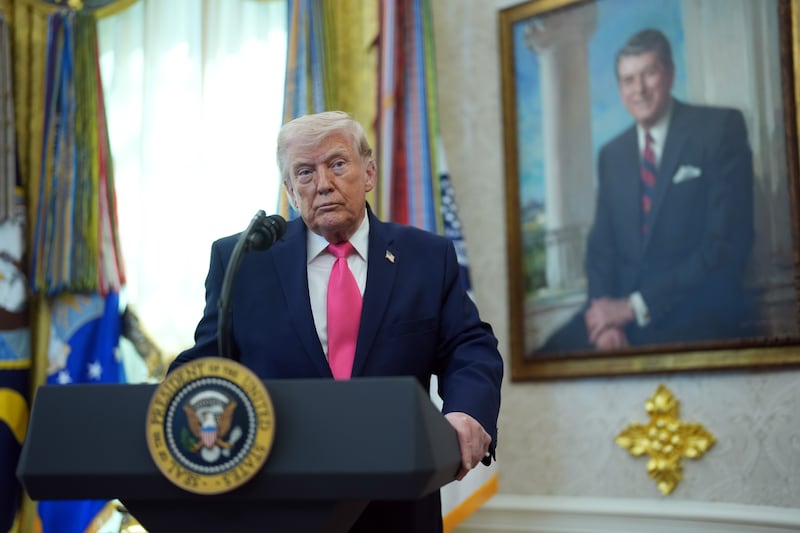 US president Donald Trump speaks at the swearing-in ceremony for secretary of homeland security Markwayne Mullin in the Oval Office at the White House in Washington this week. Photograph: Doug Mills/The New York Times
Sarah Burns – 3 hours ago
Iran has rejected a 15-point US proposal for ending the war in the Middle East. In doing so, it imposed five conditions of its own, including a conclusion of the war on all fronts, payment of war damages and sovereignty over the Strait of Hormuz.
An Iranian security official said Tehran is determined to continue defending itself and will deliver “severe blows” until its demands are met. He said the conditions presented by Washington are “excessive and detached” from what he described as the US failure on the battlefield.
Iran’s response came after reports Washington had transferred to Iran, via Pakistan, a plan to end the fighting.
Three Israeli cabinet sources said Israeli prime minister Binyamin Netanyahu’s security cabinet had been briefed on the US proposal. They said its terms included removing Iran’s stocks of highly enriched uranium, halting enrichment, curbing its ballistic missile programme and ending funding for regional allies.
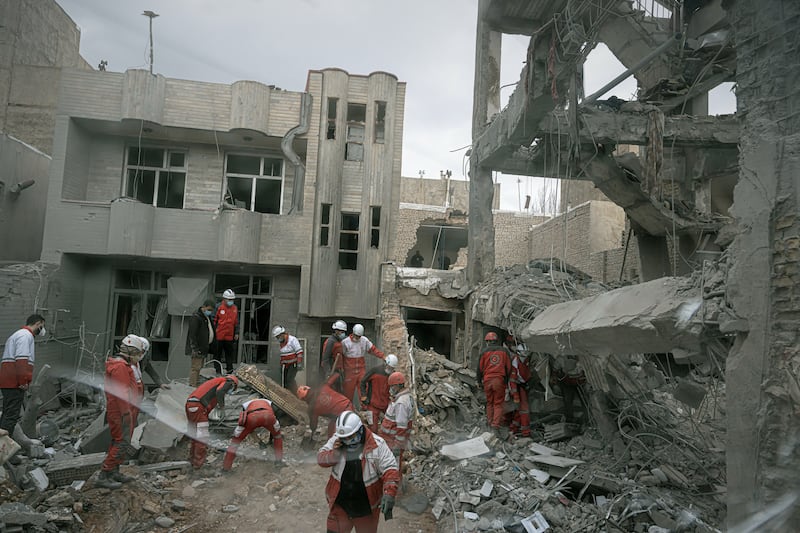 Rescue workers at a residential building hit in an overnight strike in Tabriz, Iran. Photograph: Matin Hashemi/AP
Sarah Burns – 3 hours ago
Iran and the United States hardened their positions as diplomacy aimed at reaching a ceasefire in the war in the Middle East appeared to be faltering on Thursday.
Tehran moved to formalise its control over the crucial Strait of Hormuz while Washington prepared for the arrival of US combat forces in the region that could be used on the ground in the Islamic Republic.
Iran is instituting a “de facto ‘toll booth’ regime”, industry experts say, with some ships paying in Chinese yuan to pass through the strait, where 20 per cent of all traded oil and natural gas is transported in peacetime.
Meanwhile, a strike group anchored by the amphibious assault ship USS Tripoli drew closer to the Middle East with some 2,500 Marines.
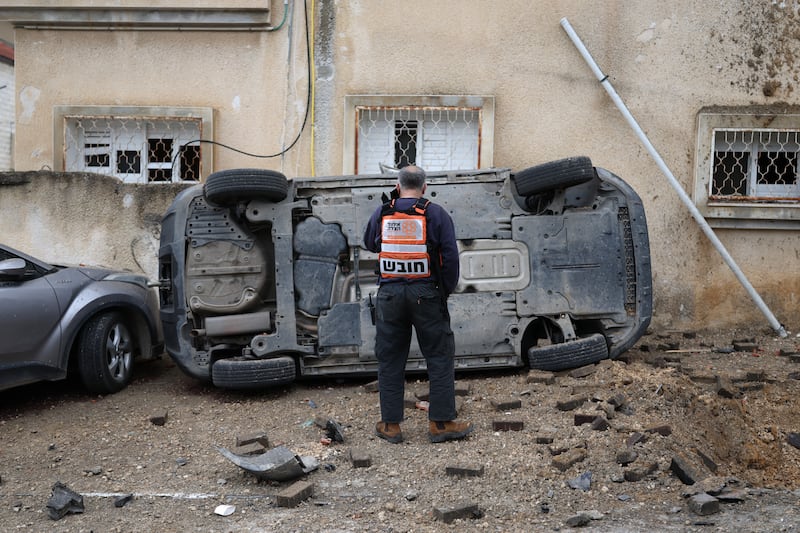 A man surveys the damage to a car following a projectile strike in the Arab-Israeli city of Kfar Qassem on Thursday. Photograph: Ilia Yefimovich/AFP via Getty Images
 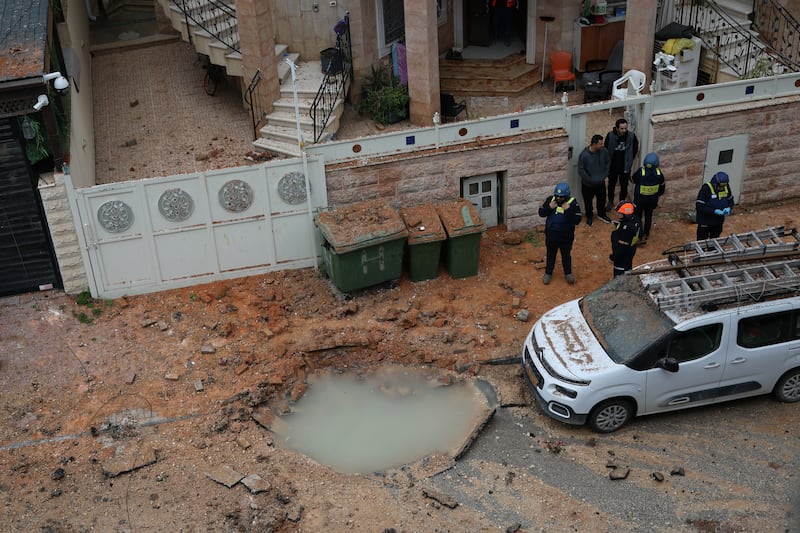 Israeli rescuers and security personnel survey the site struck by a projectile in the Arab-Israeli city of Kfar Qassem on Thursday. Photograph: Ilia Yefimovich/AFP via Getty Images
Sarah Burns – 3 hours ago
The outlook in the Gulf looks deeply uncertain, with the US suggesting it is seeking a peace deal with Iran, while at the same time moving thousands of troops and equipment to the region.
“The president’s preference is always peace. There does not need to be any more death and destruction,” White House press secretary Karoline Leavitt told a press conference on Wednesday night.
“But if Iran fails to accept the reality of the current moment, if they fail to understand that they have been defeated militarily and will continue to be, president Trump will ensure they are hit harder than they have ever been hit before.”
Her comments came after Iran apparently rejected the US proposals for ending the war, responding with five conditions of its own, including a conclusion of the war on all fronts, payment of war damages and sovereignty over the Strait of Hormuz.
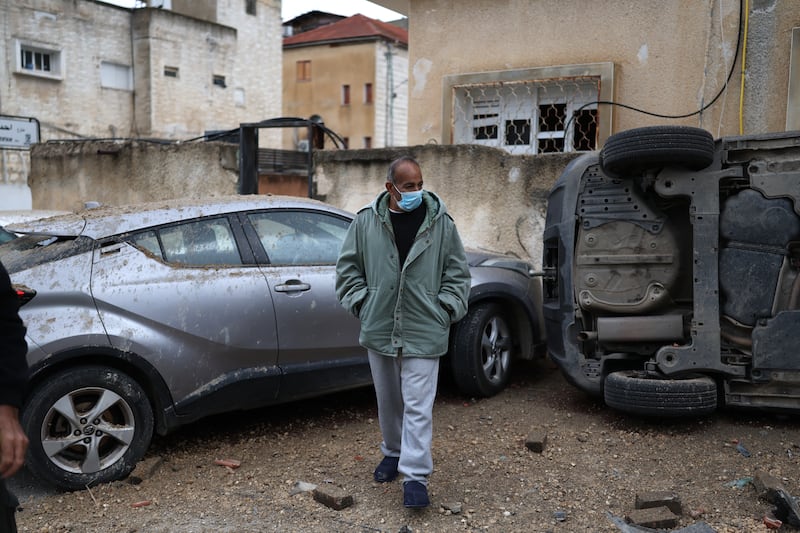 A man surveys the damage at the site struck by a projectile in the Arab-Israeli city of Kfar Qassem on Thursday. Photograph: Ilia Yefimovich/AFP via Getty Images Rescue workers at a residential building hit in an overnight strike in Tabriz, Iran. Photograph: Matin Hashemi/AP
 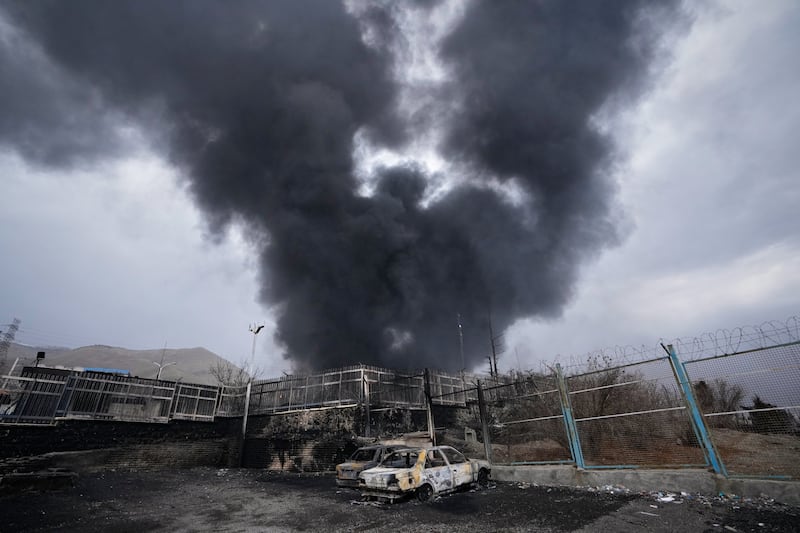 A thick plume of smoke rises from an oil storage facility hit by a US-Israeli strike in Tehran. Photograph: Vahid Salemi/AP
Sarah Burns – 3 hours ago
Consumers are facing months of rising prices as the conflict in the Gulf squeezes oil supplies and fuels inflation, two heavyweight forecasters have warned.
The Economic and Social Research Institute (ESRI), an independent think tank, and the Central Bank both issued sharp warnings of inflationary pressures across the economy as higher oil prices begin to bite.
Their warnings come as Iran poured scorn on US claims that it was considering peace proposals, though Tehran stopped short of rejecting efforts out of hand. In Washington, the White House said that president Donald Trump favoured a peace deal but was also willing to “unleash hell” against Iran.