
By Jonathan Magee
A SUDDEN rise of up to 60 per cent in agricultural green diesel, from approximately 90 to 150 cent per litre over the last three weeks, has placed farmers and contractors in a position of uncertainty.
According to one leading agricultural contractor, farmers are struggling to cope with the sudden rise in prices.
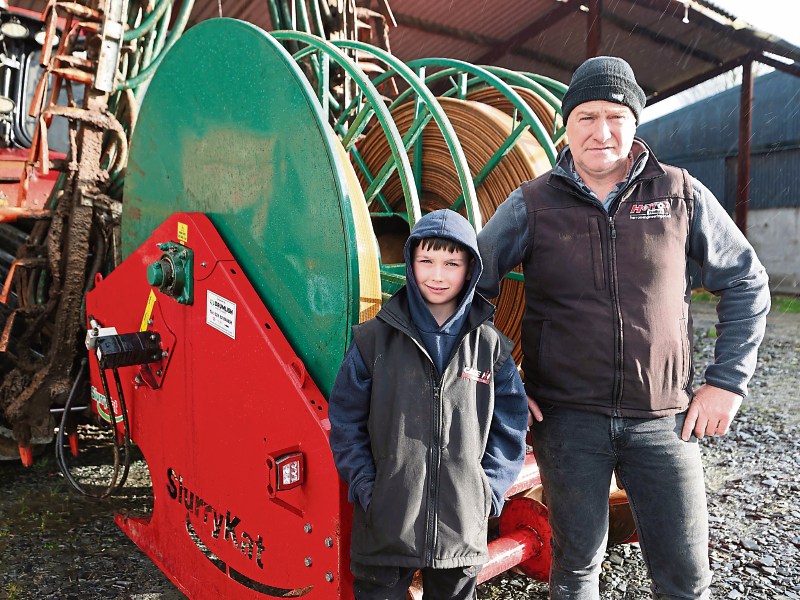
Trevor Wylie, from the well-known farming and agri-contracting business, Wylie Bros Agri, in Drumany, Letterkenny, is concerned about what might lie ahead for farmers.
“Unless fuel prices reduce very rapidly there’s only so much extra cost that farmers can absorb for getting their slurry out now and their silage in from May onwards, when the real work begins,” he said.
“I’m hoping it will come back, but I don’t know if it is going to come back in time.
“Oil price affects everything including the price of plastic.
“You can pass on so much to the farmer but the farmer can’t take anymore. They haven’t the money to afford any higher prices, and we can’t work for nothing either. We’re between the devil and the deep blue sea.”
Meanwhile farm produce prices are steady in some areas but have slipped in finished beef and milk. Input costs have risen sharply in the last three weeks, with price hikes in green diesel and fertiliser.
This is in stark contrast to the year-long optimism in 2025 when farm produce was at an all-time high across the board and weather conditions were favourable.
This year, beef finishers are down €300 a head in some cases. Their problems are compounded by the record purchase prices paid for cattle last year, along with rising input costs. It remains to be seen how this will affect the trade for finishing cattle later in the year.
Farmers who bought weanlings for grass also paid record prices throughout 2025 and may be squeezed if factory prices for heavy cattle slide much further.

Ann Harkin has served Raphoe mart for the last 38 years.
Ann Harkin, longstanding manager of Raphoe Mart, said finished cattle are back about €1.30 a kilo, but the trade for calves and young cattle remains very strong.
She said she believes finished cattle will level out at €6.50 a kilo deadweight and that “finishers can only pay what factories are prepared to pay them.”
Milk prices were strong for most of last year, hovering around 50 cent a litre. That has changed and dairy farms are under pressure in 2026. Today, the base price is back to 33–41 cent a litre, depending on the processor.
On many dairy farms, the cost of production is above 37 cent a litre, placing intense pressure on profits. Dairy calf sales are helping but not bridging the milk price losses.
Trevor Wylie said there is frustration in the farming community. “Dear oil gets here very quickly, the cheaper oil when it comes down in price, it seems like it takes a long time to come here”.
Agricultural consultant Eoin Gallagher said green diesel prices rose from around 90–150 cent a litre in the space of a few weeks, more than 50 per cent, while the pause on the government green diesel levy will only reduce prices by 5 cent a litre.
“We need better government intervention from now until early summer when farmers are going to experience their biggest contracting costs over the next three months. The government needs to be proactive to lower levies and burdens as much as they can,” he said.
Fertiliser prices surged within a week of the conflict in Iran, with protected urea jumping nearly 40 per cent.
Trevor Wylie said: “Farmers believe the fertiliser required for the 2026 season is already in stock in manufacturers’ depots in Ireland for several months, but the fertiliser manufacturers’ gates are locked until they see where the price ends up.”
There are growing fears that the Government is not moving quickly enough to alleviate the effects of a potential summer crisis for farmers and contractors.
Contractors are expected to come under intense pressure from May to September, with cash-flow issues likely if the oil crisis is prolonged and farm debt continues to rise.
Persistent wet weather late last year and into the early months of 2026 has left slurry tanks nearing capacity on many farms. Ground conditions remain poor for this time of year, severely limiting opportunities to get onto land except in drier areas.
Despite the pressure on storage, slurry is now being viewed as a valuable on-farm resource, as farmers look to offset rising fertiliser costs and uncertainty around supply.
Those who purchased fertiliser towards the end of last year are in a stronger position, having secured supplies at more favourable prices.
With limited opportunities to spread slurry and fertiliser, and input costs continuing to climb, many farmers and contractors are facing into a difficult and uncertain spring.