
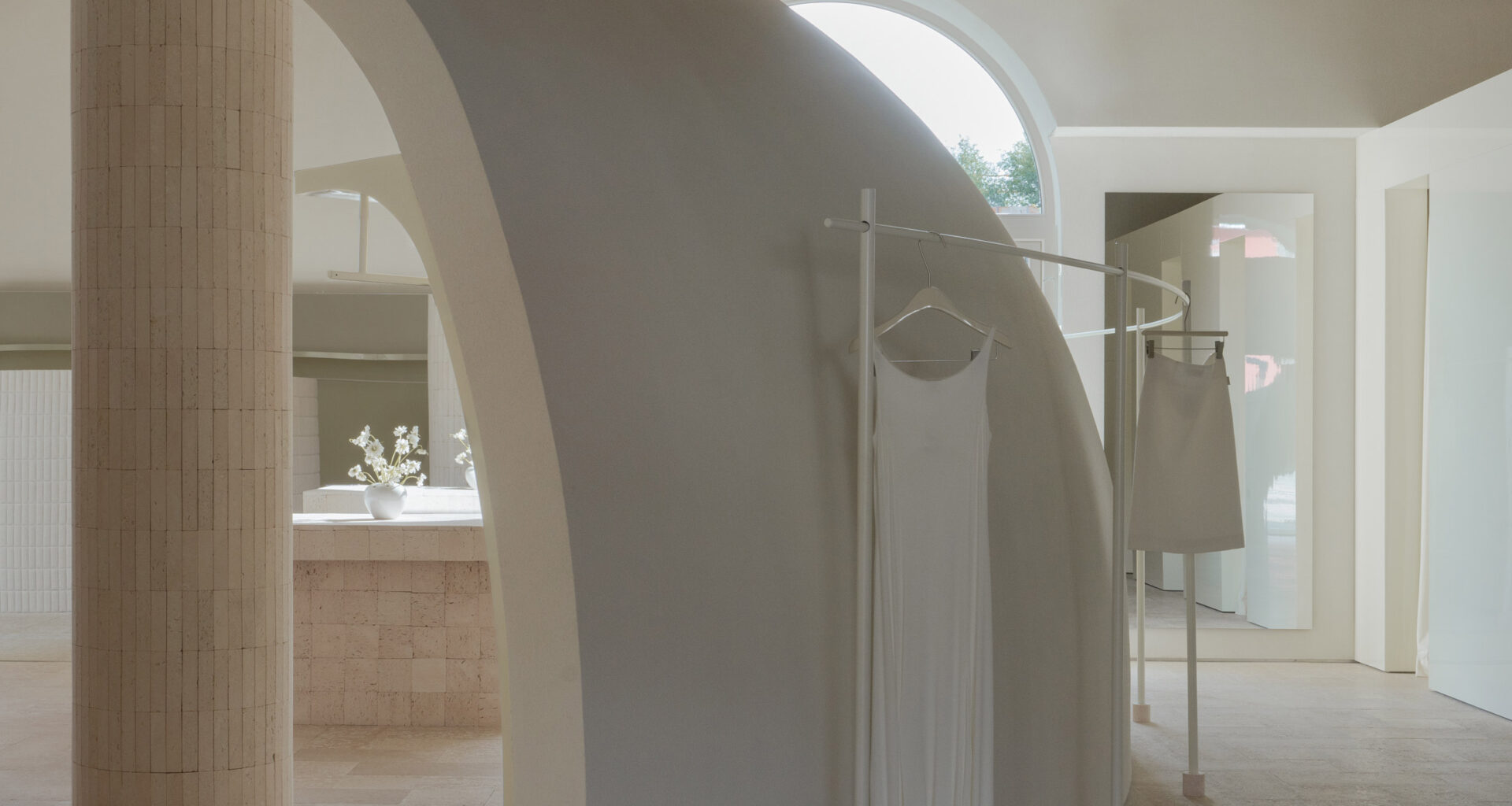
Design studio Up2date Architects has revealed the minimalist Messa House store in Almaty, Kazakhstan, which reimagines the form of a Kazakh yurt.
Commissioned for womenswear brand Messa, the 350-square-metre store was designed with breakout areas and an on-site cafe to encourage “a quieter alternative to typical fast-paced retail environments”.
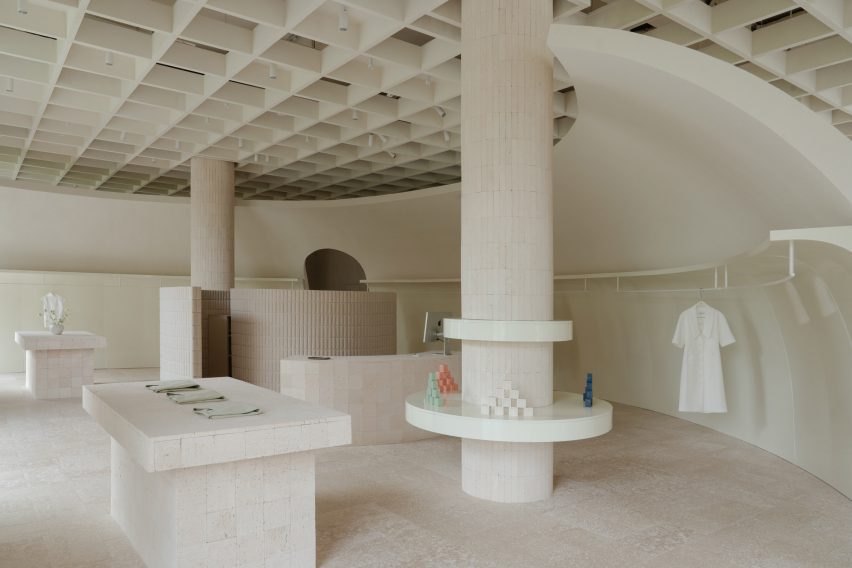 The interior was designed for boutique womenswear brand Messa
A truncated domed partition, which evokes the rounded architecture of a yurt, was added to separate the main shop floor from the surrounding cafe, lounge and fitting rooms.
The studio sought to maintain architectural continuity and flow throughout the interior by connecting sections through curved archways and using circular forms for seating areas, display stands and supporting columns.
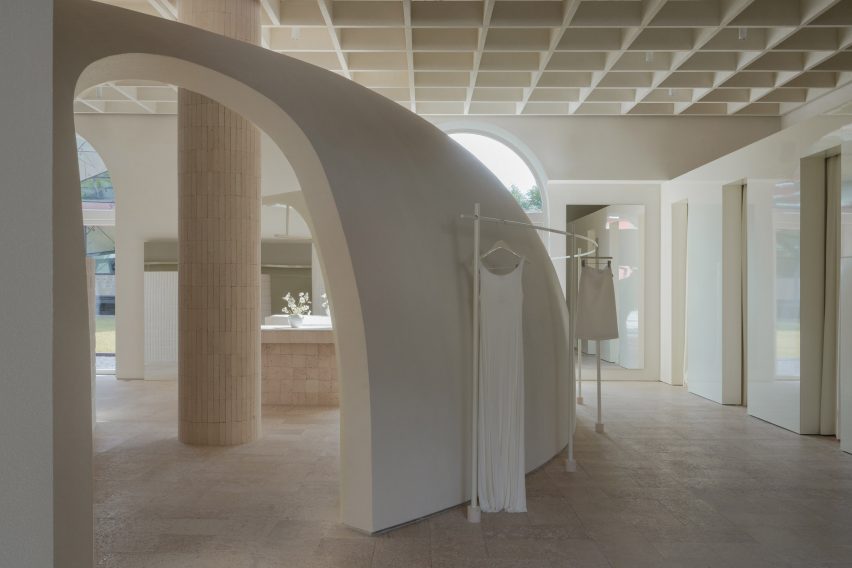 The studio included a truncated domed partition to reimagine a traditional Kazakh yurt
Citing Soviet constructivism as a key influence, the studio aimed to prioritise functional design and simplistic forms over excessive decoration.
“The project grows out of a thoughtful dialogue with architectural heritage and local traditions. It is guided by clear working principles: utility, functional clarity and structural logic,” Up2date Architects founder Akhat Baimenov told Dezeen.
“This rational framework is then softened by a more emotional reference to the traditional Kazakh yurt.”
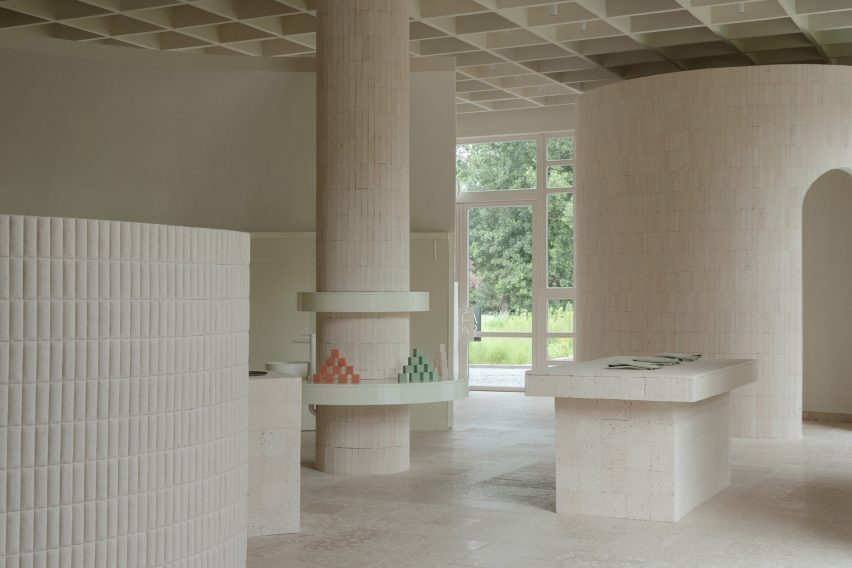 The designers chose a pared-back colour palette to highlight the space’s interior architecture
Opting for a restrained material and colour palette, the designers combined locally sourced travertine with shell limestone to create a stripped back, neutral interior.
Limestone tiles were used in various patterns throughout the project to add texture to the space, cladding the walls, columns and bespoke furnishings, including tables, sofas, shelving and display units.
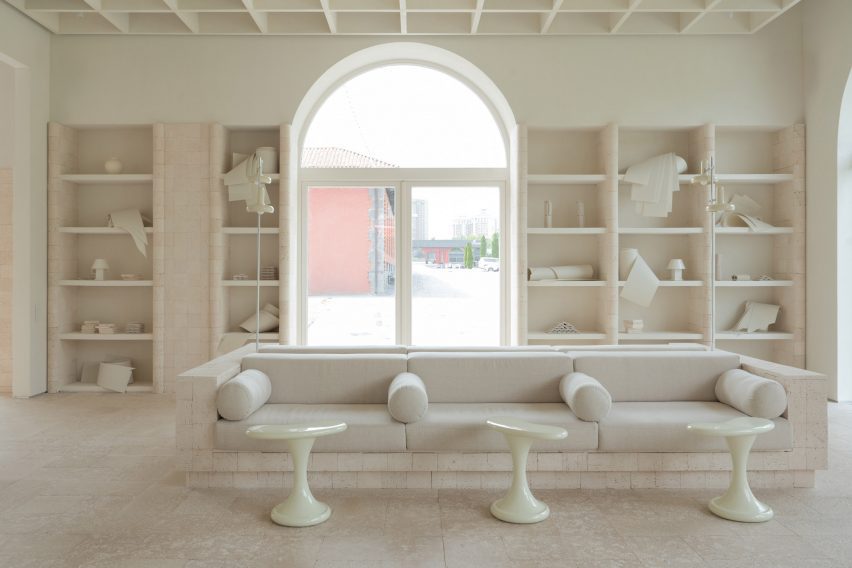 Travertine and limestone were the primary materials used throughout the design
“We deliberately chose a calm colour palette to highlight our interior architecture,” explained Baimenov.
“Playing with colour is not what this project is about. We wanted to ensure that guests would not be distracted by anything superfluous and that there would be no bright accents.”
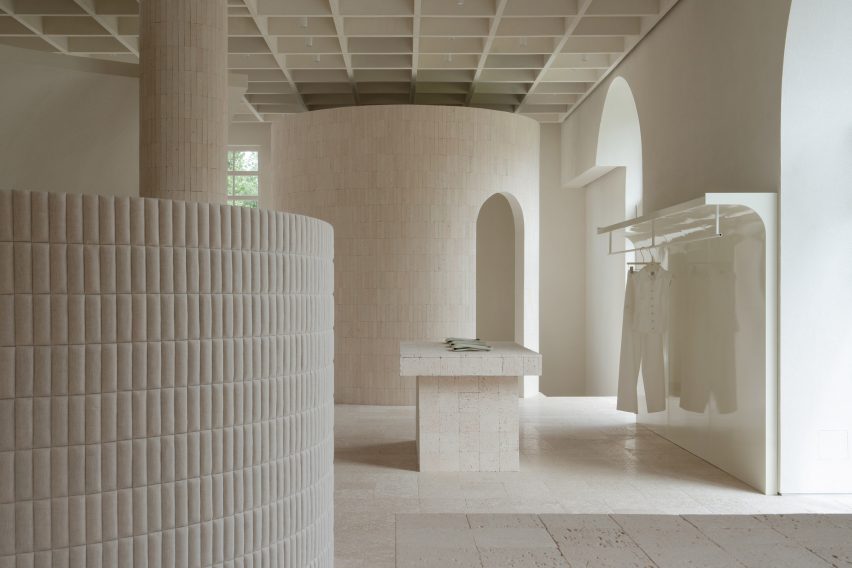 The studio championed a functional minimalist design over decoration and excessive branding
With sustainability in mind, the studio sourced its materials locally where possible, including eight tonnes of hand-cut limestone from Kazakhstan’s Mangystau region. Custom items made for the project were then crafted by local furniture brand TAKT.
“These materials are quarried in Central Asia and emphasise the core idea of our space: a local brand working with local materials,” Baimenov explained.
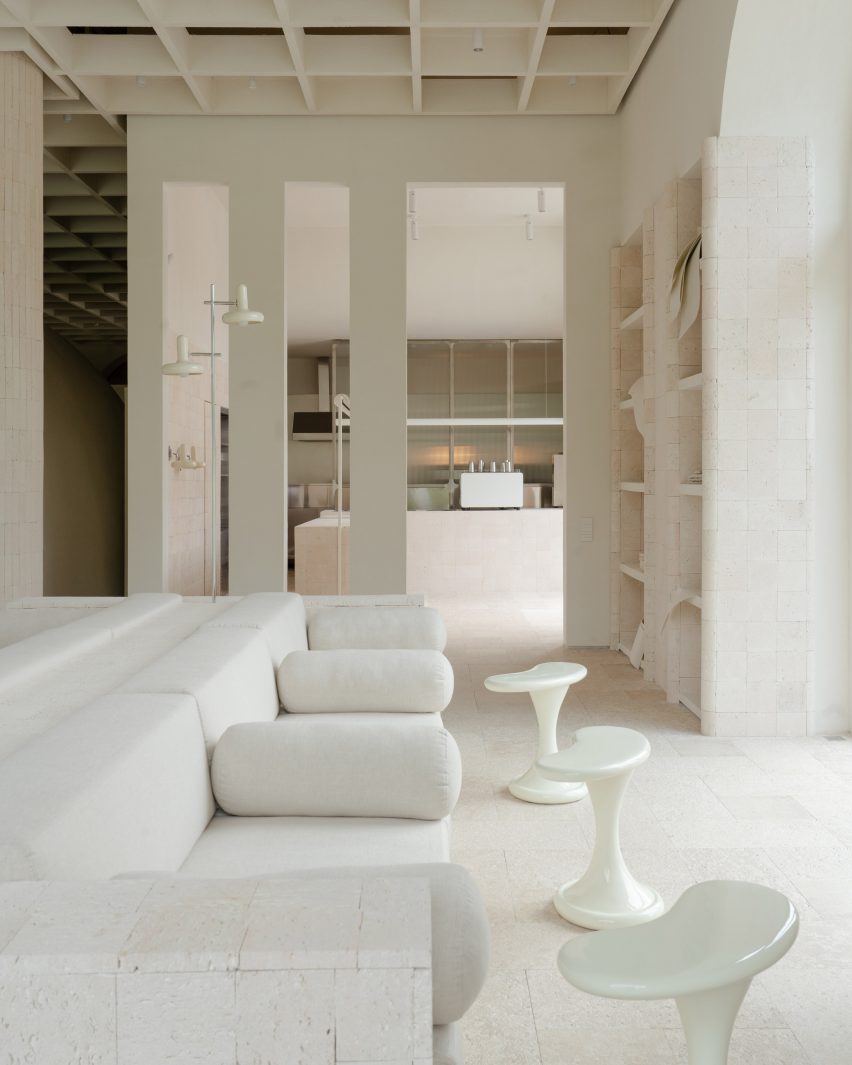 The design incorporated breakout areas and an on-site cafe
A spacious lounge area with boxy sofas and free-form side tables was created alongside the cafe service area, connected by a series of open geometric doorways.
Playing with form, the designers also incorporated an open-grid ceiling structure to mirror the square-tiled floor, while creating contrast with the curved architectural framework.
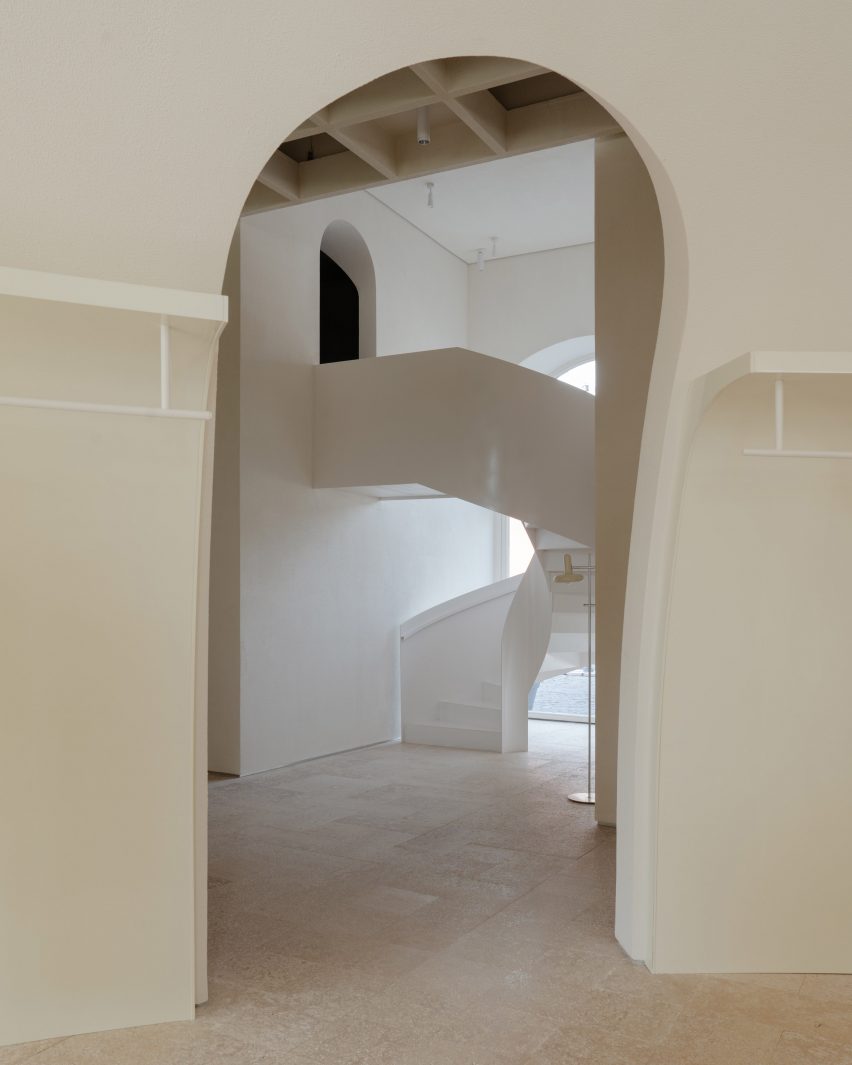 A spiral staircase leads up to a separate room for VIP customers
Gloss-finished fitting rooms were positioned at the rear end of the interior, along with a spiral staircase leading to a secluded area intended for VIP guests.
Other projects recently completed in Almaty include a cafe renovation by AT Interiors and Asif Khan’s transformation of a Soviet-era cinema into the Tselinny Center of Contemporary Culture.