
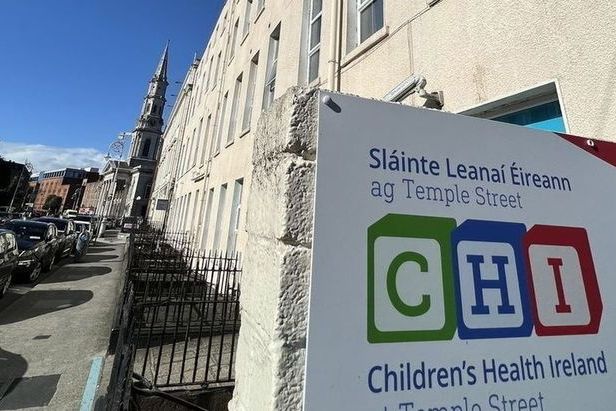
Lucy Nugent, CHI chief executive, confirmed that the company Aramark donated the money which came to light after an audit by the Comptroller and Auditor General.
The Public Accounts Committee heard last week that CHI, which oversees the three children’s hospitals in Dublin, accepted €30,000 from a concession holder – a donor who was previously awarded a contract – for a staff Christmas party in 2022, but did not return the sum until it was found by an audit two years later.
In 2024, an audit identified the sum in a bank account controlled by CHI.
Comptroller and Auditor General Seamus McCarthy said the matter “raises a concern around decision-making”.
He said the CHI board ordered that the money be returned to the donor after his auditors brought it to their attention.
Ms Nugent, who was not appointed to her post until January 2025, confirmed the name of the onor at the Oireachtas health committee this week after being questioned by chairman Padraig Rice. She said it should not have been accepted and CHI no longer holds large Christmas parties.
She said it should have been reported in its accounts, and as soon as she was notified of it, she brought it to the hospital’s audit and risk committee, as well as the CHI board, leading to a decision to return the money.
Aramark provides food services and facilities management to hospitals and other State-funded institutions.
It is also involved in the operation of the Knockalisheen International Protection Accommodation Services (IPAS) centre in Clare. Formerly known as a direct provision centre, it provides accommodation for asylum seekers. It is also the owner of Avoca, the luxury Irish retail and food business.
Asked why it made the donation, a spokesperson for Aramark said: “This is an internal accounting matter for CHI. As such, it would be more appropriate for CHI to address any questions in relation to it.”
The Comptroller and Auditor General told the Public Accounts committee last week that the related hospitality expenditure was not disclosed in the financial statements for that year as was required, and it was not recognised as income.
During an audit, his staff found the money in an account controlled by CHI and the “unreleased” fund was returned to the donor.
“We identified an account with funds in it, we queried what was the nature of that, and the explanation that was provided then gave rise to concerns.”
He added: “(The concerns related) first of all, around the event itself which should have been disclosed in the governance statement. And then, secondly, the propriety of accepting contributions from a concession holder, that muddies the waters in terms of the competitiveness of the award of a concession.”
He pointed out: “When it was brought to the attention of the board of the hospital, they decided to return the funding.”