

After nine days of deliberation, including a moment where they told the judge they were having difficulty reaching a decision, a Los Angeles jury finally returned its verdict on Wednesday in a landmark social media trial: Meta and Google’s YouTube were liable for creating addictive products that caused a young woman’s mental-health problems.
The first-of-its-kind test case was taken by a 20-year-old known only as Kaley or “KGM”, who was chosen out of hundreds of similar cases as the best to test the social media giants.
The plaintiff was awarded $3 million (€2.6 million) by the jury, with Meta to pay 70 per cent and YouTube 30 per cent, commensurate with their accountability.
This is small change to companies who recorded profits of about $100 billion last year. But experts say the verdict will prompt many others to take similar cases against tech companies. (There are already more than 2,000 other civil cases pending in the United States, waiting for this verdict.)
Significantly, the jury also recommended an additional $3 million in punitive damages after deciding the companies acted with malice, oppression or fraud in harming children with their platforms. The judge will have the final say on how much is awarded in damages.
The verdict in the case is regarded by some legal observers as similar to that found against “big tobacco” in 1998, which resulted in billions in costs and huge changes in marketing and health promotion. The very design of social media apps – and the internet itself – may now be in question.
On Tuesday evening, rumours began to circulate that a verdict was imminent when the jury asked their 10th question of the judge relating to damage liability.
As the verdict was read out on Wednesday shortly after 10am local time, the plaintiff stood silently, expressionless, in her maxi dress, the same she had worn on the first day of the trial. Beside her, the legal team showed no joy, merely shaking their heads.
The legal teams for Meta and YouTube remained impassive.
TikTok and Snapchat also had observational legal teams in court, though they had settled with the plaintiff before the trial.
The prosecution had claimed Kaley became addicted to social media as a 10-year-old and had been introduced to YouTube at the age of six.
“I stopped engaging with family because I was spending all my time on social media,” Kaley said during her testimony.
She claimed addictive social media apps caused her to experience body dysmorphia, depression and anxiety.
The trial was extraordinary not just because of the verdict but also because Meta chief executive Mark Zuckerberg took the stand in front of an emotional public gallery. Some of those present said they had lost children to suicide and drug overdoses, which they saw as direct results of using social media.
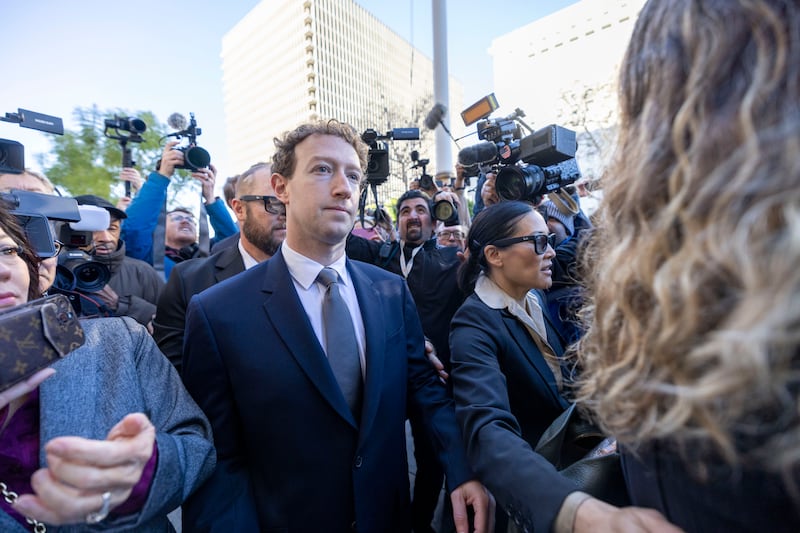 Meta chief executive Mark Zuckerberg at the social media addiction trial in Los Angeles last month. Photograph: Jill Connelly/Getty Images
“If people feel like they’re not having a good experience, why would they keep using the product?” Zuckerberg said in defence of Meta.
Internal documents from Meta presented to the court, however, may have proved damning. They included quotes such as: “If we wanna win big with teens, then we must bring them in as tweens”.
Another document said evidence showed 11-year-olds were four times more likely to keep using Instagram than switch to other apps. This was in spite of the fact that Instagram says it requires users to be 13 years old or over.
“These are internal documents that you’re uniquely seeing because you’re the jury that got to sit on this case,” Mark Lanier, the plaintiff’s lawyer, told jurors during closing arguments. “It has given you exposure that the world hasn’t had.”
The documents, the prosecution argued, painted a picture of social media giants deliberately designing apps to target young people with features encouraging addiction.
Lanier also used vivid imagery during closing arguments, comparing the social media giants to a “lion stalking a pack of vulnerable gazelles”.
The lions never go after the strongest or boldest gazelles, he said, but rather target the ones they think are weakest.
“I think that’s what we got in this case,” he said.
During the six-week trial, YouTube had sought to distance themselves from the other social media titans, claiming it was not a platform and only a toy that could be played with at a young age and then discarded.
The prosecution pushed back firmly against this line of argument. “Substitute the words ‘YouTube’ for the word ‘methamphetamine’,” one of the prosecution attorneys urged the jury during closing arguments. “Ask yourselves with your lifetime of experience whether anybody suffering from addiction could say, ‘Yeah, I just kind of lost interest’.”
Notably, Larnier engaged in almost folksy arguments, in contrast to the steely blame game employed by the social media legal teams. He also used drawings and illustrations throughout the trial to help jurors visualise the points being made.
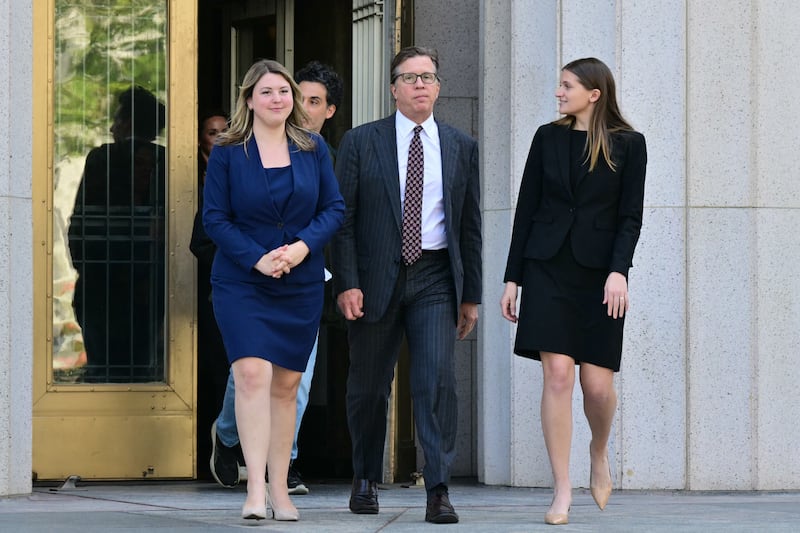 The plaintiff’s lawyer Mark Lanier (centre) outside the Los Angeles court. Photograph: Frederic J Brown/AFP/Getty Images
  Social media apps. Photograph: Anna Barclay/Getty Images
At one point, Larnier even brought out a vanilla cupcake in court to help jurors visualise how social media was designed to be tempting, appealing and addictive.
In elaborating on whether Meta and YouTube’s negligence was a “substantial factor” in causing Kaley’s harm, Larnier said a cupcake had very little baking soda in it to cause it to rise but it was a substantial factor in the baking process.
The Texas lawyer Larnier also produced a jar filled with 415 peanut M&Ms to represent the $415 billion of equity Google’s parent company Alphabet was valued at in December. This was designed to emphasise what amount of damages would actually hurt Alphabet.
The emotions of parents formed a poignant backdrop to the case. Mothers and families of children who died by suicide queued in the rain to attend the trial when it opened, and broke down in public in the court.
The atmosphere got so charged in the courtroom that at one point the LA judge threatened to remove grieving mothers from the public gallery.
After the verdict, parents gathered outside the court, where they hugged, cried and vowed to keep battling.
 Amy Neville (right), who lost her son Alexander, is greeted by another parent outside the Los Angeles court. Photograph: Frederic J Brown/AFP/Getty Images
“This verdict is bigger than one case. For years, social media companies have profited from targeting children while concealing their addictive and dangerous design features,” said a lawyer for the families, in a joint statement with the plaintiff’s legal team.
“Today’s verdict is a referendum – from a jury to an entire industry – that accountability has arrived,” he said in a joint statement with the plaintiff’s legal team.
The big question is what happens next. Many more bellwether cases are to come. A case involving a suit taken by a county school district is set to begin in San Francisco in June.
“We respectfully disagree with the verdict and are evaluating our legal options,” a Meta spokesperson said in a statement after the trial.
Two other recent verdicts have also rocked the social media world.
On Tuesday of this week a jury in a New Mexico court found that Meta’s social media platforms were harmful to children and ordered the company to pay $375 million. Meta officials said they plan to appeal.
And on March 3rd, a Delaware judge ruled insurers do not have a duty to defend Meta platforms in the thousands of lawsuits that allege its Facebook and Instagram platforms harm children.
Some days of reckoning and big bills could be coming for the social media titans.