
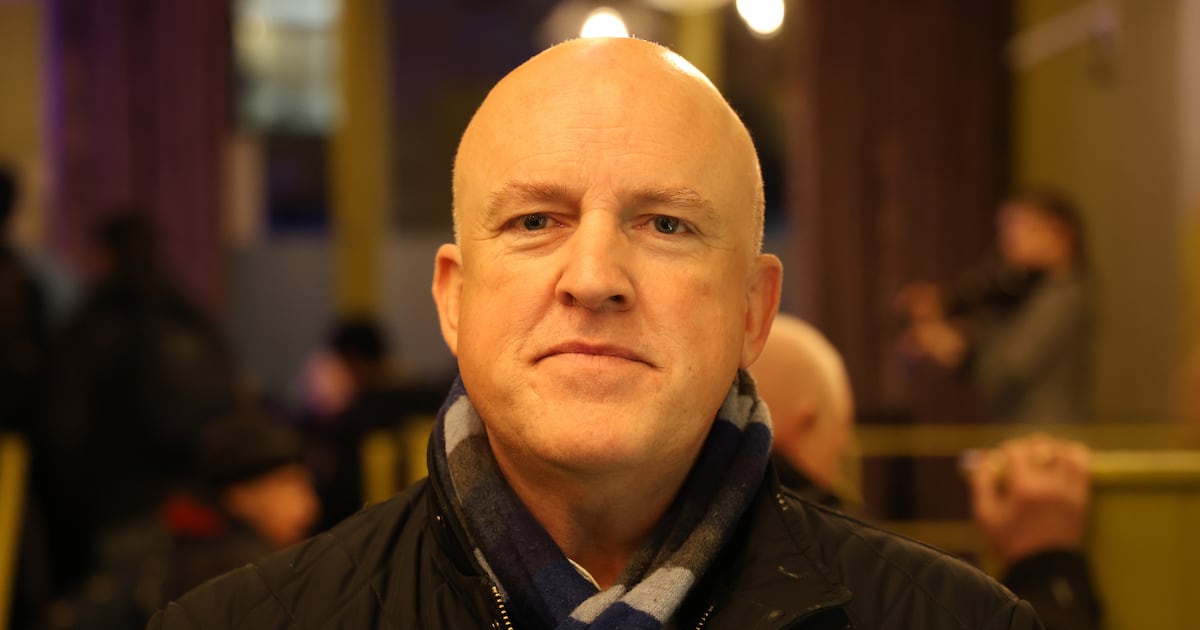
Independent Senator and founder of the Tiglin charity Aubrey McCarthy has spoken of how “direct and credible” death threats made against him and his colleagues caused them considerable fear and affected their work.
Brian McCann (40), with an address at 50 Georgian Hamlet, Baldoyle, Co Dublin, was sentenced to five years in prison on Thursday after pleading guilty to threatening to kill or cause serious harm to McCarthy and a senior colleague, and also to harassment.
At a sitting of Wicklow Circuit Court, Judge Patrick Quinn suspended the final 3½ years on condition McCann attend all medical appointments and receive all treatments for serious mental health and addiction issues.
McCann was a former resident of Tiglin, which provides residential rehabilitation for addiction, homelessness and social exclusion.
The court heard that in February 2022, McCann verbally made a threat that he would kill or cause serious harm to McCarthy at the Tiglin centre in Ashford. On the same date, he made a similar threat to Philip Thompson, the chief executive of the charity.
He had earlier harassed McCarthy by posting threatening comments on the charity’s social media pages over a period of time.
An Garda Síochána considered the threats to be serious enough to warrant its involvement.
McCann’s history of mental illness and addiction were outlined during the sentencing hearing.
In a victim impact statement, McCarthy said he forgave McCann despite the threats he had made, but indicated the convicted man’s troubled history did not excuse his actions.
McCarthy said that as the founder of a charity he had always expected some voices would oppose his work.
“But I never expected the fear and disruption that came when the threats became personal, direct and credible, not just to me, but to my staff, my colleagues and those who serve beside me in hope and purpose.
“Numerous threats were received on social media, but it was only when my secretary received a phone call that frightened the wits out of her, that I contacted the gardaí,” he said.
He said gardaí confirmed that the threats from McCann were not idle words. “They were real, serious and required urgent response. I had no choice but to make a formal statement. Not for myself alone, but for the people who work long hours, often in thankless roles, to bring dignity and support to others.
“These threats did not just rattle a few nerves. They struck at the heart of our work. They shook our sense of security. They cast a long shadow over our daily lives, moments of looking over shoulders, checking doors twice, and wondering if we were safe simply doing our jobs.”
He said despite this fear, he understood McCann was struggling with significant mental health and addiction issues.
“This doesn’t excuse the actions, but it does add important context. As a society, I believe that we need to do more not just in crisis, but long before people reach breaking point. Our mental health system must be stronger, more compassionate, and far more accessible,” he said.
He added: “I have chosen to forgive the individual behind these threats. Not because it was easy, and not because what happened didn’t matter, but because I believe in the redemptive power of compassion.”
He said he held no bitterness towards McCann. “I choose to forgive. And I genuinely hope he receives the help and care he needs to find healing and stability.”