
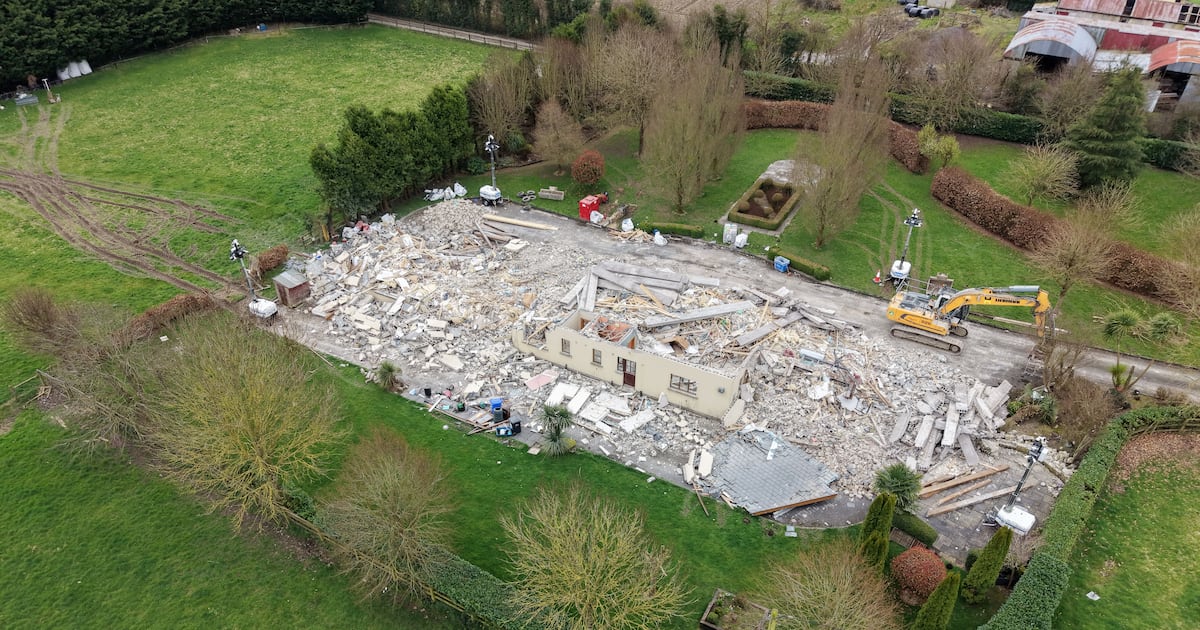
Judgment mortgages from two banks were registered in 2012 and 2015 against the land in Faughanhill, Bohermeen, Navan, Co Meath, where a large home built in 2006 was demolished by the local authority this week, land records show.
The demolition of the family home of Chris Murray (53), otherwise known as Michael, and his wife Rose (53) was the culmination of a lengthy and continuing legal battle between Meath County Council and the couple arising from their construction of the home in 2006 despite not having planning permission.
Meath County Council initiated enforcement action in 2007. Since then, the battle over the house has involved three High Court hearings, one hearing in the Court of Appeal and two Supreme Court hearings. An application by the Murrays to the European Court of Human Rights has since been made.
The couple had been working in London for many years before relocating to Ireland. Chris Murray set up a plumbing contracting business in the UK that at one stage employed close to 10 people. Rose Murray worked as a psychiatric nurse in the UK.
On returning to Ireland, she “did not return to work, but dedicated her time to bringing up her three young children and to take care of Chris Murray’s mother who at that time was living in a council house and needed minding”, according to a family statement issued through their solicitor.
[ ‘I want the mess gone’: Couple in Co Meath demolition case swear not to interfere with works ]
The folio at Tailte Éireann, formerly Land Registry, for the Co Meath property shows Rose Murray was registered as the owner of the 3.24-hectare (eight-acre) site in April 2007 – it does not give ownership details before that date – with no mortgage registered against the property at that time.
However, in March 2012 a judgment mortgage in favour of AIB, which the bank had secured against Rose Murray in the District Court in May 2010, was registered on the folio. No amount is mentioned.
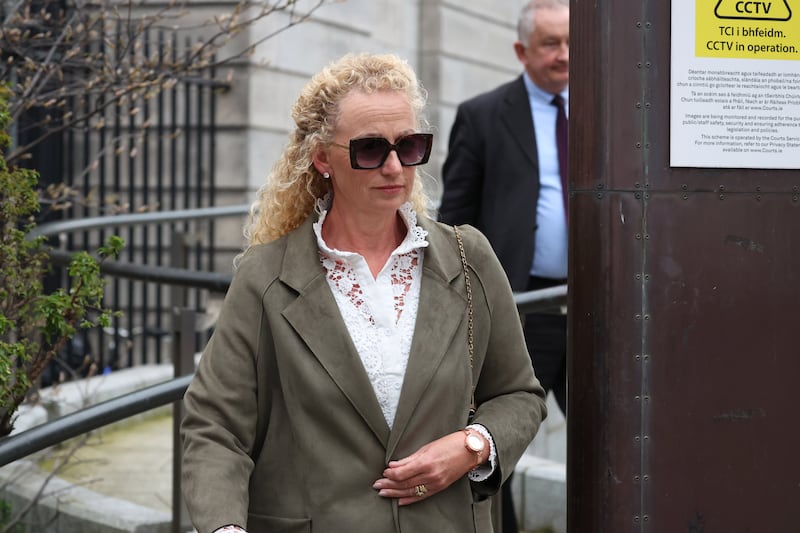 Rose Murray at the High Court on Monday. Photograph: Collins Courts
A judgment mortgage is a court ruling that a debt is owed. This can be registered against a property, which cannot be sold without clearing the debt.
In February 2015 a second judgment mortgage was registered on the folio, this time in favour of Bank of Ireland and against both Chris and Rose Murray, arising from a High Court ruling in May 2012. Again no amount is mentioned.
Both judgment mortgages were also registered against a folio associated with a 1.9-hectare plot of land at Allenstown, a townland to the west of Faughanhill.
The Allenstown property was owned by Rose Murray between 2009 and 2017, according to the folio. The judgment mortgages are no longer registered against this property but remain on the Faughanhill one.
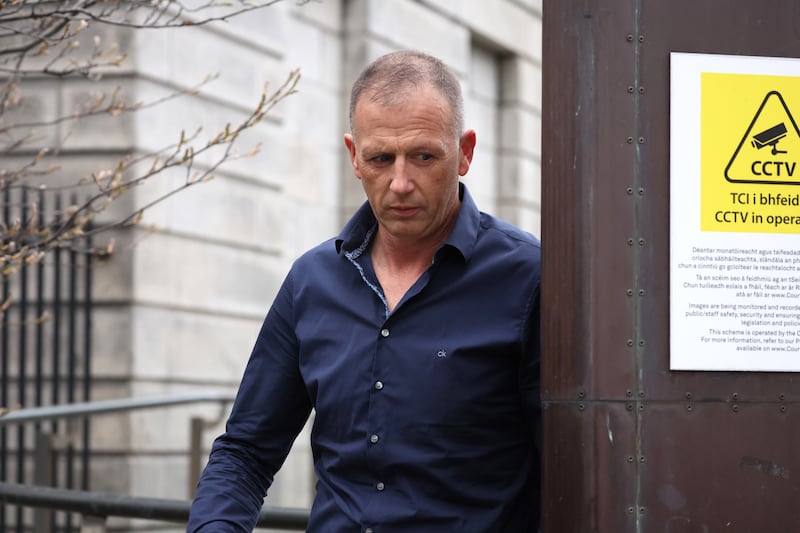 Chris Murray at the High Court on Monday. Photograph: Collins Courts
Companies Registration Office records show Chris Murray was appointed the sole director of a company in Kells, Co Meath, last June, with Rose Murray being appointed as company secretary that month.
The company is involved in manufacturing fencing and furniture from plastic. The couple are not listed as shareholders and it is understood ownership of the company is changing and the couple’s involvement is to end shortly.
The issue of who would end up paying the Murrays’ legal costs arising from the litigation was “not yet fully resolved”, their solicitor, Neil McNelis, said.
Likewise, the issue of who would pay the substantial cost of demolishing the house was “still up in the air,” he said.
Part of the home included a granny flat that had been built “in anticipation that Chris Murray’s mother Margaret Murray would have to move in with them to be cared for by Rose”, the family statement read.
Before she moved in, the late Margaret Murray “surrendered her council house, and handed it back to Meath County Council so they could reallocate it to whoever they wished”.
The site of Chris and Rose Murray’s now-demolished home is down a lane off a rural road close to the M3 near the village of Bohermeen.
The council took enforcement action in 2007 after it was brought to its attention that a 588sq m (6,329sq ft) house had been built on a site where planning permission for a substantially smaller 283sq m house had been refused six months earlier in 2006.
A council spokesman said it did not wish to comment further, citing the ongoing legal proceedings.