
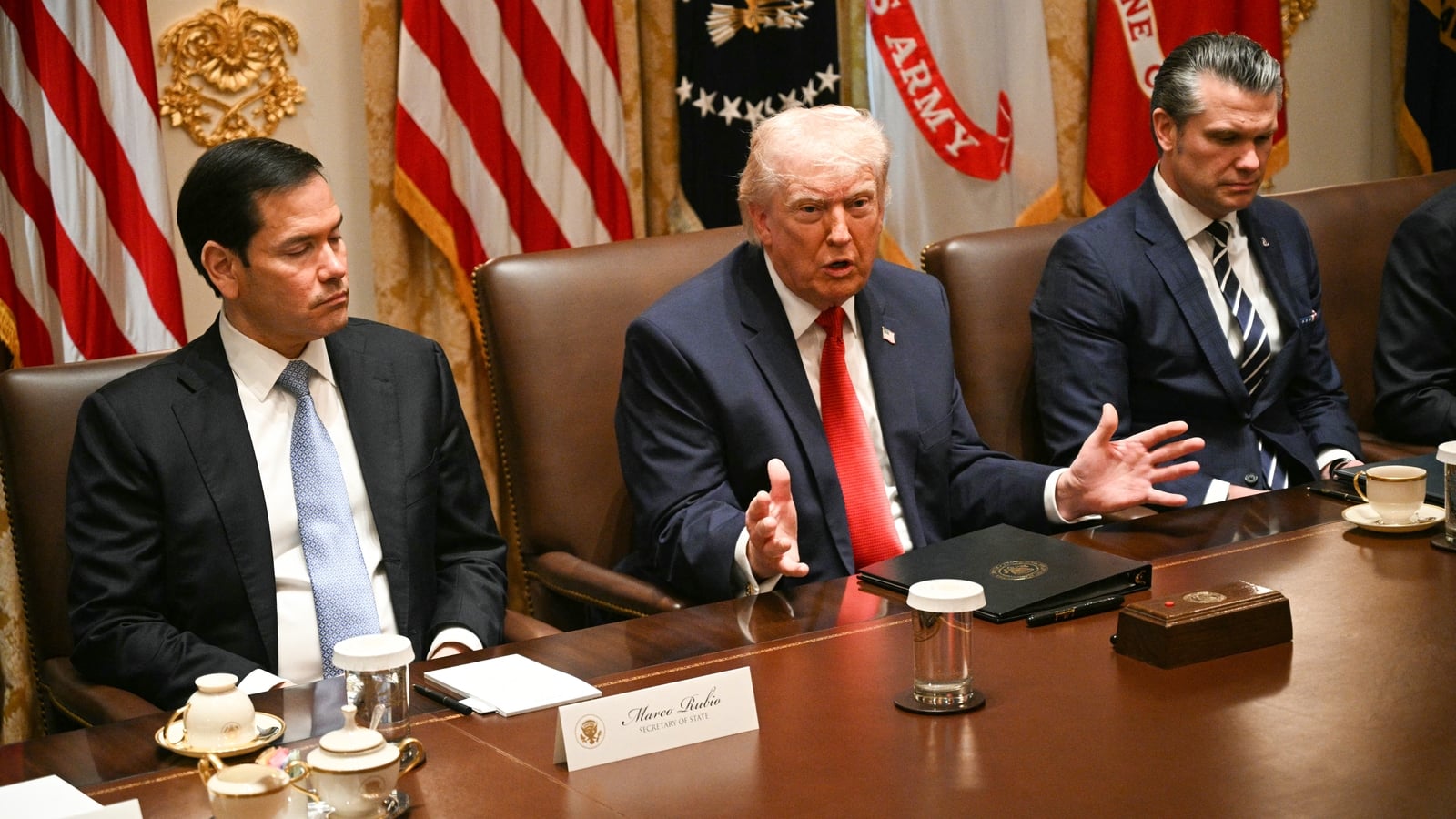
US President Donald Trump has pushed back his deadline for strikes on Iran’s energy assets, saying talks on ending the war were “going very well” as Israel announced fresh strikes on Tehran.
The four-week war has spread across the Middle East killing thousands of people and hitting the global economy with soaring energy prices, fuelling global inflation fears.
The United States and Israel launched strikes on Iran on 28 February after talks about Tehran’s nuclear programme failed to yield a deal.
US Secretary of State Marco Rubio said G7 nations should help push for the reopening of the crucial Strait of Hormuz, in remarks before arriving in France this morning for a meeting of the bloc’s foreign ministers.
Yesterday, Mr Trump threatened during a cabinet meeting at the White House to increase pressure on Iran if it did not make a deal.
He later posted on social media that he would pause threatened attacks on Iranian energy plants for ten days until 6 April.
“Talks are ongoing and, despite erroneous statements to the contrary by the Fake News Media, and others, they are going very well,” he added in his Truth Social post.
Around a fifth of global crude oil and liquefied natural gas passes through the Strait of Hormuz in peacetime.
Iran has said it is not engaged in talks with the US and Mr Trump has not identified who the US is negotiating with in Iran, with many high-ranking officials killed in the war.
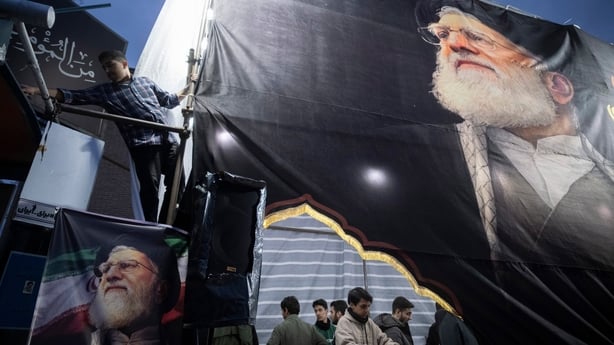
Pro-government supporters stand beneath a huge banner of the late Iranian supreme leader Ali Khamenei
On 23 March, Mr Trump announced a halt to all threatened strikes against power plants and energy infrastructure for a five-day period, but has now extended it to ten days.
Iran did not ask for a ten-day pause on such strikes, the Wall Street Journal cited peace talk mediators as saying.
Mr Trump told Fox News’ The Five programme that the Iranians had asked for a seven-day pause on strikes on energy plants. There was no immediate reaction from Tehran.
Iran has said it would return strikes on energy facilities in the Gulf region if Mr Trump follows through with his threat.
The prospect of tit-for-tat strikes on civilian infrastructure could further rattle global markets and threaten the livelihoods of millions of civilians in the region who rely on electricity to power their cities and supply fresh water.
The war has massively disrupted shipping, sending crude oil prices up around 40%, seen liquefied natural gas prices spike, and prices for nitrogen-based fertilisers, critical to food production, rise around 50%.
Stock indexes fell sharply yesterday, with the Nasdaq dropping more than 2% to confirm a correction, and Brent oil jumped to more than $105 a barrel as hopes diminished for a quick resolution to the war.
Despite Mr Trump’s upbeat assessment, Iran continued to retaliate against US and Israeli strikes by hitting Israel and US bases. It also struck Gulf states and effectively blocked Middle East fuel exports via the Strait of Hormuz, which carries about 20% of global oil and liquefied natural gas.
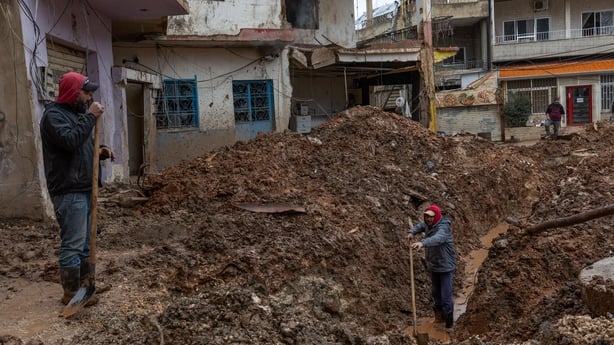
Men work at a crater created by an Israeli strike in Nabi Chit, Lebanon
Mr Trump suggested yesterday that Iran let ten oil tankers transit the strait as a goodwill gesture in negotiations, including some Pakistan-flagged vessels.
Mr Trump said the US would become the Iran’s “worst nightmare” if it did not comply with US demands, which include opening the Strait of Hormuz and ending its nuclear programme. He said taking control of Iran’s oil was an option, but gave no details.
The Pentagon was looking at sending up to 10,000 additional ground troops to the Middle East, the Wall Street Journal reported yesterday, citing officials at the department.
The United States had deployed uncrewed drone speedboats for patrols as part of its operations against Iran, the Pentagon told Reuters, the first time the US had confirmed using such vessels in an active conflict.
Iran rejects 15-point plan
An Iranian official said that a 15-point US proposal, conveyed to Tehran by Pakistan, was reviewed in detail on Wednesday by senior Iranian officials and the representative of Iran’s supreme leader, who felt it served only US and Israeli interests.
However, diplomacy had not ended, the official said.
The proposal included demands ranging from dismantling Iran’s nuclear program to curbing its missiles and effectively handing over control of the strait, according to sources and reports.
Pakistan’s foreign minister said “indirect talks” between the US and Iran were taking place through messages relayed by Islamabad, with other states including Turkey and Egypt also supporting mediation efforts.
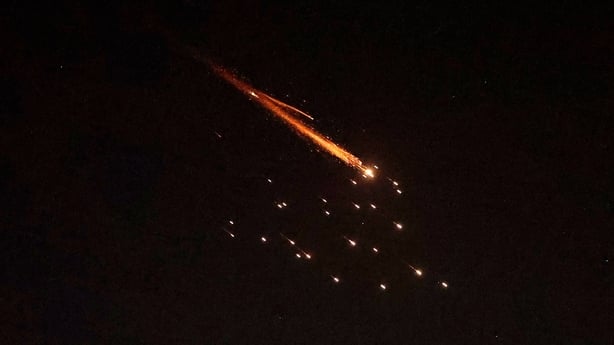
Rocket trails are seen amid a barrage of Iranian missile attacks above the Israeli coastal city of Netanya
Iran has hardened its stance since the war began, demanding guarantees against future military action, compensation for losses, and formal control of the strait, Iranian sources say.
It also told intermediaries that Lebanon must be included in any ceasefire deal, regional sources said.
Early this morning, Israel’s military said it carried out “a wide-scale wave of strikes targeting infrastructure of the Iranian terror regime in the heart of Tehran”.
In Lebanon, state media reported an airstrike on Beirut’s southern suburbs, as AFP correspondents heard several explosions from the Hezbollah stronghold.
Iran launched multiple waves of missiles at Israel yesterday, striking Tel Aviv, Haifa and other areas, including a Palestinian town in central Israel.
At least one ballistic missile hit Tel Aviv, according to Israel’s military, while others carried cluster missiles that dispersed smaller explosives, damaging homes and cars.
Israel’s ambulance service said a man was killed in Nahariya after Hezbollah fired a rocket barrage at the northern city.
In Iran, strikes hit the southern city of Bandar Abbas and a village on the outskirts of the southern city of Shiraz. A university building in Isfahan was reported to have been hit.
At least six people were killed after a strike damaged three residential buildings in central Iran’s Qom, the semi-official Fars news agency said, citing a provincial official.