
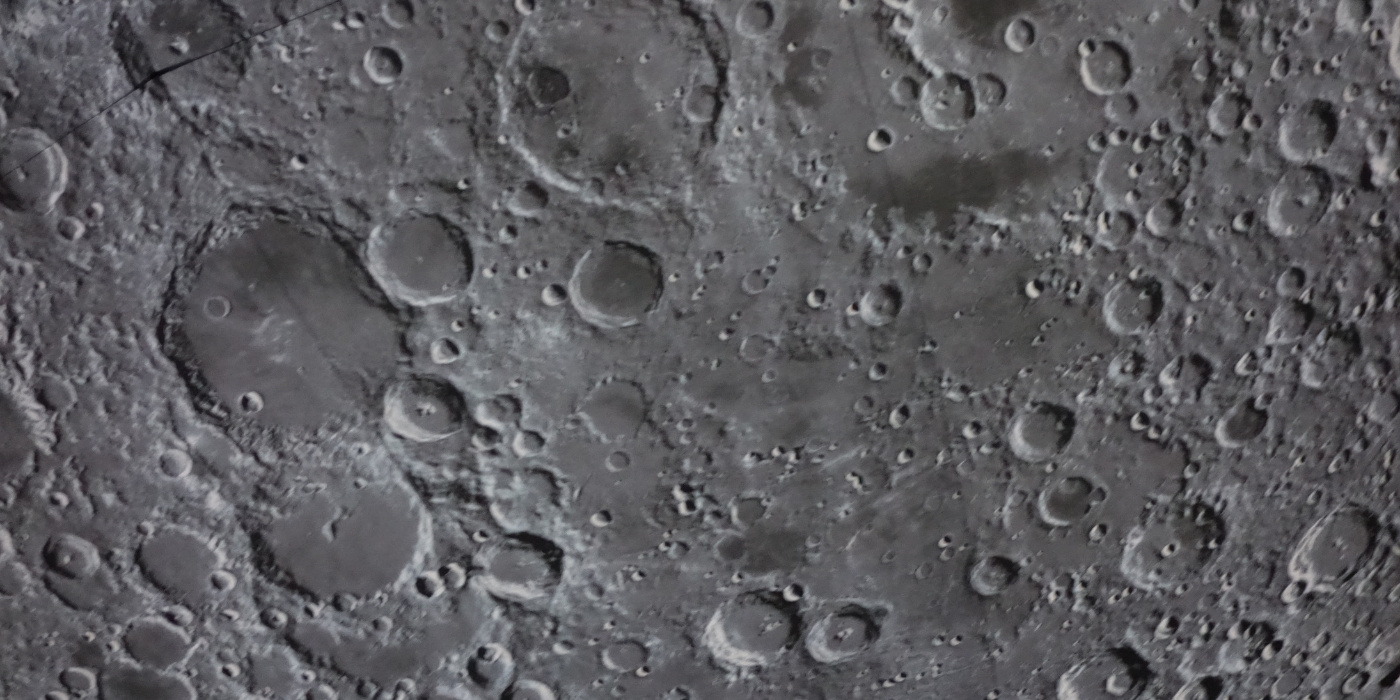
With NASA preparing to launch Artemis II, human spaceflight is returning to the Moon with a different strategy from Apollo.
In a recent SETI Live conversation, SETI Institute planetary scientist Dr. Pascal Lee spoke with SETI Institute Deputy Director of Carl Sagan Center, Simon Steel, to examine what this mission represents for the future of exploration.
Dr. Lee explained that Artemis II will be the first crewed mission of the Artemis program. It will not land. Instead, astronauts will follow a free-return trajectory, a path that loops around the Moon and returns to Earth without propulsion.
This is a test mission designed to shake down the spacecraft and its systems before more complex missions.
Testing the Systems That Enable Exploration
Artemis II is a carefully choreographed engineering mission.
After launch, the Orion spacecraft will enter a non-circular Earth orbit lasting about 24 hours, remaining largely in view of mission control. During this phase, it will perform proximity operations (maneuvering close to another spacecraft to test navigation and control), moving near its upper stage and then away from it.
These tests are essential. Future missions will require docking with other spacecraft in orbit before astronauts can travel to the lunar surface.
This represents a shift from Apollo. Instead of a single spacecraft handling all mission phases, Artemis depends on multiple spacecraft working together.
A Mission of Firsts
Artemis II also represents a milestone in human exploration.
The crew includes the first woman and the first non-American astronaut to travel to the Moon. The mission will also take astronauts farther from Earth than any humans have gone before.
This reflects how space exploration is evolving into a more international and collaborative effort.
Launch Realities and Readiness
Despite progress, Artemis II remains a complex mission with uncertainties.
A recent hydrogen leak at the launch pad required repairs before the rocket could return to the launch site. Even with fixes completed, launch probability remains uncertain, with a limited launch window and only a few opportunities for liftoff.
This highlights the complexity of preparing human missions beyond Earth orbit.
Observing the Moon in New Ways
Artemis II will also contribute to lunar science.
Astronauts will observe features such as the Orientale Basin and study the lunar south polar regions. They will examine variations in brightness and color and look for brief flashes caused by meteorite impacts on the Moon’s night side.
One key target is lunar horizon glow, a faint glow caused by dust particles lifted above the surface by electrostatic forces. Observing this phenomenon could improve understanding of dust behavior on the Moon.
These observations add a human perspective that complements robotic measurements.
Rethinking the Path to the Moon
NASA’s Artemis roadmap is evolving.
Artemis III, originally planned as a lunar landing mission, will now be an Earth-orbit test mission. It will focus on docking systems and testing new spacesuits before astronauts attempt to land on the Moon. The first landing is now expected with Artemis IV.
Another major change is the removal of the planned Lunar Gateway. Instead, scientists and engineers will design a lunar base to be built later.
This approach prioritizes practical steps toward long-term exploration.
From Sorties to Sustained Presence
Artemis represents a shift from short missions to building a lasting presence.
Apollo missions landed at different locations without leaving behind long-term systems. Artemis aims to establish a moon base that can be built up over time.
Concepts for this base include:
Inflatable habitats covered with regolith (lunar soil) for radiation protection
Pressurized rovers for traveling long distances
Hopper-style drones that take off and land to explore areas farther from the base
Power is a major challenge. Solar panels are vulnerable to dust and may not provide reliable power in shaded areas. Nuclear power systems are being developed to provide a steady energy source.
Site selection is also complex. Permanently shadowed regions near the poles may contain water ice, but they are difficult to explore due to steep slopes, deep shadows, and limited visibility. A base in a more accessible location may allow better exploration of the Moon overall.
Powering the Future With Nuclear Systems
Energy systems developed for the Moon will support future missions to Mars.
NASA’s Space Reactor One (SR-1) mission, targeted for launch as early as 2028, will test nuclear-powered spacecraft. These systems use nuclear energy to generate thrust more efficiently than chemical rockets, significantly reducing travel time.
These systems could shorten travel time to Mars, improving safety for astronauts.
Mars on the Horizon
The Moon is a stepping stone to Mars.
Newly announced future missions will deploy multiple Ingenuity-class helicopters on Mars. These helicopters would be released during descent, spread out across the surface, and explore different regions.
They help address a key challenge in Mars exploration – the gap between orbital and rover data. Helicopters provide a way to study the surface from above while still operating close to the ground.
Water ice remains a critical resource. It can be broken down into hydrogen and oxygen for fuel and life support, and it may preserve biosignatures. Locations such as equatorial glacier regions offer promising targets for exploration.
Protecting Mars While Exploring It
Human missions to Mars must consider planetary protection (preventing contamination between Earth and other worlds).
Current guidelines restrict access to water-rich regions, even though these are the most scientifically important areas.
One possible approach is to focus on frozen environments where water remains as ice. These conditions may allow scientists to study potential signs of life while reducing contamination risks.
Testing Exploration on Earth
To prepare for these challenges, the SETI Institute conducts research in Earth-based Mars-like environments.
At Devon Island in the Arctic, one of the most Mars-like locations on the planet, long-term fieldwork tests habitats, rovers, and operational strategies.
This long-running project also demonstrates how to build and operate a base in extreme conditions. These lessons directly inform future missions to the Moon and Mars.
The Next Giant Leap
Artemis II marks a transition in human spaceflight.
It signals the shift from exploration to sustained presence, from isolated missions to infrastructure, and from the Moon to Mars.
Each system tested and each milestone achieved moves humanity closer to becoming a multi-planetary species.
Watch the full SETI Live conversation here.
Final Questions
Can water ice on Mars be used to produce oxygen and fuel?
Yes. Water ice is extremely valuable because it can be processed into both hydrogen and oxygen. Hydrogen can be used as rocket fuel, and oxygen can serve as an oxidizer, which is essential for propulsion.
In addition, water ice is scientifically important. It indicates environments where life may have existed in the past. Ice can preserve potential biosignatures and protect them from degradation.
For human exploration, access to water ice is a key criterion for selecting landing sites. It supports life support systems, fuel production, and scientific investigation.
There is also an important planetary protection consideration. If ice remains frozen at very low temperatures, it reduces the risk of contamination. This makes it a safer target for studying potential signs of life while minimizing risks to both astronauts and Earth.
How do Coriolis forces affect artificial gravity in space habitats?
Artificial gravity can be generated by spinning a spacecraft, creating centrifugal force. However, if the rotation is too fast or the structure is too small, Coriolis effects (forces that act on moving objects in a rotating system) can disrupt balance and orientation.
These forces can affect the inner ear, causing disorientation. To avoid this, there is an optimal combination of rotation rate and station size that produces Earth-like gravity while keeping these effects manageable.
Another interesting aspect is directional motion. If a person moves in the direction of rotation, they feel heavier. If they move against it, they can feel lighter or even briefly experience near weightlessness.
This highlights the complexity of designing habitable rotating space environments.