
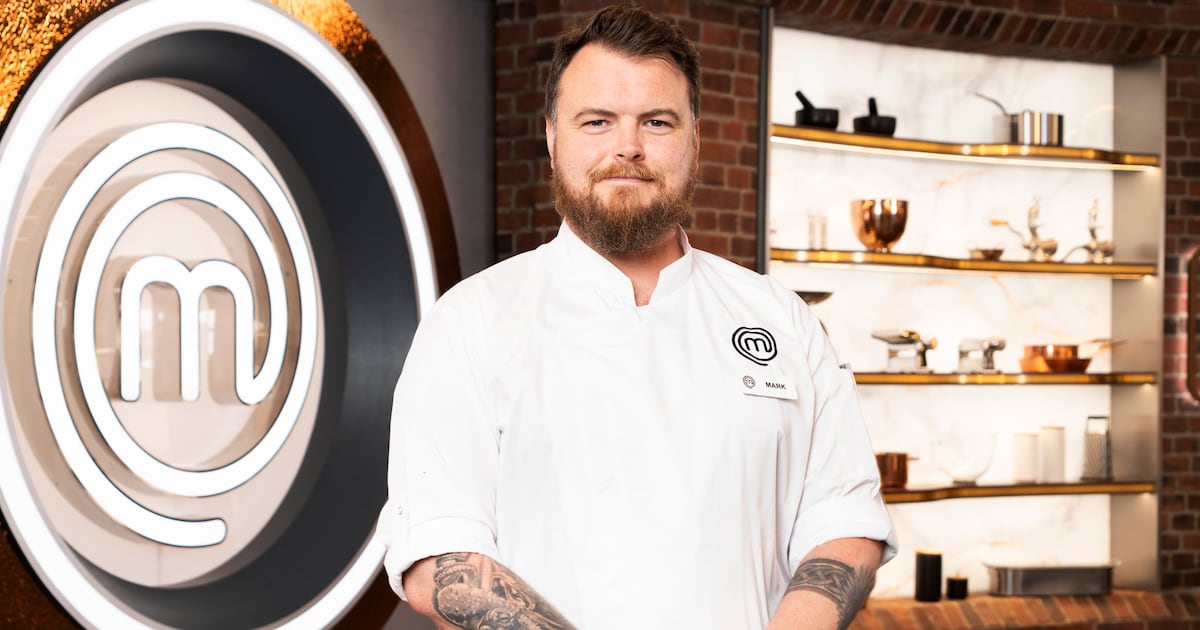
For the first time ever, an Irish chef made it to the final of MasterChef: the Professionals. Last night, Dubliner Mark O’Brien was one of three finalists featured on the flagship BBC programme, together with Luke Emmess and eventual winner Gareth Baty. He didn’t win, but for anyone who makes it to the final of this flagship cookery competition for professionals, it’s a remarkable achievement.
Now based in Margate, England, O’Brien has had to keep the outcome of the final a secret since July last year. “I told my wife Gill, and a few members of my family. But you have this whole thing you’re sitting on for months and months.”
O’Brien grew up in south Dublin, in Cabinteely and Monkstown, later moving to Greystones in Co Wicklow. His father still lives in Dublin, and when he travels back to Ireland, he likes to visit King Sitric in Howth, Kai in Galway, and Goldies in Cork City. And Coppinger Row in Dublin, where he once worked.
Cooking with fire and smoke, southern American barbecue style, is a core element of O’Brien’s style, which he had been experimenting with in various pop ups in Margate. Then one day he saw an ad on Instagram inviting chefs to apply for the show. He put in an application, like many others, who also saw the ad. And then his phone rang.
“There were four rounds after that. A big online application, two phone Interviews, and one in person,” he says. “None of the auditions involved cooking.” The first time contestants see the studio, the judges and the camera team is when they arrive for the opening part of the competition, which is a time-based technical skills test. If they look anxious, that’s because they genuinely are: everything is new.
For this season, the show was filmed over some 10 weeks, at various locations. “Once you get a couple of weeks into it, the filming really ramps up.”
The days are long, starting at 7am or 8am. “You film some pick-ups, then have lunch, and the full cook is in the afternoon.” There are always between five and six cameras filming everything, with one crew member specifically assigned to each chef.
“The biggest challenge is the feeling of exposure. You’re cooking in an environment you’re not usually in, and there are cameras on you all the time. It’s a miracle that anyone manages to do it.”
You wouldn’t know that from watching O’Brien, who is a natural on camera: calm and likable all through the season. His menu for the final started with an elegant seafood platter, of sake-poached mussels, steamed oyster with caviar and horseradish cream, and diced scallop with champagne gel, pickled celery and grape. The main was southern spiced pork loin, crispy cabbage roll with crayfish tail, hot pepper purée and crayfish sauce.
The dessert – a riff on coffee and doughnuts – involving malted milk bavoir, was missing its beignet, the doughnut element. “I ran out of time,” he says ruefully. “My starter took a lot longer to plate than I intended to. Another 90 seconds, and the beignet would have made it on.”
When the guest critics are invited on the show, they are served hot food. The judges, however, Monica Galetti, Marcus Wareing and Matt Tebbutt, eat food that has gone cold by the time it gets to them. All those amazing looking plates of food that get served up after each cook to the judges? Stone cold.
It takes time for each dish to be critiqued, a lot more time than ever makes it to air. “You could be there for 10 minutes at a time,” says O’Brien. What airs is an edited balance of whatever positive and negative criticism the judges dish out. So all the plates are cold to taste, although the judges do deliberately taste as they move around the test kitchen while the contestants are cooking.
The other thing viewers probably don’t realise is that contestants don’t even see each other’s dishes, let alone taste them. They’re working at their own stations, and only see what their rivals plate up when they watch the show back.
O’Brien stated in the competition that his ambition was to open his own restaurant. He can’t reveal anything yet, but “stuff is in the pipeline” as he puts it. “Being on MasterChef helps to open doors for people who don’t know the restaurant industry really well; say, estate agents, but they recognise the name MasterChef.”
On the show, judge Marcus Wareing is on record as saying he “can’t wait” to try whatever restaurant O’Brien may open. A future stop for The Irish Times food critic may well be at Margate.