
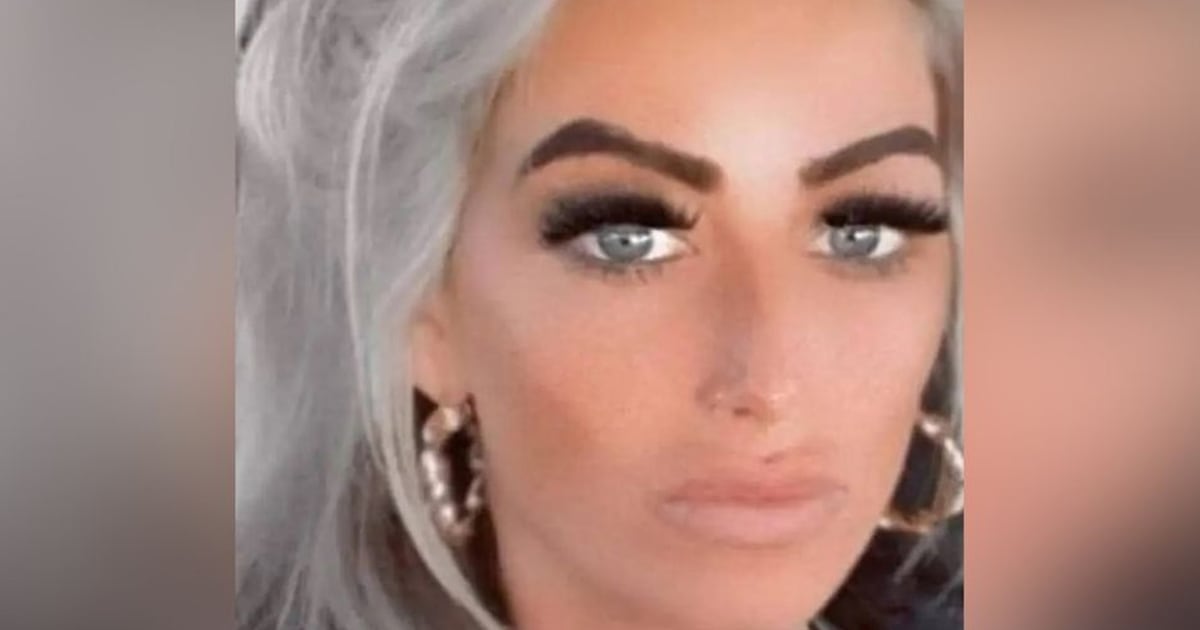
A week after she was rammed off the road, taken from a vehicle and beaten unconscious in Co Tipperary, Scarlett Faulkner remains critically ill at Cork University Hospital.
The mother of two had sustained head injuries that were so serious she was airlifted from the scene in Birdhill.
Gardaí are investigating a motive for the attack on the 27-year-old from Limerick.
The attackers – some armed with weapons, with an axe produced at the scene – are members of the Traveller community, as is the victim Faulkner.
Video footage of the incident has been shared online and in one post on X, formerly Twitter, the footage has been viewed more than 1.5 million times.
This week, well-known actor and writer John Connors, a Dublin-based Traveller, took to social media, describing the attack as “absolutely horrendous” and asking his followers to pray for Faulkner.
He encouraged people in the Traveller community to desist from becoming embroiled in feuds, which he said were “getting out of hand”.
In a subsequent interview with The Irish Times, Connors says while the community had been discriminated against for generations in many significant ways, “you can’t blame discrimination on this”.
He says the only aspect of his video message published this week he would correct was that last Saturday’s attack in Birdhill was due to a “personal” dispute rather than an “ongoing feud”.
However, it was still “group violence … brutal violence” with multiple people involved.
“The only people who disagreed with me or called me out were what I would call the ‘NGO Travellers’. These people don’t want to talk about the negative sides of our community. They want to only talk about discrimination,” he says.
He says he previously supported bare-knuckle fighting in the community as it was a way to resolve a dispute between two groups. Those fights were between men who “considered themselves kings”. They trained for the fights and, whatever the outcome, had the discipline “to let it go” afterwards.
However, he no longer supports the fights, saying they now serve only to start new feuds or exacerbate ongoing disputes. This was because many fights were live-streamed, or video clips emerged almost immediately afterwards.
These were shared on social media and weaponised by one group against another, with large numbers of Travellers commenting, thus stoking tensions.
Social media was also being used to start and escalate feuds, he says.
“They record these brutal attacks, the home invasions, the burnings, the shootings, and all of these incidents out on public roads. It’s all about: ‘Let’s capture this on camera and put it out there to show the rest of our community what we’re capable of doing; we can take down anybody … nobody will bully us.’ It’s about pride.”
[ Two people arrested over attack on Scarlett Faulkner in BirdhillOpens in new window ]
Indeed, Connors says most of the conflicts, while driven by social-media content, have “pride” at their core.
“And that’s because Travellers are very concerned about what other Travellers think of them,” he says.
“In our community pride is driving absolutely everything. It comes down to: ‘I have to show people what I’m made of and I will not be made a fool of, I won’t be bullied, I’m able to beat them and they will see that.’”
To an extent, Connors also believes, the disparity of wealth now in the Traveller community is a major issue. It has concentrated status, perhaps power, in the hands of the few while many others lived in abject poverty. Those who were wealthy often flaunted it on social media.
Connors, who has embraced his Catholic faith since the 2023 death of his mother, Kathleen believes many Travellers have lost their faith.
It was always such a big part of the culture that its loss has had devastating consequences on the community. He insists those consequences are not yet fully appreciated.
He says even as a young child, when he was drawn into feuds from the age of 12, he faced grown men in the violence that played out. He says he has developed Bell’s palsy – a form of paralysis – in his face from the stress of feuding as a young boy.
Mediators and “violence interrupters” within the Traveller community were in contact with him and were working in a “relentless” manner.
“There’s that many feuds going on,” he says.
All of this was happening at a time when the community had “enough other emergencies”, including soaring suicide rates, he says.
Garda sources agreed social media had been embraced by some in the Traveller community to drive violence.
Other social-media accounts had been created to harvest Traveller violence content and publish it online, with clips being re-shared, often for years.
One Garda says the social-media content is “now a type of feuding in itself” or “a new battleground”.
He adds that so much of the content could go back and forward between rival groups so quickly that a feud could now escalate “far faster, and involve far more people” than during the pre-social media years.
Gardaí say when disputes and feuds break out, they must tackle the violence like any other crimes, with investigations.
However, they also try to maintain strong contacts with members of the community who could influence others, including mediating in disputes in a bid to quell feuding.
A 2023 report authored by Sarah Sartori, a researcher and educator based in South East Technological University, found interfamily violence was “a pervasive problem affecting Traveller individuals and their families”.
Entitled The Impact of Traveller Interfamily Conflict on Individuals and Families, the report said that while “only a minority of Travellers engage in interfamily violence”, it is “a conflict that negatively impacts on virtually all sections of the Traveller community”.
The report involved mostly Traveller researchers and participants in focus groups.
“All of the individuals recalled childhood memories of violence and conflict,” the report said, with feuds often involving extreme violence, which had – at times – proven fatal.
Unlike Connors, the report said communities with high levels of violence were also characterised by poverty, disadvantage and marginalisation, all of which have been suffered by the Traveller community.
Martin Collins, the codirector the Pavee Point Traveller and Roma Centre, accepts feuding is an issue within the Traveller community and says there is little point in the community “taking the ostrich approach” to the problem.
However, he rejects suggestions that Traveller feuding is worsening.
He says the large – and growing – volume of social-media content about feuding has served to “amplify” these incidents and make them “more visible”.
That content created the impression feuding was much worse than the reality, he argues.
He points out that the Traveller Mediation Service works hard in a bid to resolve disputes, adding before that service was established Pavee Point had pioneered the Traveller mediation model, almost 20 years ago, which he was involved in.
However, he says there is also feuding, conflict and violence in the settled community. But when violence occurred within minority communities it fed “racism and stereotypes”, he argues.
He insists feuding and violence “is not part of our culture”.
Collins, like Connors, points to Traveller pride as a major issue. He says social-media content along with assaults on people and attacks on property all injured family pride.
“The whole notion of pride is a problem – not shaming your [family] name – that’s regarded as the last thing you want to do. That the pride of the family has to be protected and you don’t let anybody shame the family,” he says.
Often, the people regarded as “having status and influence” within a family group are expected to instigate that response “because of pride and not letting anyone bring shame on the family”.
And when mediation takes place, Collins says, it was those same people that mediators had to try to reach. Family leaders had to be convinced that striking back was not the answer and indeed that it took strength not to retaliate, he says.
“You have to have that inner strength to know there is no shame, you are not letting the family down by not responding,” he says.
“The only people who can deal with that is ourselves, our community. We have to deconstruct that mindset that you defend the [family] name at all costs, and you don’t shame it.”