
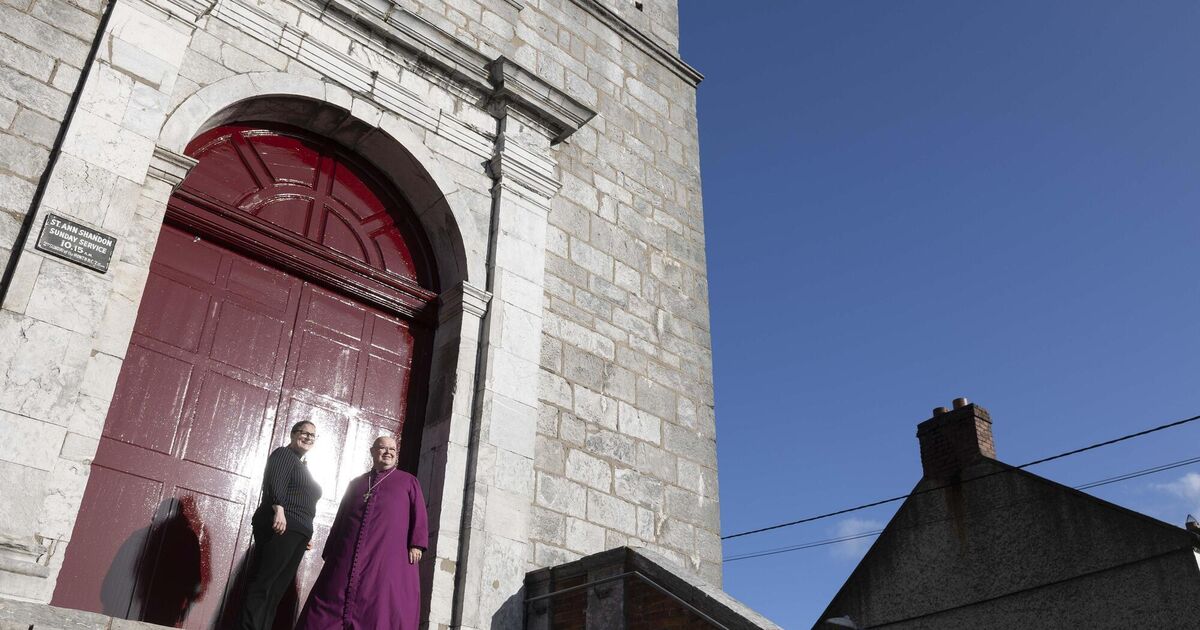
There could be few things more Cork than the Lord Mayor ringing the bells of Shandon in the restored clock tower of St Anne’s, but the big question was what he would play.
“Why, The Bells of Shandon, of course,” said Lord Mayor Fergal Dennehy, before challenging his counterpart from the Straight Road, Mayor of the County of Cork Mary Linehan Foley, to a bell-ringing duel.
She played Ode to Joy and, it being an ecumenical matter between city and county, they called it a draw.
Earlier, outside St Anne’s newly restored 300-year-old front doors, the ribbon was cut by Elizabeth Barrett, a Chapel Hill resident these past 61 years — in the presence of Bishop Paul Colton and the Reverend Meghan Farr, the priest in charge.
The two mayors were at hand at the northside landmark, as was Valerie O’Sullivan, Cork City Council chief executive, to mark with the Church of Ireland community the completion of a major council-led restoration project.
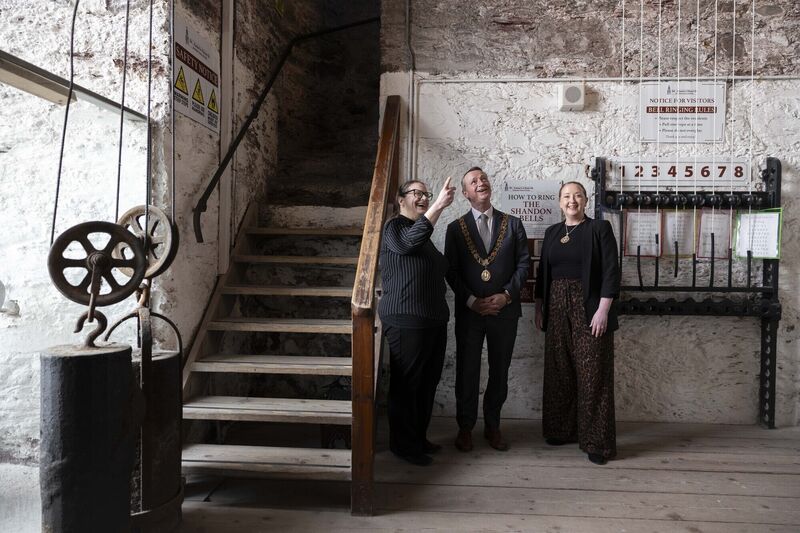 Reverend Meghan Farr welcoming Cork City Lord Mayor Fergal Dennehy and Lady Mayoress Karen Brennan to Saint Anne’s Shandon after the completion of a major Cork City Council-led restoration project. Picture: Clare Keogh
They were joined by a host of locals, dignitaries, council officials, and former lords mayor — including John Dennehy, father to the current incumbent.
All present seemed to agree that the three simultaneous restoration projects — involving major works to the clock faces and clock mechanism, the bells supports, and the ancient original doors — have left the freshly cleaned St Anne’s Shandon looking better than it has in years.
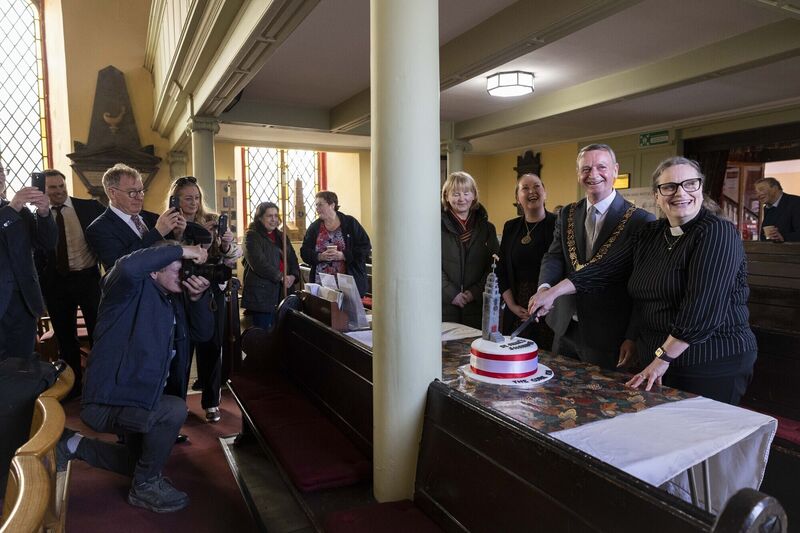 Lord Mayor of Cork, Cllr Fergal Dennehy, and Reverend Meghan Farr cutting a cake that was made by a member of the congregation. Picture: Clare Keogh
The clock was installed in 1847 by Cork Corporation, making it the oldest four-faced clock on these islands, predating Big Ben in London, and it became known locally as ‘the four-faced liar’ because its four faces did not historically show exactly the same time.
In recent years, the clock faces, the clock mechanism, and the bell supports, had all deteriorated badly, and were all in need of major restoration.
The entire project included specialist input from horologist Philip Stokes, structural engineers, Hearthstone Building and Restoration, conservation architect James Bourke, and specialist joiners and stone repair contractors, all of whom are based in Cork.
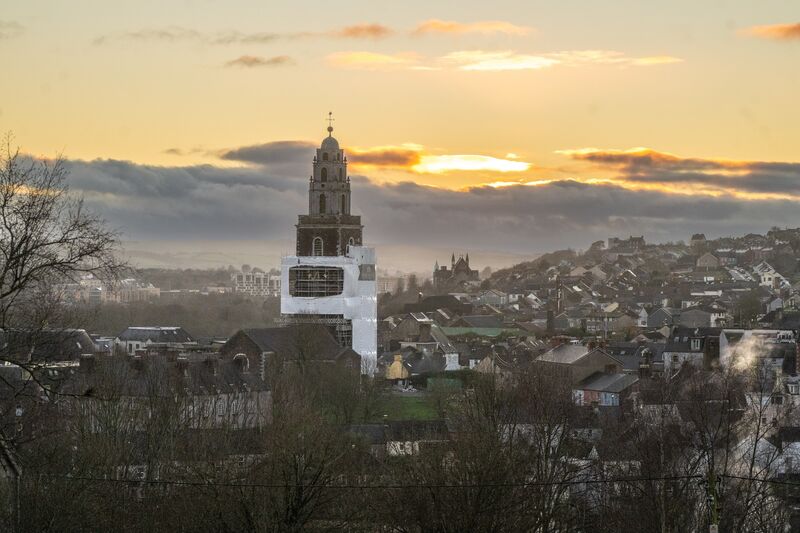 The iconic tower of St Anne’s Shandon had been under wraps until recently amid a major conservation and restoration project. Picture: Chani Anderson
Cork City Council received €250,000 in from the Department of Heritage, Local Government and Housing under the Historic Structures fund, and supplemented this with an additional €340,000 to fund the restoration to the clock faces and clock mechanism.
All four clock faces have been restored, with the clock numerals repainted and gilded and the minute markers, missing since the 1960s, restored.
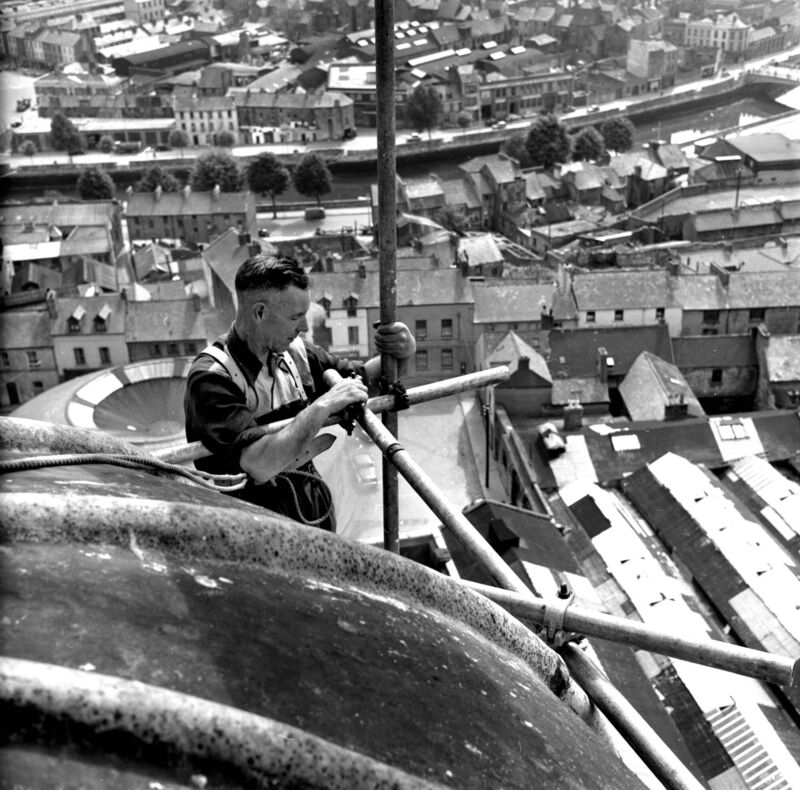 The 300-year-old icon Cork needs regular maintenance including the work captured here in an August 1959 photo. Picture: Irish Examiner Archive
Perhaps best of all, the four faces of the clock are deliberately showing slightly different times, only agreeing every hour.
At the top of St Anne’s clock tower yesterday, looking out over the panoramic view of the city, the Lord Mayor said Shandon was one of Cork’s most beloved landmarks.
“It is part of the cultural and social fabric of the city, it is woven into the story of us, it is a symbol of the city, it is part of us. This restoration reminds us of the significance of Shandon to us all,” Mr Dennehy said.