
MARK WEISS in Jerusalem
Regional powers held talks on Sunday in Pakistan to discuss how to end the Middle East war, now in its fifth week.
The foreign ministers of Saudi Arabia, Turkey and Egypt met in Islamabad for the talks, but neither Iranian nor US diplomats were present in an indication of the significant gaps that remain between the sides.
The Iranian Kayhan newspaper, which is closely aligned with the regime leadership, outlined nine demands for ending the conflict but all appeared to be non-starters for Washington.
The demands included: a full withdrawal of US forces from the region; dismantling US bases in west Asia; lifting sanctions; releasing frozen Iranian assets; formally declaring the United States and Israel as aggressors while paying compensation; and Iranian control over maritime transit through the Strait of Hormuz.
However, the US defence department is pushing ahead with plans for ground operations in Iran that could last weeks, The Washington Post reported. Citing US officials, it said a combination of special forces and infantry troops would be deployed in raids, which would fall short of a full invasion.
In response to the report, White House press secretary Karoline Leavitt said: “It’s the job of the Pentagon to make preparations in order to give the commander in chief maximum optionality. It does not mean the president has made a decision.”
Iranian parliament speaker Mohammad Baqer Ghalibaf accused the US of “talking about negotiations in public, but planning a ground invasion in secret”. The accusation came after reports that Tehran had formally requested from Washington a full cessation of the fighting, while weighing its response to the American 15-point ceasefire plan – a request the US denied.
[ Netanyahu orders expansion of Israeli invasion of southern LebanonOpens in new window ]
Against the backdrop of the arrival of a US rapid-response amphibious force in the region over the weekend, Ghalibaf warned Washington that “armed Iranian forces are waiting for US ground troops to arrive”, adding that Iran would “punish” their regional partners as well.
The relentless US and Israeli strikes continued on Sunday, day 30 of the war. At least 1,551 civilian deaths have been recorded in Iran by human rights monitors since the start of the war.
Iran maintained rocket and drone attacks on Israel and Gulf Arab states. One rocket hit a big Israeli chemical plant close to the southern city of Beersheba, causing a huge plume of black smoke and a leak of hazardous chemicals. The attack appeared to be a response to Israeli strikes on Iranian industrial plants over the last few days.
Houthi rebels in Yemen said they fired a second wave of missiles and drones at southern Israel on Sunday. The Houthis’ decision to target Israel is the latest escalation of a conflict that has spread across the region.
The first Israeli troops have now reached the Litani river, a distance of some 30km from the Israeli border in most areas. Troops are engaging with isolated cells of Hizbullah fighters, and five soldiers have been killed to date, but most Hizbullah cells are believed to have retreated to north of the Litani. The area is largely empty of civilians after most fled north.
Israeli prime minister Binyamin Netanyahu said he instructed the army to “further expand the security zone in Lebanon in order to finally thwart the threat of invasion and keep anti-tank fire away from our border”.
The funeral of three Lebanese journalists killed by Israeli forces. Video by Sally Hayden for The Irish Times
Israel claims to have killed hundreds of Hizbullah operatives in the south and in air strikes in other Shia areas of Lebanon.
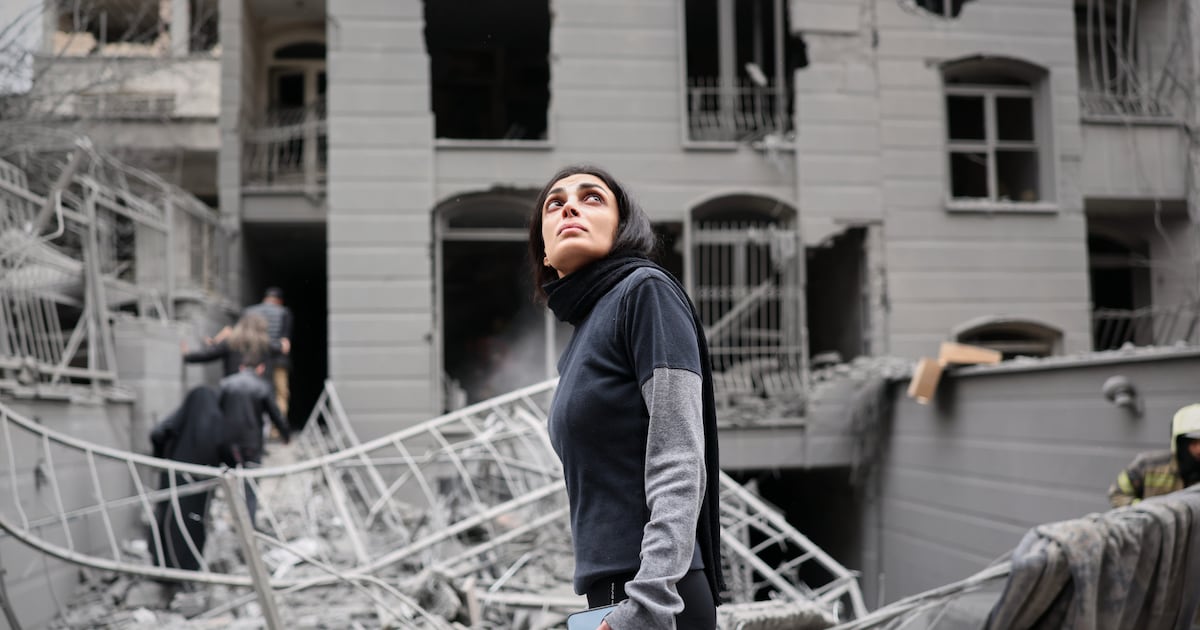
More evacuation orders were issued to residents of Beirut’s Dahiyeh quarter, a Hizbullah stronghold, on Sunday as residents of other Beirut areas expressed concern that evacuees from Dahiyeh could turn their neighbourhoods into targets for Israeli strikes.
More than 1,000 people have been killed in the fighting in Lebanon and more than a million are homeless.
Pope Leo XIV has said God rejects the prayers of leaders who start wars and have “hands full of blood” in his Palm Sunday address. He has repeatedly called for an immediate ceasefire in the conflict and said last week air strikes should be banned.
Late on Sunday night, the United Nations peacekeeping mission in Lebanon (Unifil) said a peacekeeper was killed when a projectile exploded at one of its positions near the southern Lebanese village of Adchit al-Qusayr.
Another peacekeeper was critically injured.
“We do not know the origin of the projectile. We have launched an investigation to determine all of the circumstances,” UNIFIL added.
In a statement, the Defence Forces said “all Irish personnel are well and accounted for. We wish to extend our sympathies to the family of the peacekeeper who has lost their life in the service of peace. Our thoughts are also with those injured in the attack.”
“Óglaigh na hÉireann condems any attack on peacekeepers and reminds all parties of their responsibilities under international law.” – Additional reporting: Reuters