
The European Union may have to take another look at whether alumina should be included in the sanctions regime against Russia, according to the bloc’s sanctions envoy.
David O’Sullivan said this might have to be considered if alumina from a plant in Limerick is being used to make aluminium that ends up “finding its way, however indirectly, into military equipment”.
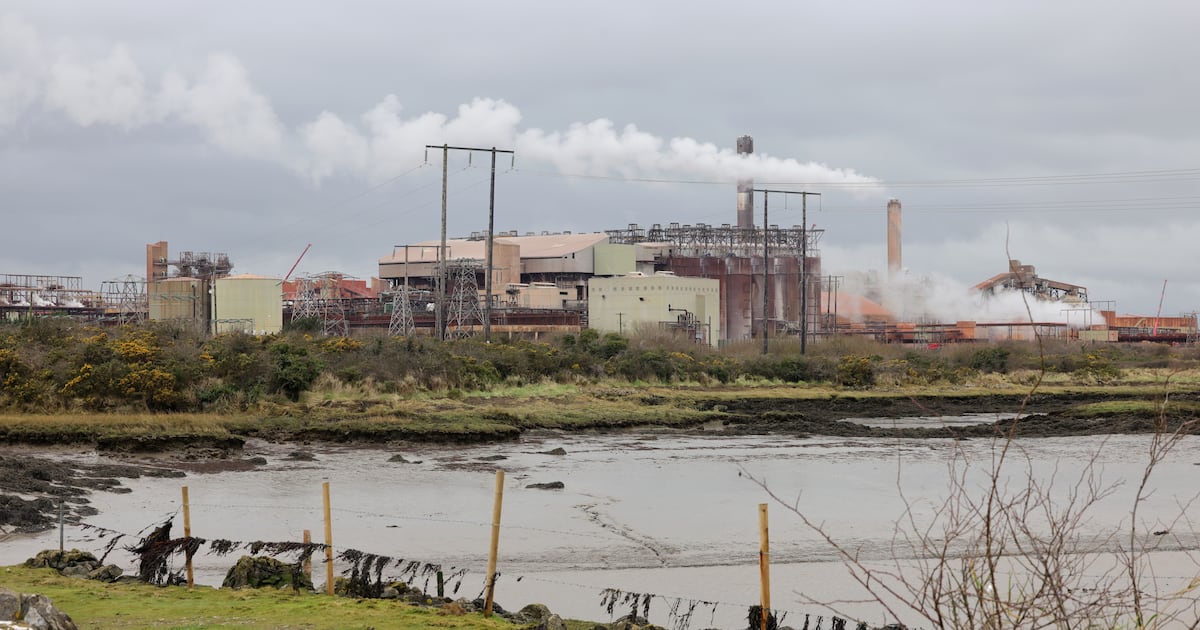
His remarks come after an Irish Times investigation, carried out in co-operation with the Organised Crime and Corruption Reporting Project, found that the Aughinish Alumina plant in Co Limerick is shipping vast amounts of alumina to smelters in Russia where it is used to make aluminium.
This aluminium is then sold to a trading company, ASK, that supplies dozens of Russian arms manufacturers, according to leaked financial documents.
Aughinish Alumina responded to the investigation saying it operates “in strict compliance with all applicable European Union laws, including sanctions, export control measures and trade regulations” and it has “implemented a robust sanctions compliance and due diligence framework covering its entire supply chain”.
The Government has said the findings will be reviewed by the Department for Foreign Affairs and the Department of Enterprise while Belgium has committed to closing the sanctions “loophole” allowing the export of Irish alumina to Russia.
In an interview with RTÉ Radio 1, O’Sullivan said he was “surprised” and “concerned” at the findings of the investigation by The Irish Times.
He added: “It’s very worrying if material produced in the EU is finding its way, however indirectly, into the Russian war machine.”
O’Sullivan also said: “I don’t think anyone is accusing the company, and still less the workers, of deliberately circumventing sanctions.
“The product alumina is not sanctioned. It is perfectly legal and legitimate for it to be exported to Russia. I think the assumption always was that it was going into civilian purposes.”
He added: “What this investigation has shown is there is a high risk that it is actually going into the military industrial complex, and perhaps even into military equipment and weapons which are being used in the Russian unprovoked aggression in Ukraine. So I think this is where we have a problem”.
He said: “Enforcement of sanctions is, of course, a matter for national authorities but I’ve already seen some people in Brussels, a couple of member states, even suggesting we need to consider putting this product [alumina] under sanction.”
Asked whether new sanctions or tighter rules should be brought in as a result of the investigation, he replied: “We have to see, you know, what are the facts?”
He said: “The prima facie evidence produced by the journalists is very damning and very concerning.”
He noted the Irish Government’s review of the situation and said: “I think the company should undertake a review.
“It is the responsibility of all companies to do due diligence and to make sure their products are not finding their way into the Russian military machine.
“So I think the company will have some homework to do.”
O’Sullivan also said: “If it is proven that … this product is finding its way, however indirectly, into military equipment, then … either the company will have to find a way of guaranteeing that that will no longer be the case – because they won’t sell on to people involved in this – or we may indeed have to take another look at whether the product should not be sanctioned.
“But of course, that would be something ultimately to be decided by the member states by unanimous agreement so we’re a little way off of that.”
Aughinish Alumina is a large employer in the midwest region.
Asked about this, O’Sullivan said: “I’m hopeful that if ever we had to sanction the product being exported to Russia, there would be other outlets for the factory to be able to continue.”