

A robotics company co-founded by Tipperary man Jamie Palmer, which is building a robotic labour force for space, has signed a deal to test its technology on board the International Space Station.
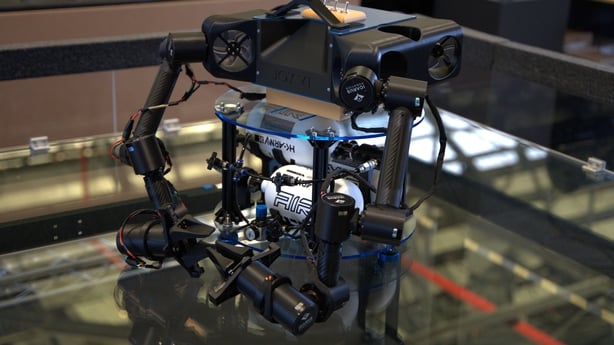
Icarus Robotics has agreed a mission management contract with Voyager Technologies to test its free-flying robotic platform ‘Joyride’.
Under the agreement, Voyager will oversee payload integration, safety certification, launch coordination, on-orbit operations planning and real-time mission execution support.
The International Space Station demonstration will take place in early 2027.
Icarus Robotics uses artificial intelligence (AI) to create human-controlled robots that can learn and carry out tasks in space.
“Icarus Robotics represents the next generation of space builders and provide the turnkey solution for those seeking reliable, flight-proven access to space,” said Matt Magaña, President, Space, Defence & National Security, Voyager.
The company’s first-generation robots are operated remotely by humans, a first step toward embodied AI – machines that learn from human demonstrations and eventually carry out complex space tasks autonomously.
Icarus was co-founded by Mr Palmer who was born in Tyrone and moved to Tipperary at the age of five.
The company’s other co-founder Ethan Barajas was a participant in Voyager’s NASA HUNCH programme when he was in school.
“It is very full circle to return the favour and deliver a robotic platform to help make the ISS and future commercial stations like Starlab smarter–autonomous, free-flying, and ready to operate where humans can’t easily go,” Mr Barajas said.
According to Icarus, labour has become a pressing bottleneck in space missions with astronauts spending much of their time on mundane tasks such as cargo handling and equipment checks.
The robots being designed by Icarus will have built-in intelligence allowing them to physically interact with their environment and learn, adapt, and evolve while in space.
They will be able to take on a full range of space labour such as intravehicular activities, tasks performed inside spacecraft, and eventually scaling to large-scale orbital construction, such as maintaining satellites and infrastructure in space.
In September 2025, Icarus announced the completion of a $6.1m funding round.