
However, there are no plans to introduce pandemic-style travel restrictions to conserve Ireland’s fuel supply as the energy crisis resulting from the US-Israeli invasion of Iran deepens worldwide.
Mr Harris said it “may well be necessary again” for the government to give advice to citizens on conserving energy akin to the messaging around saving energy during the early part of Russia’s invasion of Ukraine led to global gas shortages.
Mr Harris said while the current energy crisis “is very different to the covid crisis” he said it is a “very challenging situation too.”
“There are no plans currently to adapt people’s travel schedules,” he said.
Mr Harris said that people will change their travel habits anyway due to the increase in price and defended the government’s recent intervention on petrol and diesel prices.
“We staged one of the biggest interventions in European Union last week per head of population, but no government in the world can absorb or should absorb all of the cost – it’s not possible economically.”
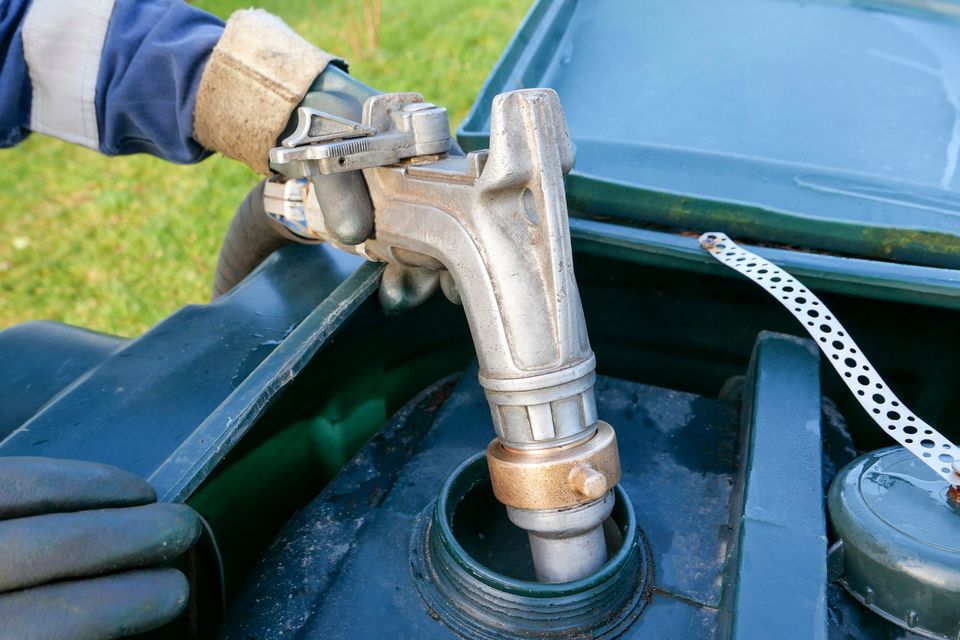
Home-heating oil costs have jumped. Photo: Getty
Today’s news in 90 Seconds – Monday, March 30
He said they are examining the circumstances “each and every month” around the energy crisis.
Mr Harris said there was also no intention to call for mass working from home and said there were also no plans for the Defence Forces to police petrol stations to make sure only key workers get fuel, “we’re nowhere near that point.”
“The Irish people are full of common sense and decency,” he added.
The Tánaiste said there were currently “adequate supplies” in Ireland and Europe for the supply of fuel.
“Bear in mind this is a war that is seeing energy supplies destroyed. That does have real consequences in terms of global supplies and no country is immune to that.”
Mr Harris said the government is trying to “seek a de-escalation” of the conflict and preparing for the “various economic outcomes” and a Spring forecast for the economy will be provided in April.
“There’s a great sense of economic anxiety and worry,” he said, but believed real incomes to rise this year.
He said governments around the world are currently preparing for a variety of “scenarios” in the fuel crisis.
“There are no supply concerns in Ireland today, there are no supply concerns in Europe today but again what if we’re having this conversation many months down the road and infrastructure is still being destroyed in the middle east and the gulf region and energy supplies disrupted?”
He said that this energy crisis was the “greatest that the world has ever seen”.
The International Energy Agency told Eurogroup Finance Ministers last week that according to their estimates even if the conflict in the Middle East ended today, the damage to energy infrastructure would take “the best part of a year” to repair.
“No matter what happens here there is going to be a challenge, it’s only a matter of how grave and significant that challenge is.”
Mr Harris said the government will be looking at how other countries are responding and “we’ll have to decide at the end of May whether the current measures are the right measures or if they need to be adapted, ended or changed.”
The Tánaiste said the latest consumer price inflation estimate rising to 3.6pc in the 12 months to March “vindicated” the government’s move to provide energy support last week.
“If this conflict goes on for a prolonged period of time, the scale of the economic challenge that the world will face – and Ireland will not be immune from that – will be very significant.
“I’ve got to get the balance right…between acting now to help people like we did last week, and we will keep that under review and keeping some economic powder dry for the time ahead.
“We’re fortunate to live in a country that does have a degree of economic fire power; full employment, budgetary surpluses, money set aside in terms of fiscal buffers that all helps, that’s all important.”
He said warnings at the Eurogroup meeting from the IEA about the scale of the crisis “struck” him which set out that the current fuel crisis is worse than the oil crisis in 1970, 1976 and gas crisis in 2022.
“This current energy crisis globally is larger than all three combined, and is ongoing and worsening by the day.”
He acknowledged that there is “huge frustration” amongst the public “at a time when inflation was falling, at a time when the economy is growing well to now see this significant economic impact not parking the humanitarian impact.”
“We will respond in Ireland, we will get through from a position of strength, but I do I have to advise the Irish people that really the only sensible, responsible course of action to take is step by step.”
The Tánaiste said he will be engaging with the IFA and farm contractors this week along with the Minister for Agriculture regarding the fuel crisis.
“We’ll continue to engage, we’ll continue to listen and trying to get that balance between responding in the here and now and preparing for what could be a very difficult time ahead.”