
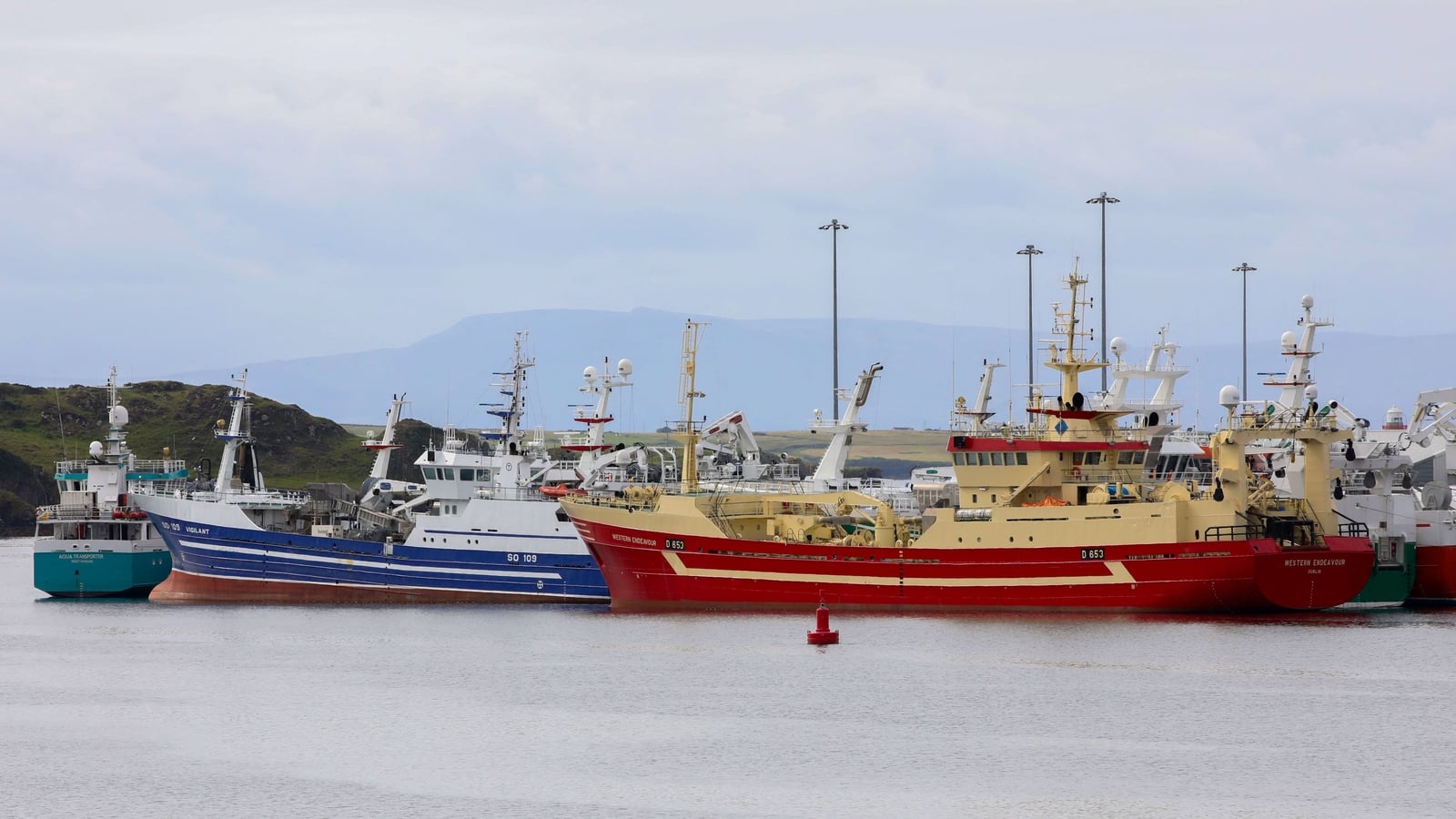
Fishing industry leaders have welcomed a €32 million mackerel agreement secured at the EU Agrifish Council in Brussels.
Minister of State for Fisheries Timmy Dooley said deal will provide 8,000 additional tonnes of mackerel for Irish quota holders.
“It’s very important this year with so many negative issues facing the fishing and processing sector.
“It will have a significant impact on the coastal communities in terms of jobs and overall funding into those areas,” Minister Dooley said.
At the December Fisheries Council in Brussels, Ireland lost one third of its fish quota with projected catch losses valued at €105m, as the total allowable catch for a number of shared stocks was significantly reduced.
Ireland’s most valuable quota, mackerel, was earmarked for a 70% reduction.
However, this morning’s agreement will see that lessened to a 48% reduction.
Atlantic Mackerel, a shared fish stock, is managed through often contentious negotiations involving the EU and non-EU coastal states.
Minister of State Timmy Dooley said following conversations with the Marine Institute he pushed for the EU to level matters between both sides.
“I’ve been engaging with colleagues around Europe to try and bring some balance and level the playing pitch to ensure that Ireland, who holds the greatest percentage of the mackerel quota got a fair chance to sustain our fishing sector, particularly, the pelagic fleet and consequently then, the processing sector and the jobs in those communities.”
The Seafood Ireland Alliance said the deal will help provide a level of stability to the fishing industry.
However, it said many concerns remain.
The alliance said the Irish fleet still face the loss of over half of their 2025 EU fishing quota due to EU cuts and are significantly impacted by rising fuel costs.
The group has acknowledged what they described as “strong engagement” by Minister Dooley and Irish MEPs.
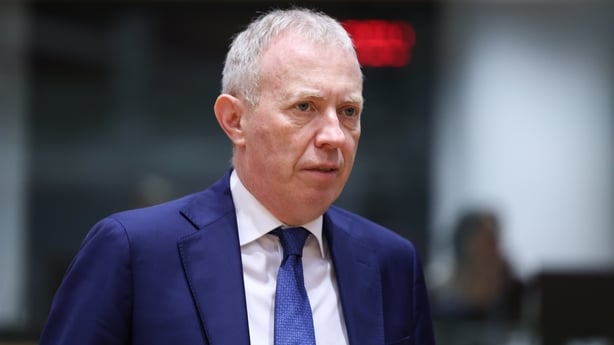
Timmy Dooley said he pushed for the EU to bring balance to the quotas
The alliance said Ireland benefits significantly, reflecting the country’s role in developing the fishery over decades.
CEO of the Irish Fish Producers Organisation Aodh O’Donnell described the deal as “major progress”.
“This deal secures landings of mackerel worth €32 million. That matters for coastal jobs and processors.
“But let’s be clear. Ireland still has 20,000 tonnes less of mackerel to catch in 2026. This is major progress,” Mr O’Donnell said.
CEO of the Irish Fish Processors and Exporters Association Brendan Byrne said the deal “restores the level playing field with competitors in the short-term for mackerel”.
“It protects markets and supports Ireland’s processing sector,” Mr Byrne said.
Patrick Murphy of the Irish South and West Fish Producers Organisation said cooperation between various stakeholders was key to the outcome.
“The result is a more balanced quota. It includes a 48% reduction in mackerel quotas to protect future stocks,” Mr Murphy said.
Dominic Rihan of the Killybegs Fishermen’s Organisation said mackerel underpins key ports like Killybegs, Ros an Mhíl, and Castletownbere.
“This deal secures important fishing opportunities for the autumn. It protects jobs at sea and onshore in Killybegs, but we still need a long-term agreement to protect our fishermen and the mackerel stock,” he added.
John Lynch of the Irish South and East Fish Producers has warned of the impact of rising costs in the industry.
“Ireland holds the largest EU mackerel share for good reason. But fuel costs have doubled in the last fortnight, so many vessels are facing real viability challenges.
“The Minister must now push for targeted EU supports, particularly for the whitefish fleet,” he said.
Mr O’Donnell warned that Ireland cannot continue with less than 6% of EU quotas and called has called for a long-term review of the Common Fisheries Policy.
Meanwhile, in Killybegs, CEO of the Atlantic Dawn Group Karl Mc Hugh commended Minister Dooley efforts for what he described as “a welcome reprieve”.
“This is a short-term fix and there’s a long-term problem which has been going on for many years.
“Other coastal states have been acting irresponsibly, and that has affected our share of what is rightfully a resource of the Irish nation.
“We’re calling on the Minister to continue his fight to try to secure and retain our rightful share of this fish.”
Skipper of the Vigilant vessel Marc Gallagher told RTÉ News his crew has spent 14 days at sea this year and would be finished for 2026, if not for today’s announcement.
“This year we fished a total of 14 days. Without this quota increase, this boat would be tied up until 2027.
“We have nine of a crew; that’s nine families and we’re supplying a factory with 30 to 40 people ashore for every job at sea.
“This year has really been the most difficult we’ve ever encountered, unlike anything else.
Mr Gallagher said while the announcement will give us some reprieve, he described it as “a sticking plaster on a gaping wound”.
“The Irish fleet has suffered on the back of the Brexit trade agreement, the blocking of our Hague references last December and we’ve suffered massive losses to our quota.
“It certainly helps when you get a slight increase on the on the top of huge losses. We do appreciate it; but we’ve enough a long way to go before we’re back to a thriving industry that we should have for a coastal nation.
“We should be the pride of Europe,” he said.