
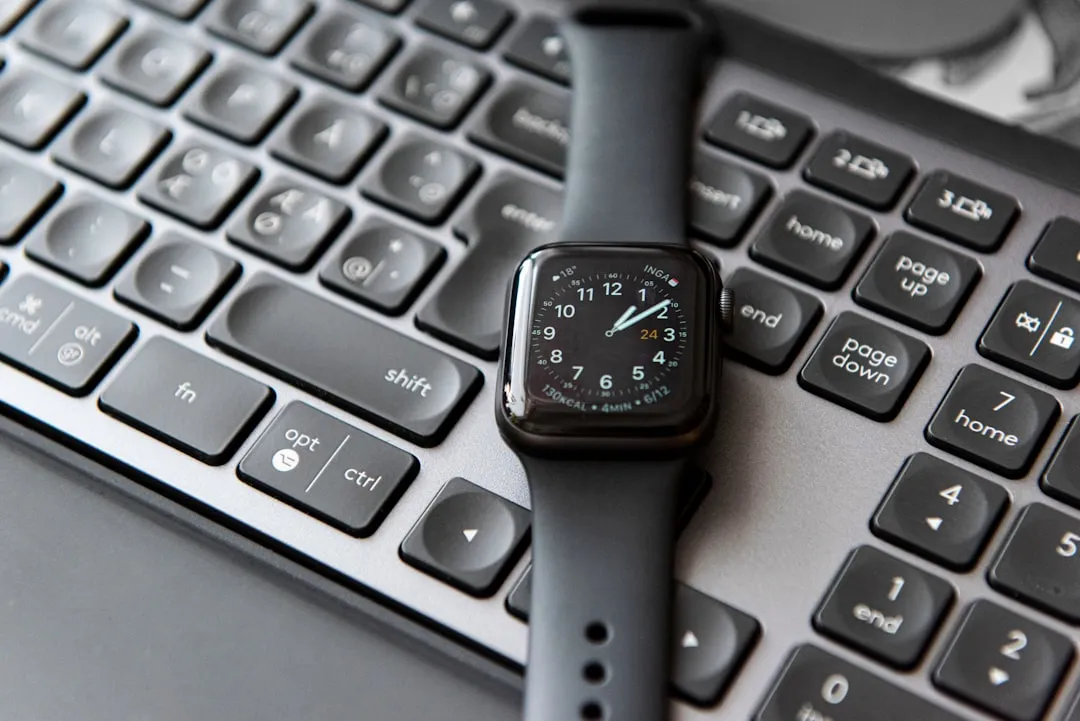
With Apple’s hardware designers apparently sitting this cycle out, software has to carry the entire story for Apple Watch this year. Bloomberg’s Mark Gurman said during a live Q&A on the Bloomberg website last Thursday that the next Apple Watch will look essentially unchanged from the current lineup. A separate rumor places any significant physical redesign at least two years out, according to MacRumors, which covered Gurman’s comments four days ago. When the chassis stays the same, watchOS carries the whole story.
Two rumored watchOS 27 upgrades are now circulating: a visionOS-inspired interface overhaul, and Apple Intelligence coming to Apple Watch. Both are worth knowing about. They are not equally worth believing.
This is less a feature preview than a credibility analysis, a look at where each claim comes from, what the evidence actually supports, and what readers should treat as plausible versus premature before WWDC.
How to read these rumors: the source gap that shapes everything
Before examining either claim, the sourcing picture matters.
The hardware outlook, stable design with no imminent redesign, comes from Mark Gurman, whose Apple roadmap reporting via Bloomberg has a strong track record. That part of the picture is as reliable as pre-announcement information gets.
Both software rumors, by contrast, originate with The Verifier, an Israeli outlet that MacRumors covered in April 2025 and explicitly flagged as a less established source. MacRumors didn’t just relay The Verifier’s claims; it called specific parts of them questionable in the same article. That’s an unusual editorial signal, and it matters for how much weight to assign each item.
A claim from Gurman and a claim from The Verifier occupy different tiers of confidence. Readers deserve to know that upfront rather than find it buried in caveats.
The watchOS 27 redesign rumor: plausible, but the timing is unproven
The Verifier’s more grounded claim is a visual overhaul for watchOS. MacRumors’ April 2025 coverage describes an interface that borrows from visionOS, with bolder visuals, a degree of transparency, and what the report calls a floating aesthetic applied across buttons, menus, icons, and the Home Screen. Apple is said to be working on several ideas for the Home Screen layout, which suggests the work is still in an exploratory phase.
Claim: A visionOS-like visual language comes to watchOS, touching the full UI layer.
Evidence and source: Reported by The Verifier, relayed by MacRumors in April 2025. The same report connects this to design updates rumored for iOS 19 and macOS 16, though that connection reflects The Verifier’s framing rather than independent confirmation from a separate source. Platform-wide unification is a plausible pattern, not an independently verified fact.
Key constraint: The Verifier explicitly acknowledged it does not know when these changes would ship, because development is reportedly ongoing. That timing gap is not a minor caveat. It means this could be watchOS 27, a later release, or an internal concept that never ships publicly.
Verdict: The redesign rumor is plausible, but the timing is unproven. A visual unification effort across Apple platforms is consistent with how Apple has approached past design cycles, and it requires no hardware changes that aren’t already in place. Still, “plausible direction” and “confirmed for watchOS 27” are meaningfully different things.
The Home Screen and menu structure are unusually consequential on a screen measured in millimeters. Apple Watch users navigate primarily by scrolling through small elements on a constrained display, so restructuring those layers isn’t cosmetic; it changes the basic feel of daily use. If this work ships, it’s the most impactful change possible on a hardware-stable platform. When it ships is the open question.
The Apple Watch Ultra watchOS 27 Intelligence rumor: an appealing idea with a fundamental problem
The Verifier’s second claim is that Apple Intelligence is coming to Apple Watch, starting with the Ultra and rolling out to other models a year later. The reported feature set includes notification summaries, Genmoji creation, and a Siri variant that draws on fitness data, sleep tracking, heart rate, and health monitoring, per MacRumors’ April 2025 coverage. The Ultra would receive an exclusive new chip to make this possible.
Claim: Apple Intelligence debuts on Apple Watch Ultra with a health-contextualized Siri, then expands to other models the following year.
Evidence and source: The Verifier, relayed by MacRumors in April 2025. No corroboration from Gurman or any comparably reliable reporter. MacRumors itself called the claim questionable in the same article.
Key constraints, two of them, both significant:
The hardware math doesn’t work. Apple Watch currently runs on 1GB of RAM; MacRumors noted that current Apple Intelligence-compatible devices carry at least 8GB of RAM. That’s not a modest engineering gap to close.
The Ultra-exclusivity framing cuts against Apple’s observed pattern. As MacRumors flagged directly, Apple has been bringing Apple Intelligence features to as many eligible devices as possible, not restricting them to its highest-priced hardware. MacRumors treated this contradiction as a red flag, not a footnote.
Both issues are independent reasons for skepticism, and the reporting resolves neither.
There is an obvious counterargument worth taking seriously: Apple Intelligence doesn’t have to run on the watch itself. Features could be offloaded to a paired iPhone or handled via cloud processing, bypassing the on-device RAM constraint entirely. That’s technically feasible. The problem is that The Verifier’s claim doesn’t describe that architecture; it describes an exclusive new chip in the Ultra designed to run Apple Intelligence on-device. If the actual implementation were iPhone-offloaded or cloud-based, the Ultra-exclusivity framing would make no sense, since every Apple Watch pairs with an iPhone capable of doing that work. The rumor’s own internal logic undermines the most charitable technical reading of it.
Verdict: The concept has genuine appeal. Apple Watch collects more intimate personal data than almost any other device in the lineup, and a Siri that actually used that context would be a real advancement. But the claim as stated doesn’t survive contact with known technical constraints, and it comes from a single source that even its relay outlet questioned. Until a more credible reporter offers specifics on the processing architecture, this belongs in the speculative column.
What this means before WWDC: a credibility map
Taken together, the watchOS 27 Apple Watch upgrades picture is clearer than the headlines suggest, though not uniformly encouraging.
Likely: Hardware stays the same. Gurman’s track record makes this the most reliable element in the picture.
Possible: A visionOS-inspired interface redesign. The direction is plausible, the source is not top-tier, and the timing is explicitly unknown even to the reporter who filed it.
Unlikely as described: Apple Intelligence on Apple Watch for watchOS 27. The RAM gap alone makes the on-device claim technically implausible, the Ultra-exclusivity framing conflicts with Apple’s observed AI deployment behavior, and the most obvious workaround, offloading to iPhone, directly contradicts the rumor’s own logic.
What would shift the judgment on Apple Intelligence? Corroboration from Gurman or a supply-chain reporter, paired with a credible explanation of the processing architecture. Without that, the claim is a concept, not a roadmap item. On the redesign, a reliable secondary source confirming watchOS 27 as the specific target release would upgrade its status from “plausible eventually” to “plausible this year.”
Apple’s WWDC, typically held in June, is the next credible checkpoint. That’s roughly ten weeks out, close enough that significant leaks would be expected if either feature were genuinely shipping this cycle. The relative quiet from stronger sources is itself a data point.
Looking ahead
The hardware is almost certainly staying put; Gurman’s judgment on that is about as firm as pre-announcement reporting gets. The interface redesign is a real possibility, but “Apple is exploring this” is not the same as “this ships in watchOS 27,” and the source behind that claim isn’t in a position to close that gap. The Apple Intelligence rumor is the least supported of the three items and the most technically challenged.
If Apple announces a visionOS-style interface refresh in June, it will validate The Verifier’s direction while confirming that timing was always the uncertain part. If Apple Intelligence for Apple Watch appears, the burden on Apple will be to explain how the hardware makes it work, because no current reporting does. Watch for those technical specifics. They’re what separates a genuine platform advancement from a rumor that sounded good on paper.