
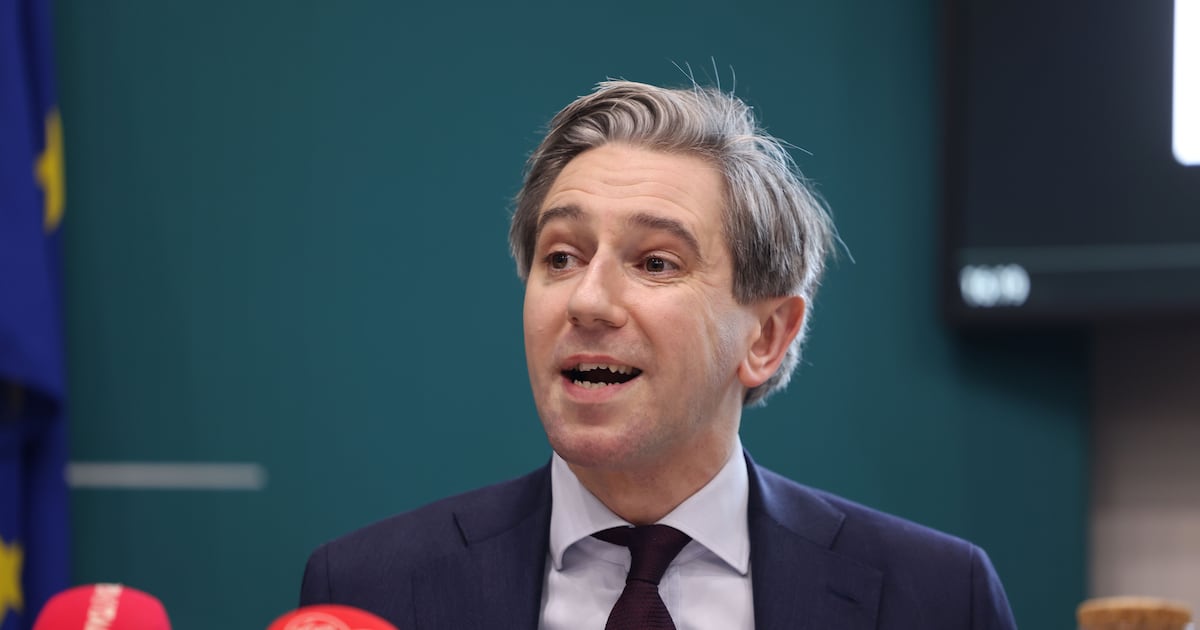
Minister for Finance Simon Harris is set on Tuesday to unveil the outline of a plan to encourage households to invest, with money put into a special savings scheme set to attract only a small flat rate of tax – and avoid taxation on capital gains.
The proposal is based on a Swedish model, where the rate of tax is linked to the market rate – or yield – that applies to the Government’s benchmark bonds. The Swedish tax rate is currently 1.065 per cent.
The planned Irish regime will carry an annual flat-rate tax to the value of assets held in the account above a tax-free threshold that is likely to be set in the budget later this year. The Minister will tell an investment forum at the Central Bank that this flat rate of tax could potentially serve as the sole form of taxation on investments made through the new account.
The aim is that all investments made within the account would receive consistent tax treatment, he will say. Account providers would be required to administer the tax to help remove complexity for investors.
The plan is in line with a push by the European Commission for EU member states to adopt tax-friendly models to encourage individuals to invest.
[ State investment scheme should not tax entry or transactions, says Ibec groupOpens in new window ]
Irish households have about €170 billion on deposit with banks, most of which is earning little or nothing in current or on-demand deposit accounts.
Households countrywide saved 12.4 per cent, or €1 in €8, of their disposable income in the final three months of last year, according to the Central Statistics Office (CSO).
The provisional saving rate for 2025 as a whole was 13.6 per cent, similar to 2024 and higher than 2023, the agency said earlier this month.