
Humanity is facing what is being described as its greatest health challenge, and those charged with keeping us healthy are grappling with their own contribution to the problem.
The World Health Organisation (WHO) lists climate change as the single biggest health threat facing humanity, responsible for the deaths of 13 million people annually.
In Australia, the healthcare sector accounts for 7 per cent of the nation’s total emissions and, in Queensland, nearly 50 per cent of government emissions are from the public health system, primarily driven by electricity consumption.
It is why all 16 of the state’s public health services are implementing sustainability measures, from procurement to design, recycling and energy reduction.
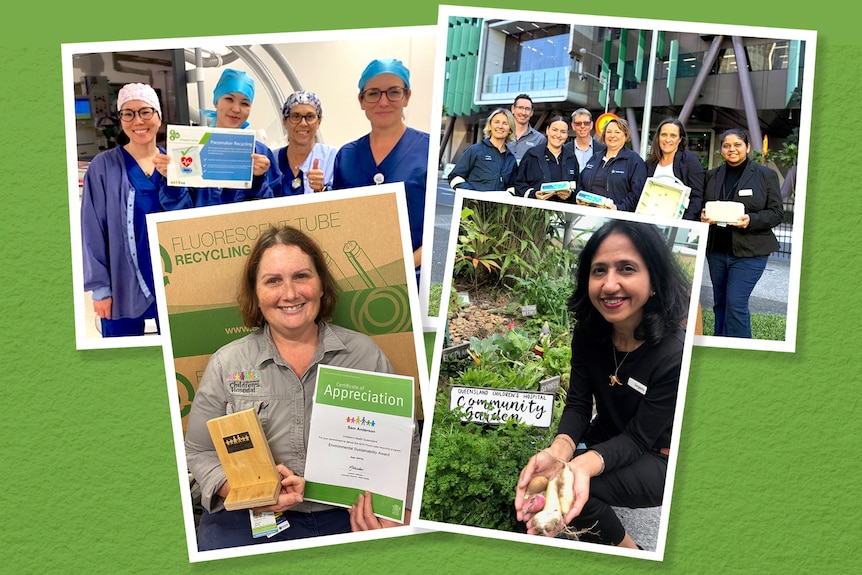
Children’s Health Queensland is implementing environmentally sustainable measures. (Supplied: Children’s Health Queensland)
Children’s Health Queensland (CHQ) has been slowly introducing environmentally sustainable initiatives and has just published its third sustainability plan.
Sustainability consultant Renae McBrien said it was showing the next generation that things could change.
“We’re trying to map sustainability, not be a burden on the system, but an opportunity,” she said.
“We’re showing Queensland that you can actually save money and generate money.”
It is a promising step forward in an industry known for its consumption of electricity and water and reliance on single-use plastics — in fact, if the global health industry were a country, it would be the fifth-largest emitter on the planet.
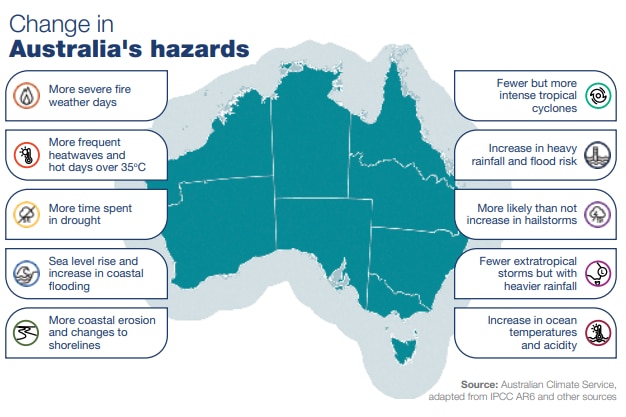
Predicted changes for hazards in Australia from climate change. (Supplied: Australian Government National Health and Climate Strategy)
In the past decade, CHQ has generated about $1.6 million in savings.
Metal recycling is one of the 42 recycling streams CHQ now has.
“We have platinum, iridium and gold wires, and silver in some of our conductive materials [used in] sleep studies, respiratory studies, and our cardiac catheterisation labs — precious metals that were going in the bin,” Ms McBrien said.
“We now have a huge skip bin that fills up every month that goes out for recycling, so it’s about 1.5 tonnes a month that we’re moving.
“We’ve trained our entire workforce to respect different materials in different capacities and quantities to make sure we get them out to the right places in the community.”
The five illnesses experts say climate change is making worse
Sustainability programs are proving popular among staff, who can volunteer for the “Green Team” to help with communication and ideas.
“It’s getting a lot easier for healthcare workers inside Queensland Health to say, ‘Hey, I’ve got an idea,’ and there’s an audience and a process for them, we can help solve their problem,” Ms McBrien said.
CHQ is now undertaking a research project with the partially government-funded Solving Plastic Waste CRC.
“[Plastic waste is] very necessary inside hospitals, but we need to learn how to value it and use it,” she said.
As a reliable source of clean and sterile plastic, Ms McBrien said it was a “highly valuable” material.
“We are working to understand what our medical plastics are made of, then talking with and working with local manufacturers to drive manufacturing from that,” she said.
Climate change impacts health
In December 2023, the Australian government launched the first National Health and Climate Strategy, aimed at better preparing health services for the challenges presented by climate change.

Kevin Phillips says they need to make sure the changes do not impact the health services. (Supplied: Queensland Health)
“We understand the change in climate will impact the health of our populations, so it’s important we are preparing ourselves,” Kevin Phillips, the Director of the Office of Hospital Sustainability, Queensland Health, said.
“We’re readying ourselves for the changing disease and health impacts that will come from the climate.”
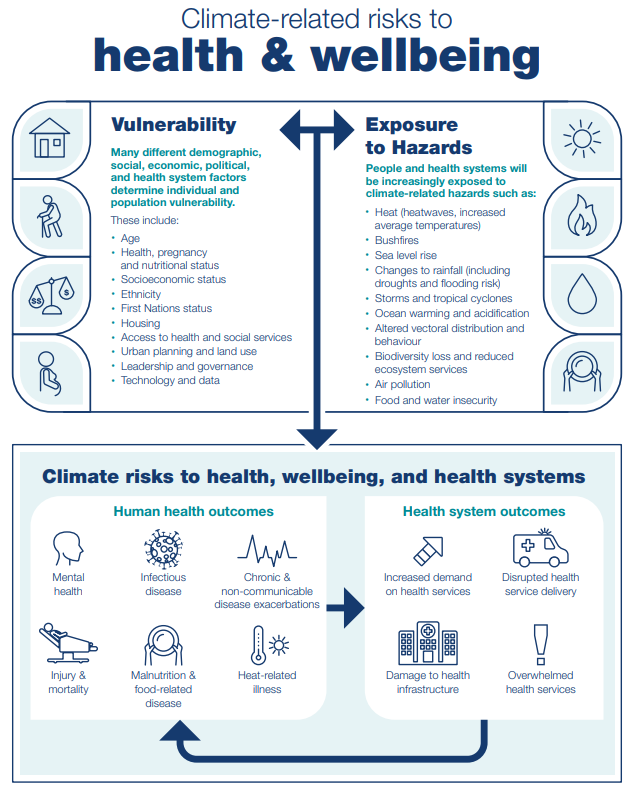
The health risks associated with climate change. (Supplied: Australian Government National Health and Climate Strategy)
One of the biggest challenges is making changes to an industry that works around the clock.
“There isn’t really the luxury of stopping that and stepping back and having a whole-of-system look at it,” Mr Phillips said.
“So, we need to be making changes as we go, and we need to make sure the changes aren’t impacting our ability to deliver those health services.”
Potent greenhouse gas system removed
Metro North Hospital and Health Service developed its first sustainability strategy in 2021, implementing more than 50 recycling initiatives in just five years.
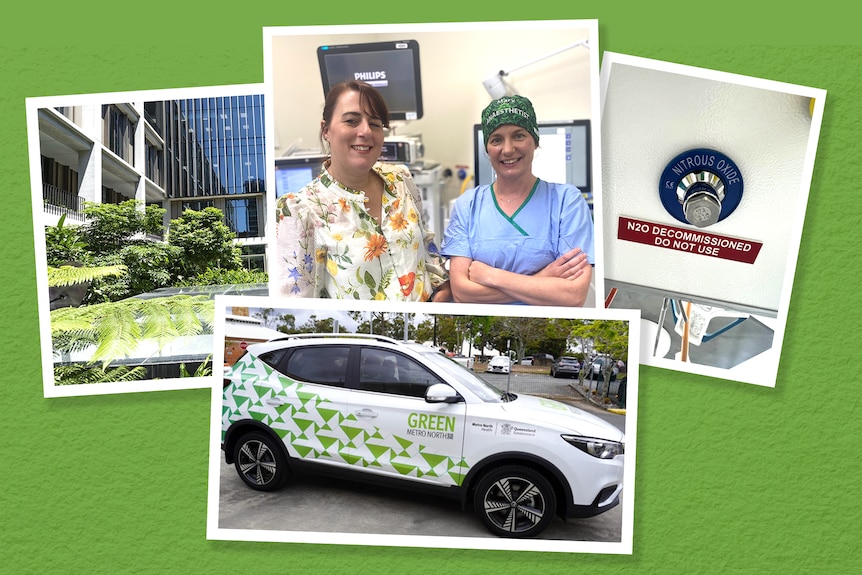
Metro North Hospital and Health Service has established more than 50 recycling initiatives. (Supplied: Metro North Hospital and Health Service)
“But a bigger part is actually reducing waste in the first place by making really informed decisions on what you buy and how you use your resources,” Kellie Williams, Metro North director of environmental sustainability, said.
Last year, the Prince Charles Hospital in Brisbane became the first Queensland hospital to decommission reticulated nitrous oxide anaesthetic gas.
Ms Williams said while the gas was safe and suitable for birthing and maternity, it was a potent greenhouse gas, 300 times stronger than carbon dioxide.
Prone to passive leaking, 70 per cent of the gas was being lost into the atmosphere through valves, wall outlets and hospital pipelines.
“We’re starting to decommission our reticulated systems to remove that method of delivery of the gas around the hospital,” she said.
The hospital now uses portable gas canisters at patients’ bedsides.
Change takes time
While still in their infancy, sustainability initiatives in Queensland’s Wide Bay are progressing.
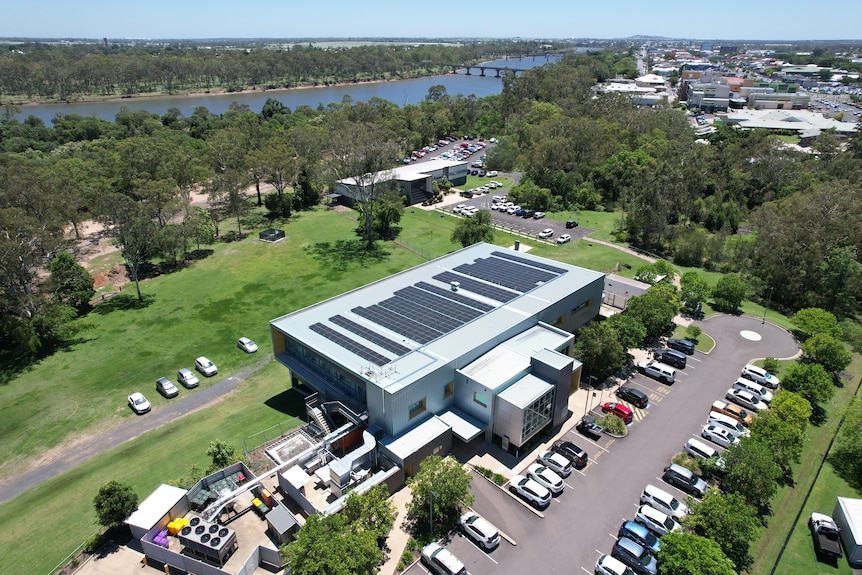
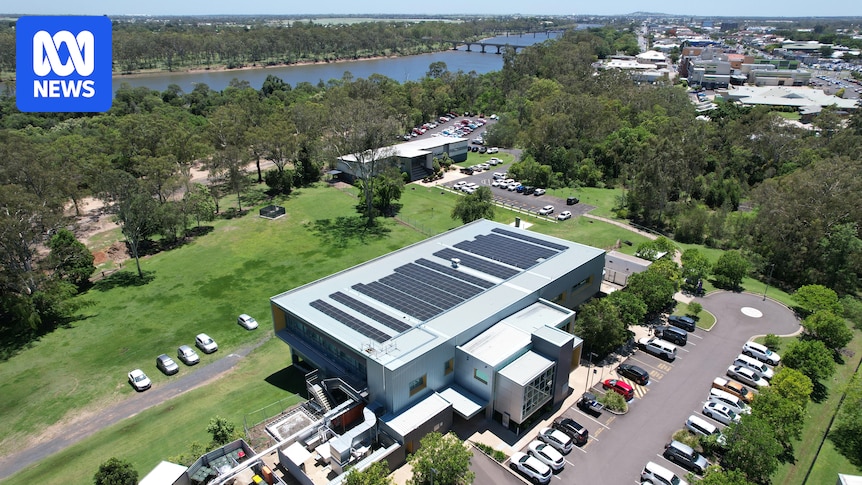
Wide Bay Hospital Health Service has installed rooftop solar on three facilities across the region. (ABC Wide Bay: Johanna Marie)
Solar panels have just been installed on three facilities, and programs to divert waste from landfill, separate clinical waste and transition fleet cars to electric, hybrid or low-emission vehicles are underway.
“It’s about looking at the picture as broadly as possible and trying to attack that emissions reduction on a number of fronts because there’s no silver bullet,” Wide Bay Hospital Health Service environmental sustainability project officer Christina Ongley said.
Ms Ongley said infrastructure posed a huge challenge for sustainability measures.
“Technology changes, services change, our communities grow all the time, and we realise that we just run out of space,” she said.
“We can say, ‘Let’s set up a new recycling service and let’s divert these things out of landfill,’ but we have no room to put three bins.”
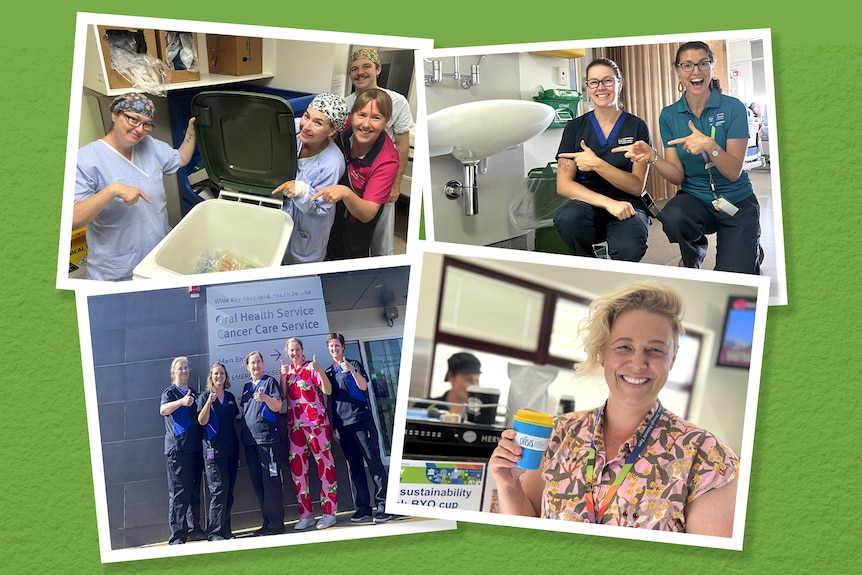
Wide Bay Hospital Health Service have introduced programs to divert waste from landfill. (Supplied: Wide Bay Hospital Health Service)
Angie Bone, an associate professor of practice at the Monash School of Public Health and Preventive Medicine, said while sustainability had been on the national agenda for decades, it had really gained momentum in the past three to four years.
“It started very much thinking about the obvious, but we’re turning our attention now to the things we buy, our supply chains and our disposal routes and how we use resources, how we steward the resources we have,” Dr Bone said.
She said health services could see a rise in patient presentations and admissions due to the impact of climate change, as well as recognising the financial benefits and value to patient care that sustainability measures could provide.
“And partly because there’s increasing expectations by staff, patients, regulators and governments that hospitals take this seriously,” Dr Bone said.
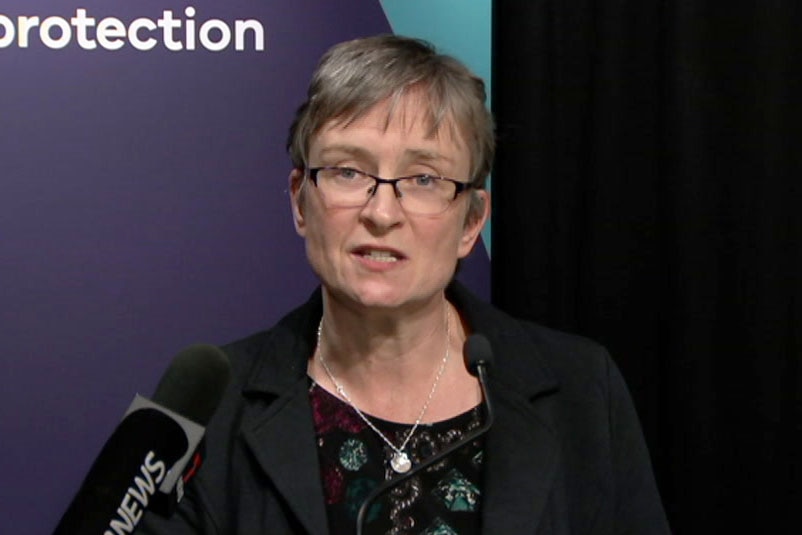
Angie Bone says healthcare sustainability has been gaining momentum the past few years. (ABC News)
Sustainability added to health standards
The Australian Commission on Safety and Quality in Health Care (ACSQHC), which is responsible for the standards hospitals are accredited by, has recently introduced a new module on healthcare sustainability and resilience.
The module, which is currently voluntary, describes how health services can integrate strategies on environmental sustainability and climate resilience into their existing quality-improvement frameworks.
The commission said there was strong support to include sustainability in the next edition of the National Safety and Quality Health Service standards in 2030, which all hospitals will be required to meet.