
The proposed closure of a long-standing European Union nature programme will have a “deeply regressive” impact on efforts to protect endangered species and habitats in Ireland, an Oireachtas committee has said.
The Oireachtas Committee on the Environment has employed a rarely-used mechanism called a “political contribution” to challenge the EU’s decision to end the Life programme, a dedicated funding instrument for environmental and biodiversity initiatives.
Since 1992, Ireland has secured funding for more than 100 Life projects with total investment exceeding €200 million.
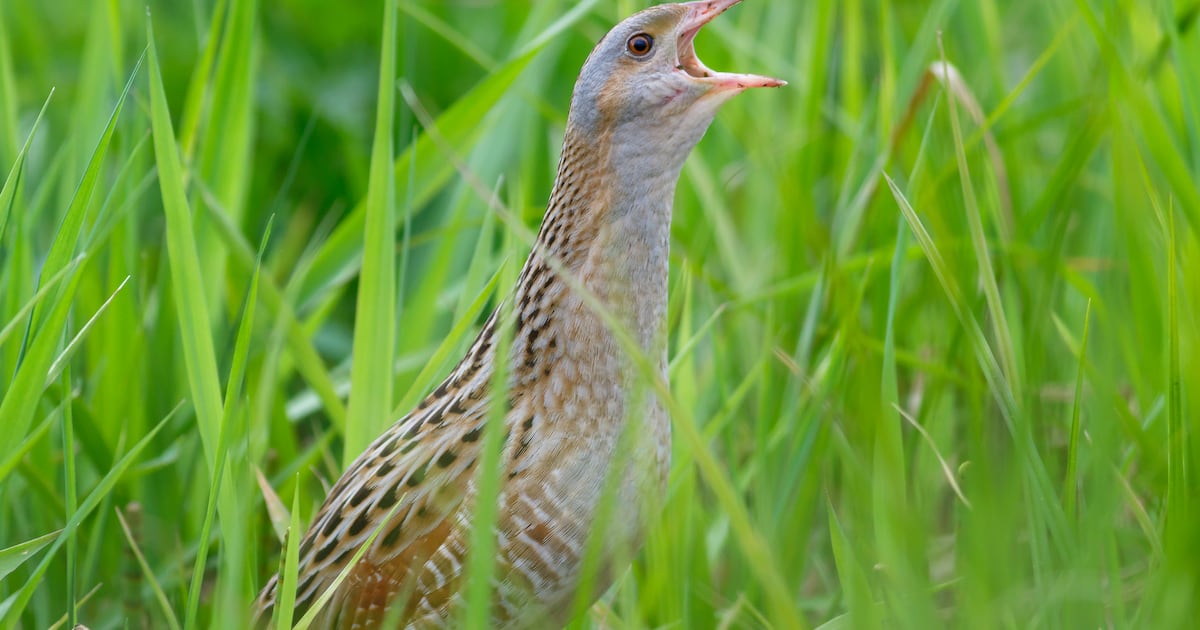
The Life programme has funded big projects to protect endangered species such as the corncrake, and vulnerable habitats such as blanket bogs and freshwater lakes. Participation by local communities, landowners and farmers has played an integral part of the projects, with funding available for positive actions that encourage conservation.
However, last year the European Commission announced that the Life programme would come to an end in 2028 and funding for conservation projects would be subsumed into a much larger fund that included research, industry, digital technologies and defence.
The committee, chaired by Fine Gael TD Naoise Ó Muirí, has held a series of meetings this year to ascertain the impact of this change. It said the changes would mean that nature projects would be competing in a very broad pool that used wider criteria – some not suited to environmental concerns – that would make it more difficult to secure funding.
It has taken the step of drafting a “political contribution”, a report that will be sent to the Government and president of the European Commission, Ursula von der Leyen, requesting the decision to end the Life programme be reversed.
In its report, the committee wrote: “The new approach risks the erosion of funding levels for nature and biodiversity and diminished focus, impact and efficacy, including a potential reduction in specialised expertise.”
It also stated: “The committee is concerned that the ending of the Life programme as a stand-alone instrument for the benefit of environmental and biodiversity initiatives is deeply regressive.”
Minister of State for Nature and Biodiversity Christopher O’Sullivan said on Friday he strongly supports the Life programme and will crusade strongly to retain it. He said he has already brought up the matter with the EU’s environment commissioner Jessika Roswall.
“These funding mechanisms have allowed us to think beyond ‘business as usual’,” he said.
He added that the programme had set the agenda for biodiversity policy across the State.
“It’s incredibly disheartening that the commission is proposing to take away the EU’s only dedicated environmental funding instrument,” added O’Sullivan.
John Carey, who has managed the Corncrake/Traonach Conservation Programme, told the committee that Life funding had helped bring the corncrake back from the brink of extinction.
Ó Muirí said it became clear to the committee during its research that a lot of important conservation projects would never have got off the ground without Life funding.
[ Ireland’s natural environment in ‘very poor’ condition, EU analysis findsOpens in new window ]
“By ending this programme and mainstreaming the funding, there is a real possibility that some projects will lose funding,” he said, adding that the new system would make it harder to establish such schemes.
“Getting projects started and getting buy-in from farmers and the local community takes time.”
Senator Malcolm Noonan, a Green Party member of the committee, said he was very concerned about the development.
“Our fear is that nature projects could end up competing with infrastructure projects, or defence and security spending, or digital spending. We’d have a real concern that the Life programme would fall way down the pecking order.”
He said programmes such as preserving blanket bogs, reducing pollution in freshwater lakes and waterways, and projects for bird species such as breeding waders and corncrakes, had made a marked difference.
The committee will ask the Government to lobby to retain the funding stream.