
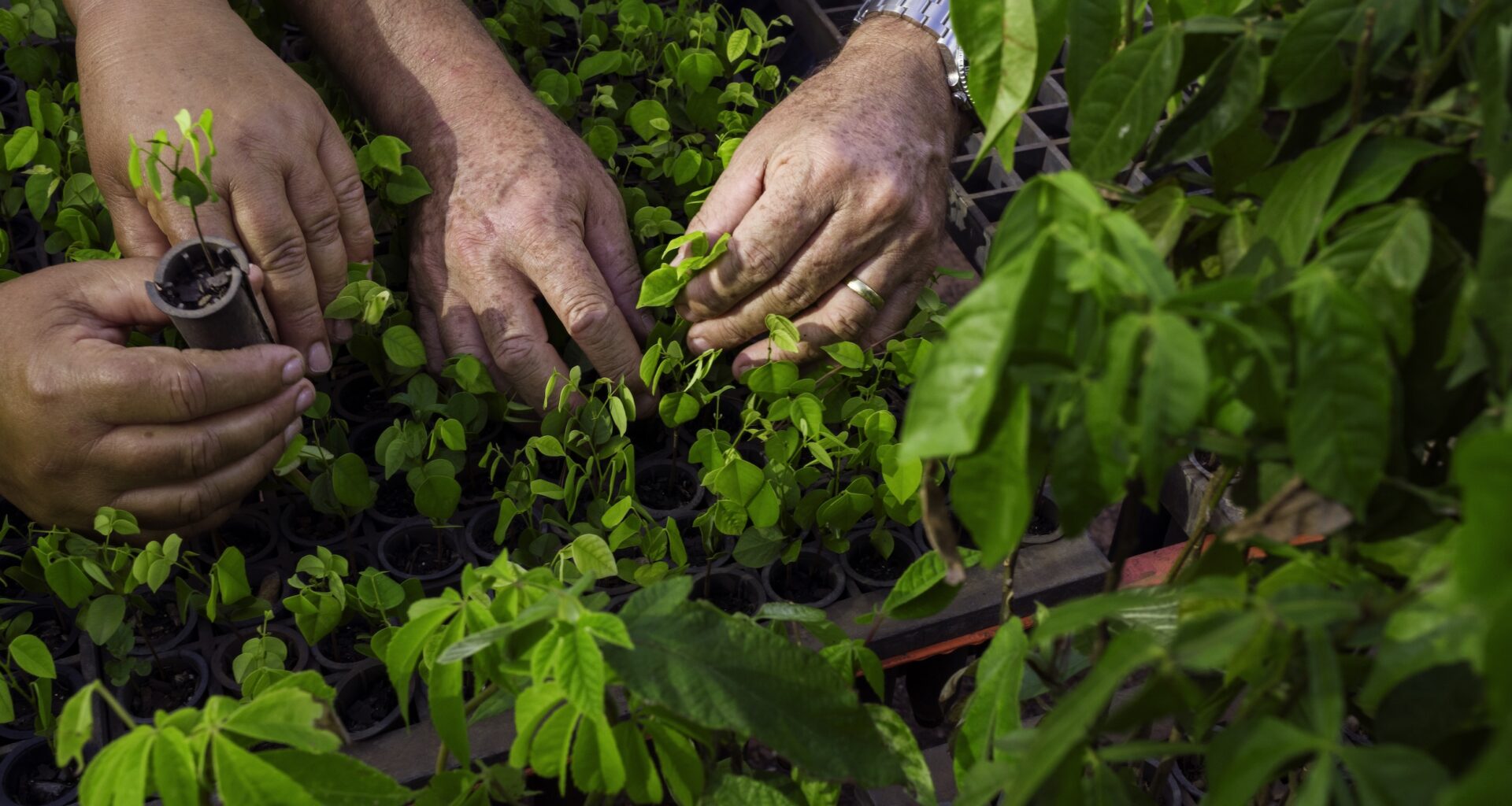
Driven by the work of several generations of land reform settlers, an initiative has already planted 10 million trees across 6,000 hectares in the Pontal do Paranapanema region of western São Paulo; the goal is to reach 75,000 hectares by 2041, an area roughly the size of New York City.By reconnecting Atlantic Forest fragments and creating ecological corridors, the project has helped bring wildlife back: 174 bird species and 29 mammal species have been recorded in reforested areas, and in 2024, a jaguar was sighted for the first time.The effort has also delivered local economic benefits: Rural startups, community nurseries and agroforestry coffee plantations have been established to support the program, all providing additional income for settler families.
See All Key Ideas
PONTAL DO PARANAPANEMA, Brazil — Sugarcane fields undulate across the landscape as a line of water stretches to the horizon. We travel along a dirt road in western São Paulo, on the banks of the Paraná River — the watery border between the states of São Paulo and Mato Grosso do Sul.
Here, monoculture overwhelms a landscape once covered by semideciduous seasonal forest, known as the Inland Atlantic Forest, where trees shed their leaves during the dry season.
In his pickup truck, biologist Haroldo Gomes, who holds a master’s degree in agronomy, carries a small forest: ipês (Handroanthus spp.), aroeiras (Myracrodruon urundeuva) and guarantãs (Esenbeckia leiocarpa) are some of the nearly 70 native Atlantic Forest species looking for a place to take root.
There was a time when Haroldo’s family, too, had no land. “When we arrived at the encampment, I was 11,” said Gomes, the son of land reform settlers. “During the conflicts, we lived for six years in a makeshift tent. I’ve run from gunfire during land occupations.”
Today, Haroldo serves as field coordinator for the Corridors of Life project at the Institute for Ecological Research (IPÊ). Through the initiative, both he and a diversity of native plant and animal species have found a place to call home. Since 2002, the project — driven by land reform families — has restored more than 6,000 hectares (14,800 acres), with 10 million trees planted.
The ambitions ahead are even greater: By 2041, the group aims to restore 75,000 hectares (185,000 acres) of priority conservation areas across 30 municipalities in São Paulo — an area roughly the size of New York City.
According to Laury Cullen Jr., general coordinator of Corridors for Life, as much as 250,000 hectares (618,000 acres) of land degraded over the past 4-5 decades could still be recovered. “These areas should be forest again, but they aren’t,” he said.
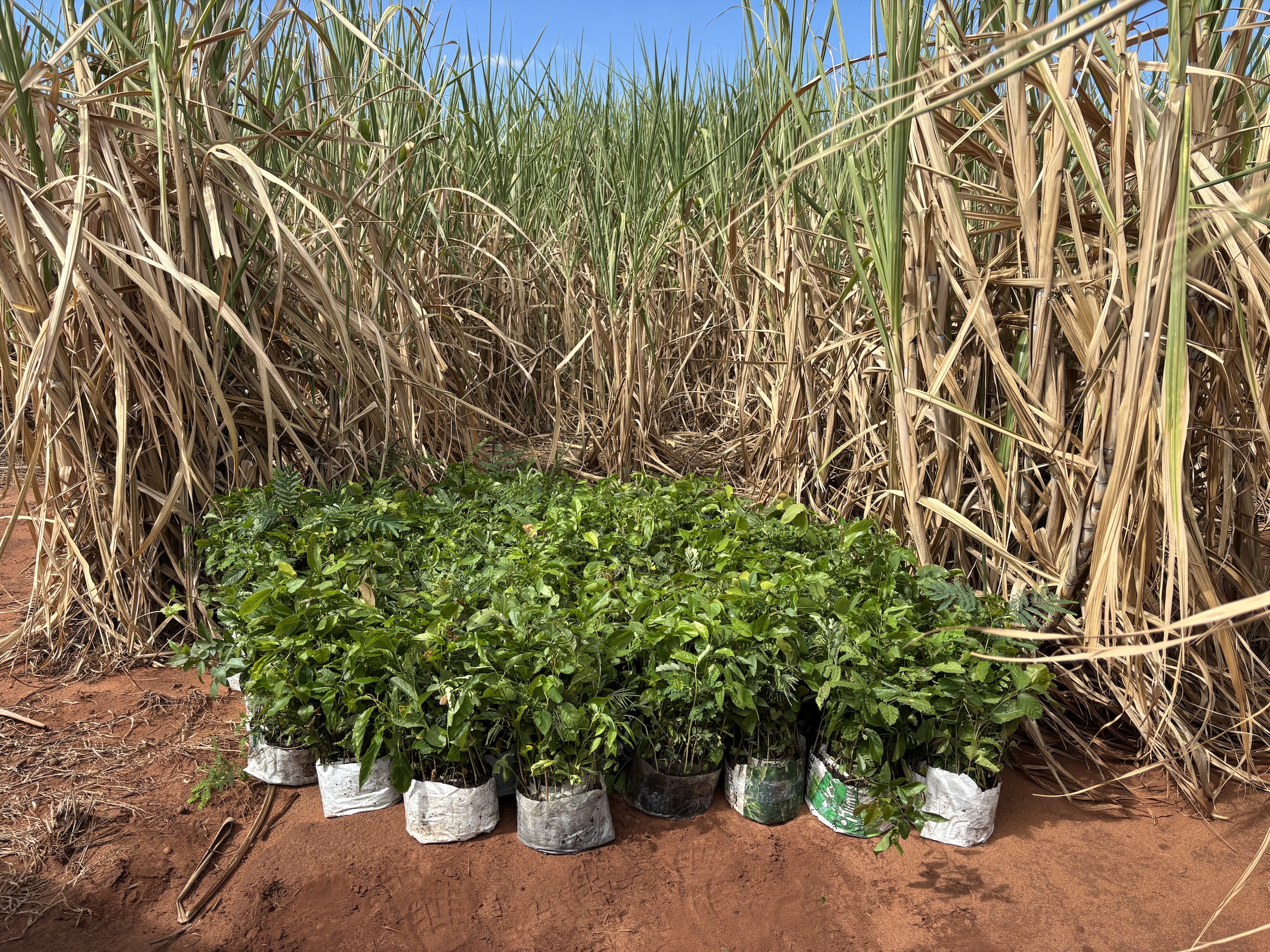 Seedlings for reforestation amid sugarcane fields. Image by Sibélia Zanon.
Scars on the landscape
Traveling dirt roads and advising those doing the planting is part of Haroldo’s routine. He has been with IPÊ for 24 years. It is a race against discouraging numbers: “Today, only 8% of native vegetation remains in the Pontal [do Paranapanema region, in São Paulo]. There are municipalities with less than 2% forest cover,” he told Mongabay.
The historical context helps explain the damage. The Pontal do Paranapanema region, spanning 32 municipalities in the far western corner of São Paulo state, was heavily deforested in the early 20th century. Part of this history is tied to the Sorocabana Railway, which transported coffee production and timber extracted from across the state. Years later, the railway also opened the way for land-grabbers to seize remaining lands, echoing a pattern seen in parts of the Amazon affected by major infrastructure projects.
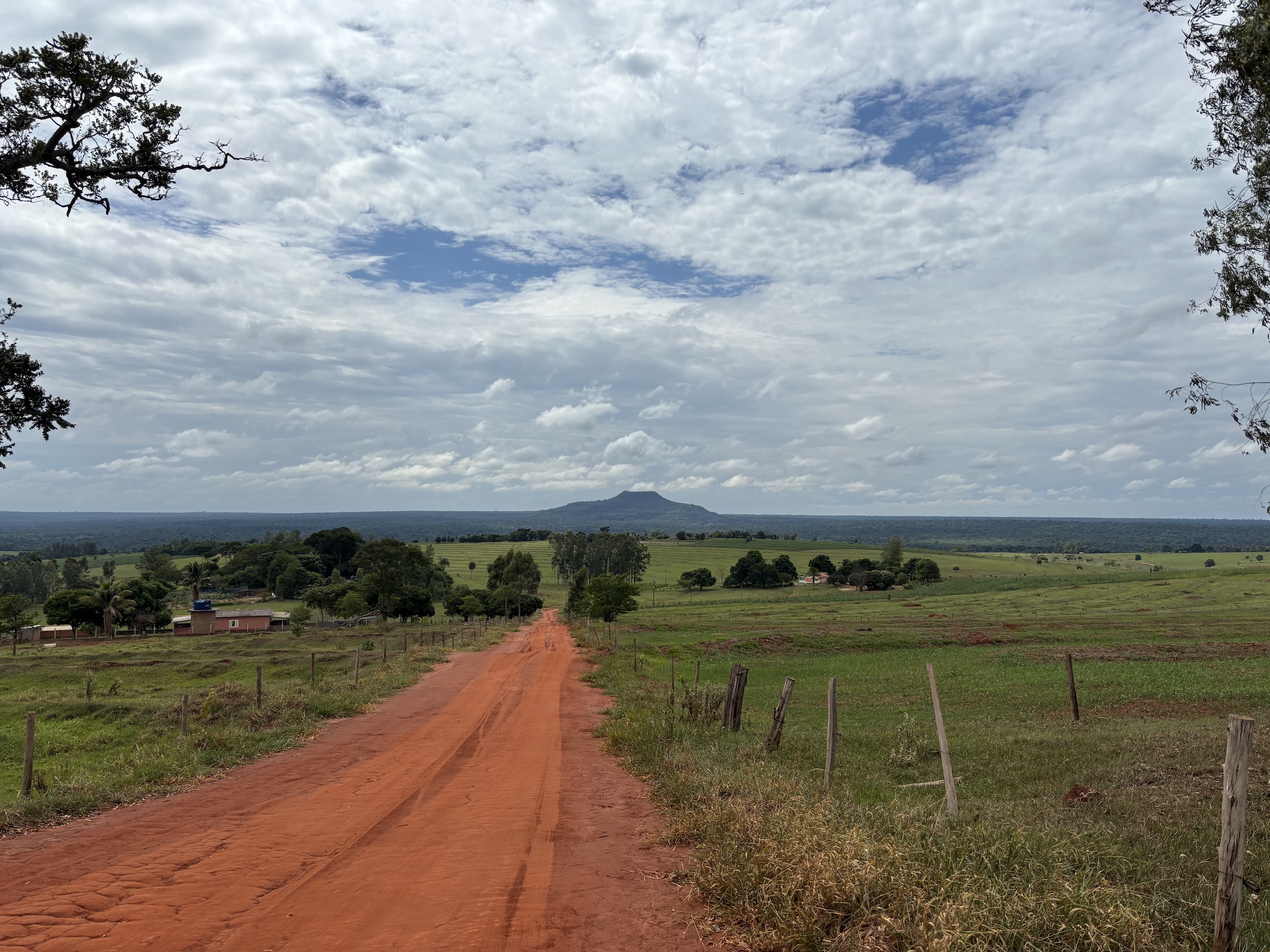 Dirt road in the Pontal do Paranapanema region, São Paulo state. Image by Sibélia Zanon.
As rural lands were carved up and reassigned, whatever stood in the way was pushed aside — both biodiversity and Indigenous peoples in the region, including the Kaiowá and the Kaingang. Meanwhile, cattle herds advanced and monoculture spread, occupying even state-owned lands. By the mid-20th century, in the Pontal region — the final stop of the Sorocabana line — only 1.8% of forest cover remained.
Decades later, in the 1990s, the same insecure land tenure context helped spark social movements in the Pontal. To this day, the region holds the largest concentration of agrarian reform settlements in São Paulo state.
Data from the Instituto de Terras do Estado de São Paulo (Itesp), São Paulo’s state land agency, show that the Pontal includes 98 state-run settlements totaling more than 120,000 hectares (296,500 acres), as well as 23 federally administered settlements covering another 30,000 hectares (74,000 acres). The distinction is administrative: federal settlements are overseen by the Instituto Nacional de Colonização e Reforma Agrária (INCRA), Brazil’s agrarian reform agency, while state settlements are managed by state governments.
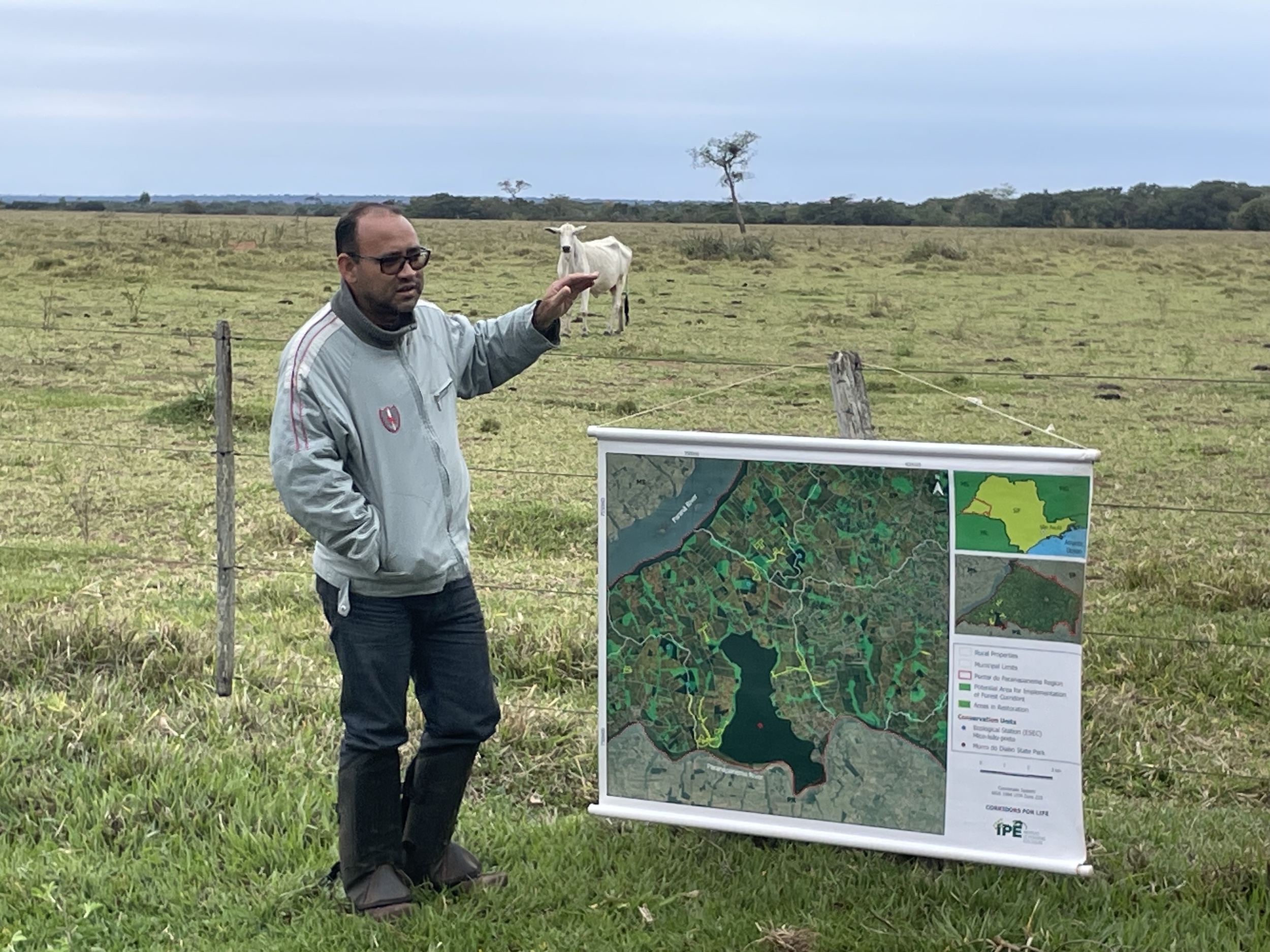 Haroldo explains the environmental restoration work carried out by IPÊ. Image by Sibélia Zanon.
Rural startups
Among newly planted native species such as canafístulas (Peltophorum dubium) and paineiras (Ceiba speciosa), biologist Edmilson Bispo says he was born for “a green life”. The son of land reform settlers, he comes from a lineage of farmers in Brazil’s Northeast, which taught him to live with uncertainty in the fields. Some harvests were profitable; others were undone by weather or market swings. Often, the profit from one crop had to offset the losses of the next.
In reforestation, Edmilson said he found greater stability. “Here, if we do things right, I can plan the income I’ll have at the end.” Now, Edmilson and his brother, José do Carmo, run Bispo Ecological Restoration Services, a company that began with three employees and now counts 10.
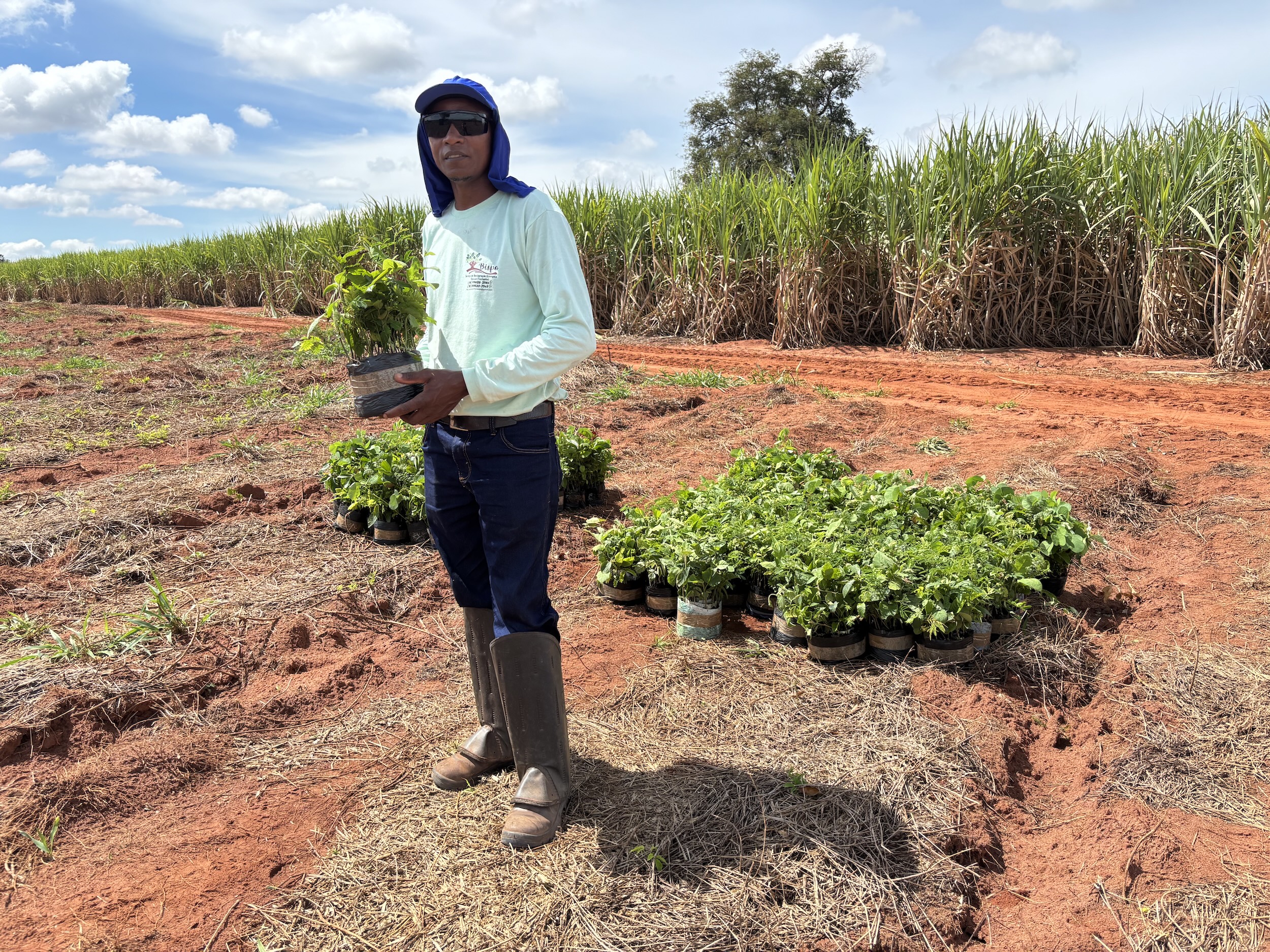 Edmilson with seedlings used in reforestation efforts. Image by Sibélia Zanon.
Their firm is part of a network of 21 local businesses known as “rural startups,” which handle planting and maintenance for the Corridors of Life project, most of which were founded by settlers or the children of land reform families. The teams received technical and management training, brought their operations in line with labor regulations and now also work for other clients.
At Categeró Farm, in the municipality of Teodoro Sampaio, Edmilson and João do Carmo’s team planted 170 hectares (420 acres) of forest in less than three years. The area will form part of an ecological corridor, launched in 2022, that aims to reach 550 hectares (1,360 acres), linking a permanent preservation area (APP) along the Cuiabá stream — a legally protected area set aside to conserve native vegetation and water resources — to Morro do Diabo State Park, which protects important remnants of the Atlantic Forest.
“My grandfather used to tell many stories. There was a time here in the Pontal when the mindset was to clear the forest,” Edmilson recalled. “Today, we see how much that has changed.” With the quiet pride of someone who has shaped his own path, he spoke about the house he recently bought in Teodoro Sampaio. “It’s like a smallholding, with orange trees. My two boys play in the yard at home.”
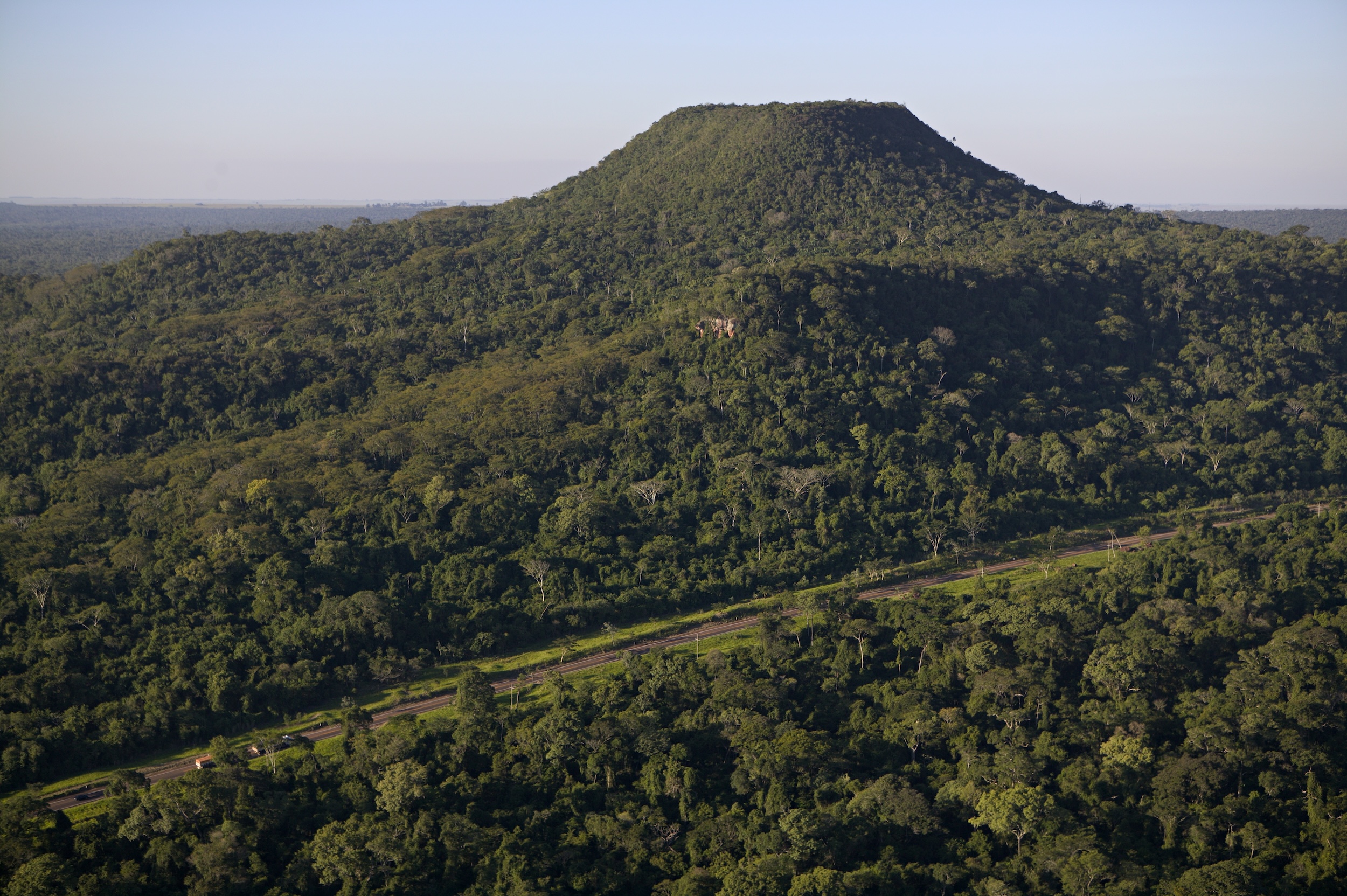 A road through the forest in Morro do Diabo State Park, São Paulo state. Image by IPÊ archive.
Benefits for the community
Forest recovery is also boosting the local economy. The Corridors of Life project currently employs 342 people across technical teams, community nurseries and restoration businesses. IPÊ estimates that more than 2,000 people — most of them from land reform settlements — have been trained in agroecology, restoration and seed collection.
Meanwhile, the benefits are gradually taking root across the community. In May 2024, through agreements with IPÊ, Maria Nazaré da Silva Montemor, president of the Cooperative of Women Settlers of Mirante do Paranapanema (Coperamas), delivered more than 120 hectares (300 acres) of restored forest to the municipality that bears the organization’s name.
A community leader since 1995, Nazaré helped form a group that later became the Association of Women Settlers (Amas) and was twice elected to the city council in Mirante do Paranapanema. During her terms, she focused on youth education and on milk production and marketing, key sources of income in the settlements.
Since childhood, Nazaré knew how to plant, but her body was not yet used to the steep terrain slated for restoration. Nor was she prepared for the tenacity of brachiaria, a pasture grass that spreads aggressively in rain or sun. Faced with tight deadlines to deliver the restored hectares, she hired tractor services and brought in other women to help. “One woman gives strength to another,” she said.
As trees returned to the landscape, local commerce also began to grow. Coperamas’ tractor, for instance, started being used to improve pastures and secure feed for cattle, helping boost milk production and income for settler families. “The drop fell and spread,” Nazaré said. “It didn’t create wealth for just one person — it generated benefits for many and blossomed.”
In Teodoro Sampaio, 30 kilometers (19 miles) from Mirante do Paranapanema, the creation of a community nursery reshaped the future of the Ribeirão Bonito settlement. With profits from seedling sales, local volunteer Valdomiro de Castro das Mercês, known as Miro, purchased an ambulance to serve settlement families.
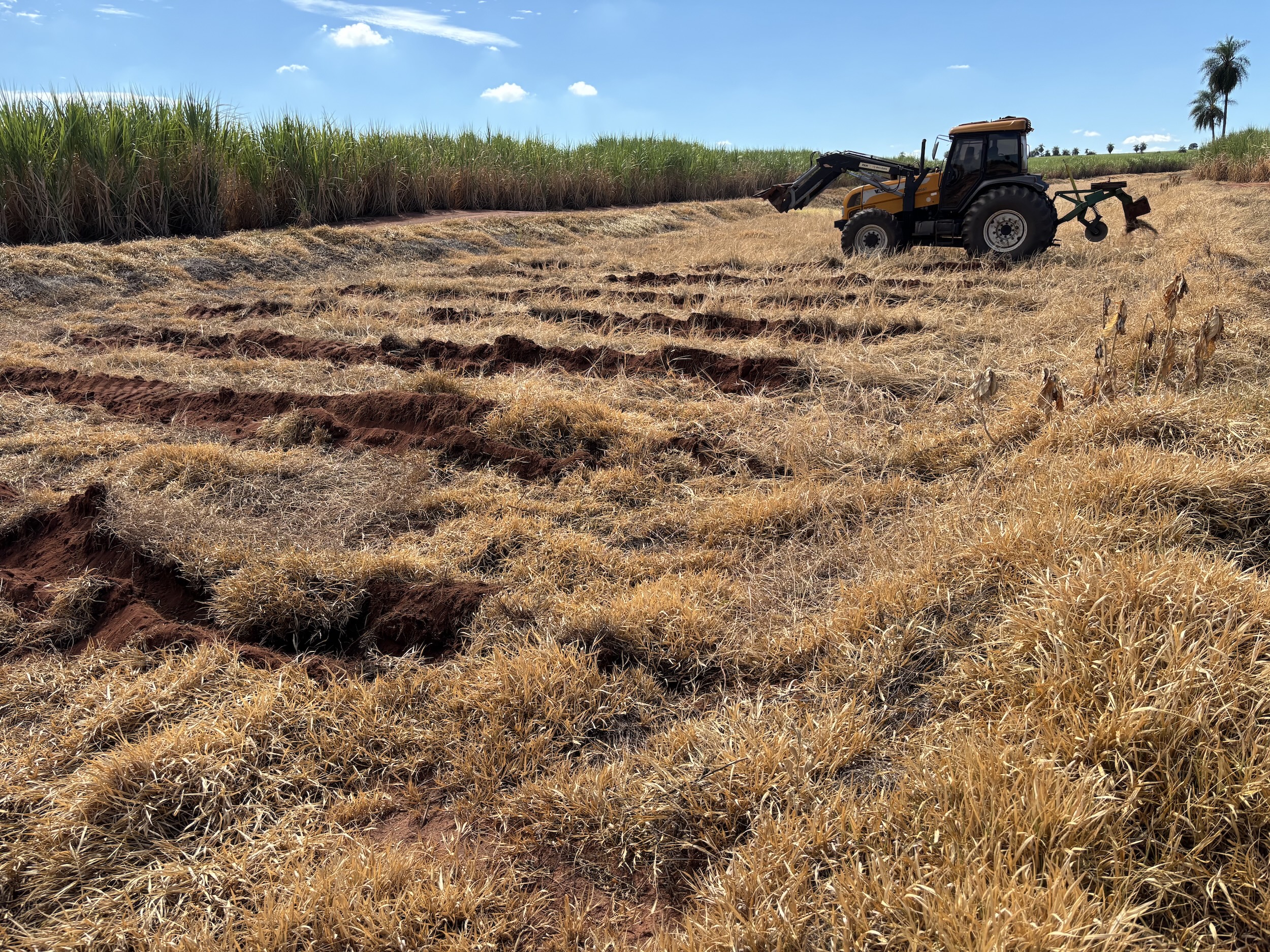 A tractor prepares land for seedling planting. Image by Sibélia Zanon.
Biodiversity gains
On lands once set aside for cattle pasture on the former ranch that is now the Ribeirão Bonito settlement, small forest patches stand out across the landscape. We visited one of Aline dos Santos Souza’s favorite spots, a member of IPÊ’s technical team.
According to her, “the settlements brought ecological diversity to what used to be only intensive cattle ranching [which concentrates many animals in small areas].”
These forest fragments are particularly useful for short-distance birds, such as different species of toucans and macaws, which move between patches and help disperse seeds.
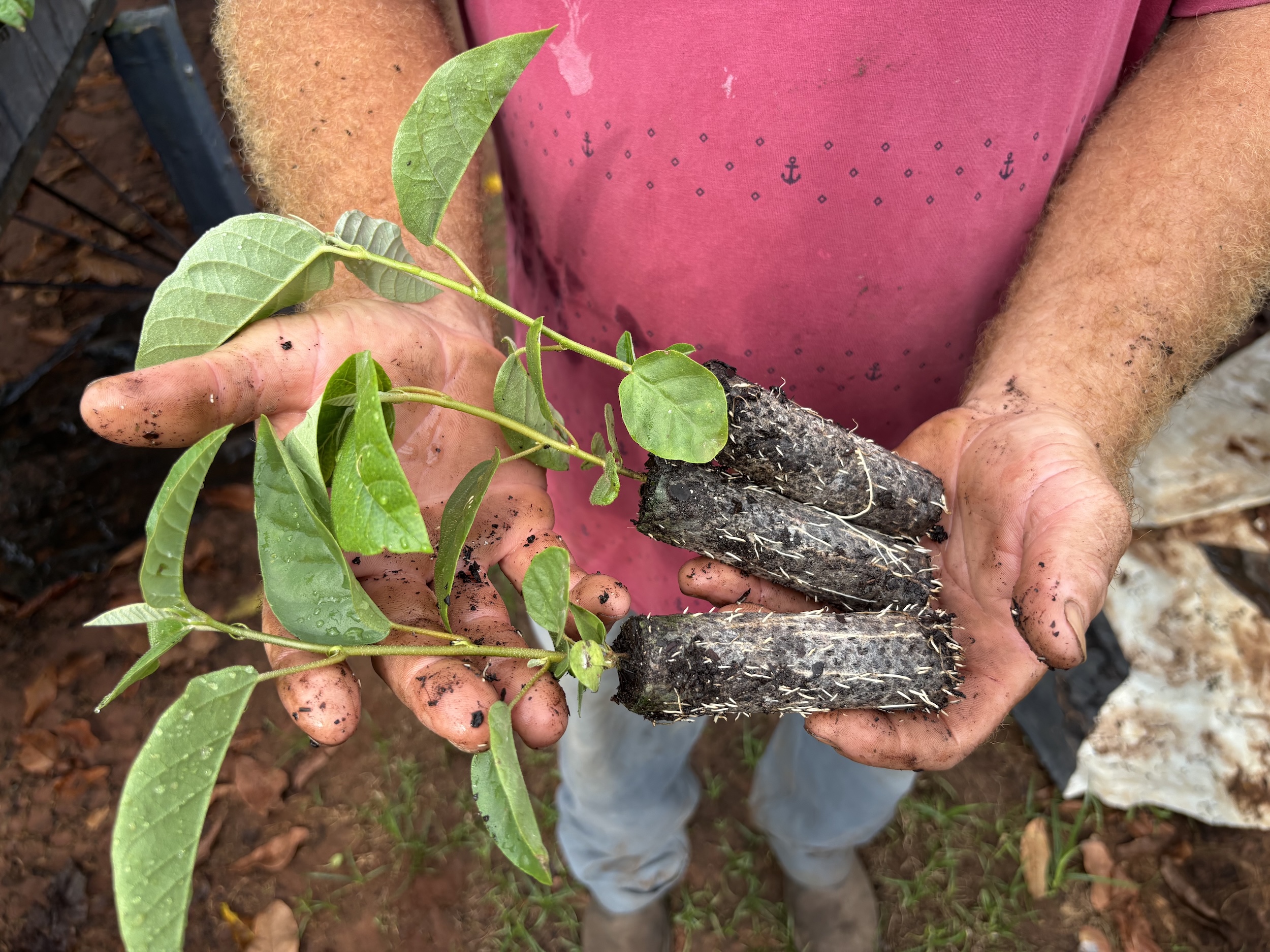 IPÊ team members show seedlings for reforestation initiative. Image by IPÊ archive.
João Maria de Souza, author of Memorial Teodoro Sampaio: Nossa Terra, Nossa História, Nossa Geografia (Teodoro Sampaio Memorial: Our Land, Our History, Our Geography), echoed this view. “You used to see vast areas with a few heads of cattle and very few people to manage them. Today, you see multiple settlements with families working, generating income and producing food. That has changed the landscape of the Pontal do Paranapanema,” he said.
Dairy farming still accounts for 95% of settlement income. However, alternative livelihoods have been gaining ground, such as the so-called café com floresta (coffee with forest). In this agroforestry system, trees protect coffee crops, which in turn enrich the soil and contribute to ecological balance.
Marilene Lima Santana was among the first settlers to adopt agroforestry. Today her home is shaded by a grove of native trees, where lemon, lychee, orange, jackfruit and cashew grow — and, of course, coffee, which yields five sacks per harvest and brings the family together around the table.
“I harvest the coffee I drink. I’m drinking my agroforestry coffee,” celebrated the settler, the daughter of migrants from Sergipe.
Marilene’s home also has its own vegetable garden, supplying her children’s meals with produce grown and fertilized using compost made right in the backyard — a mix of dry leaves and animal manure.
Francisco Gomes de Deus, father of biologist Haroldo, has also adopted agroforestry in Mirante do Paranapanema. At five in the morning, Seu Chiquinho, as he is known, milks seven cows and then heads to the coffee plot, where he picks only ripe cherries, one by one. The careful work yields about 400 kilograms per harvest — enough for the family’s coffee, with the surplus sold to IPÊ.
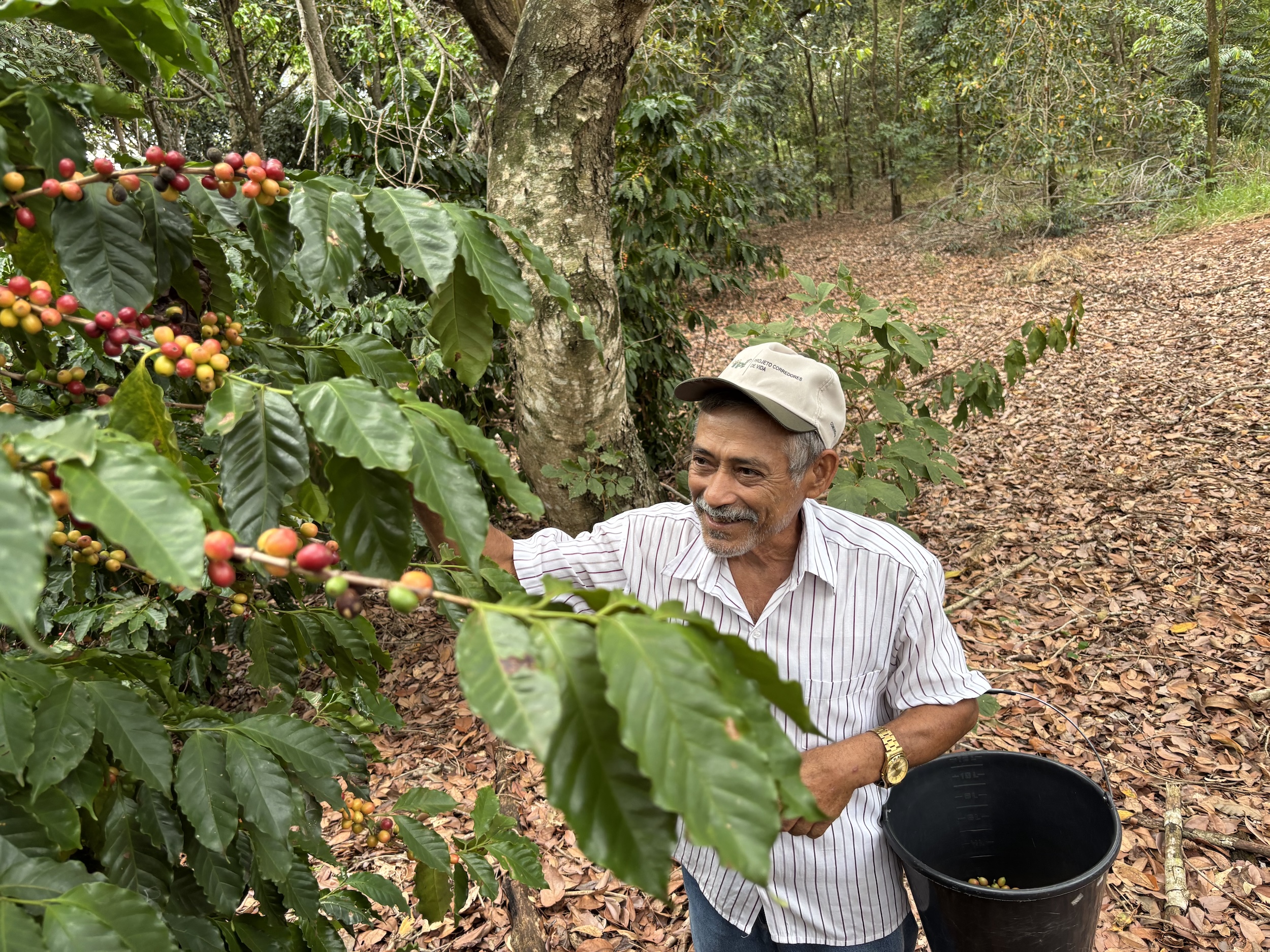 Farmer Chiquinho harvests coffee in Mirante do Paranapanema, São Paulo state. Image by Sibélia Zanon.
Among the coffee rows, taller trees provide shade and moisture, while jataí bees (Tetragonisca angustula) act as pollinators.
“They ran soil tests — the land has already recovered, it’s restored here,” Chiquinho said. “I come here and feel at peace harvesting. I forget about life. And I thank God.”
Speaking about purchasing surplus coffee from settlers, IPÊ director Eduardo Ditt emphasizes community autonomy. “The idea is not to create a relationship of dependence, but to provide training so settlers learn about agroecology and agroforestry systems and can run the business on their own,” he said.
Mapping the forest
The movement now taking root across the Pontal do Paranapanema began with a small animal that nearly vanished from the wild: the black lion tamarin (Leontopithecus chrysopygus). In the 1970s, when the species was no longer being seen in the forest, the Black Lion Tamarin Conservation Program was created — and has been coordinated by IPÊ ever since.
From that program emerged the Corridors of Life project, whose actions are guided by a detailed territorial study known as “Mapa dos Sonhos” (Map of Dreams), which identifies where the forest needs to be replanted.
“The Map of Dreams was developed from a combination of land tenure data obtained from Itesp, which provided spatial maps with information on rural properties across the Pontal do Paranapanema region,” said Alexandre Uezu, research coordinator at IPÊ.
“With these data, IPÊ mapped forest areas, springs, rivers and APPs, calculating the environmental liabilities of each property. Based on landscape criteria, priority areas were then identified to restore and reconnect forest fragments.”
Currently, 45 rural landowners take part in the project, restoring legally required areas under Brazil’s Forest Code, which regulates how much native vegetation must be preserved or restored on private rural properties, and helping form ecological corridors.
In fact, much of the biome’s regeneration occurs on privately owned land. According to data from SOS Mata Atlântica, a Brazilian nonprofit focused on Atlantic Forest conservation, released in October 2025, private properties account for 45% of the total Atlantic Forest area restored between 1993 and 2022.
On the other hand, data from MapBiomas, a collaborative initiative that uses satellite data to track land-use and vegetation changes across Brazil, indicate that over the past decade, the balance between forest gains and losses in the biome has remained at zero. In 2024, half of the deforestation recorded in the Atlantic Forest affected mature forests — more than 40 years old — causing more severe impacts on biodiversity and carbon storage.
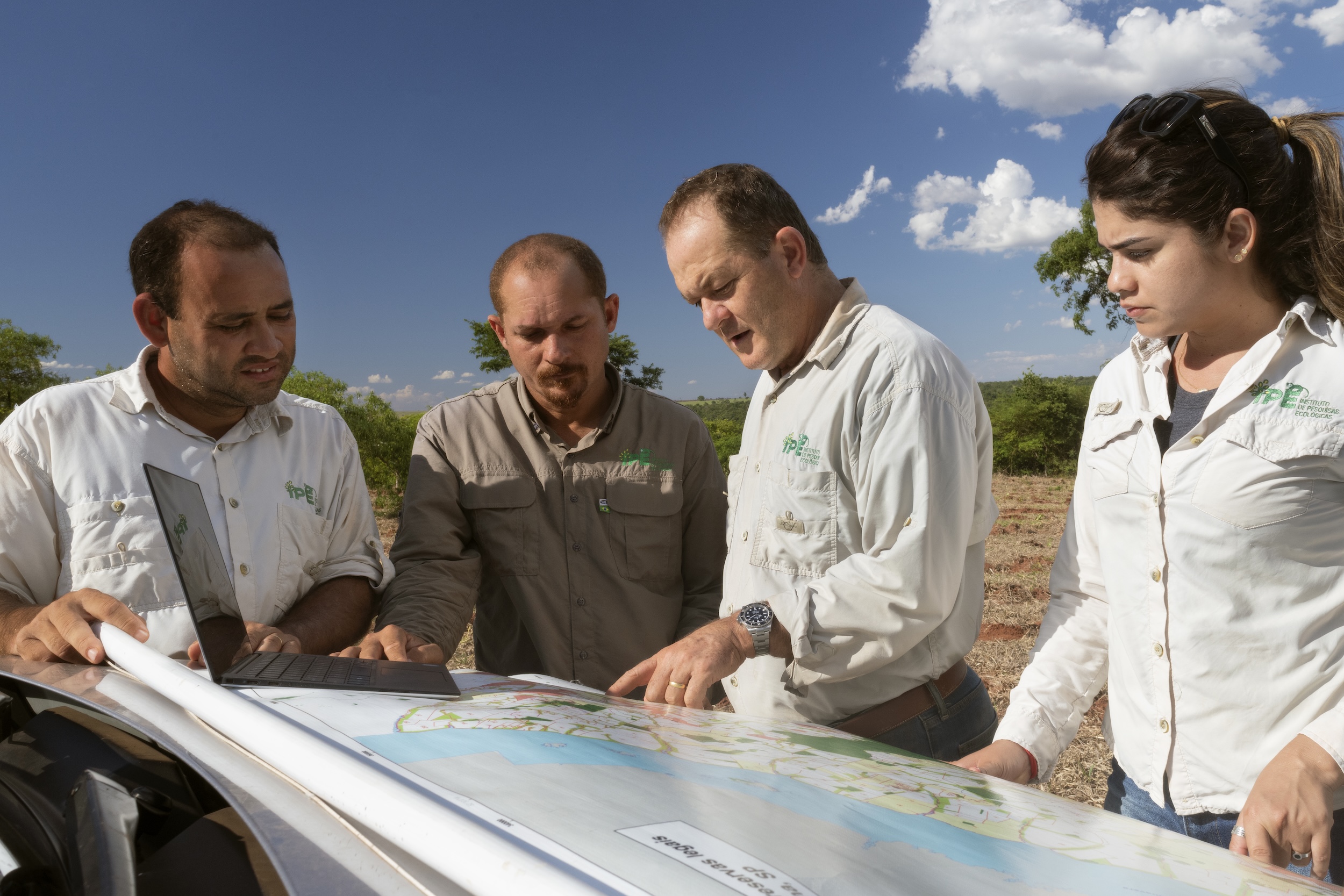 IPÊ specialists analyze maps of the Pontal do Paranapanema region. Image by IPÊ archive.
“For wildlife to truly return and rebuild communities similar to those found in natural forests, it takes around 15-20 years. But it varies widely,” said IPÊ researcher Carolina Bíscola. “We recorded the first jaguar in restored areas only last year.”
Within reforested areas, conservation programs have identified 174 bird species and 29 mammal species — five of them threatened with extinction, including the black lion tamarin. The jaguar’s reappearance in 2024 is a promising sign, but the challenge extends far beyond the Pontal.
Highly threatened, the Atlantic Forest is the Brazilian biome with the least remaining native vegetation and today retains less than one-third of its original cover. The expansion of sugarcane cultivation is one of the drivers of this loss: an estimated 66% of Brazil’s sugarcane plantations are located within the biome. Data from the National Supply Company (CONAB), the federal agency that monitors agricultural production and supply, show that more than half of the country’s total production comes from São Paulo state.
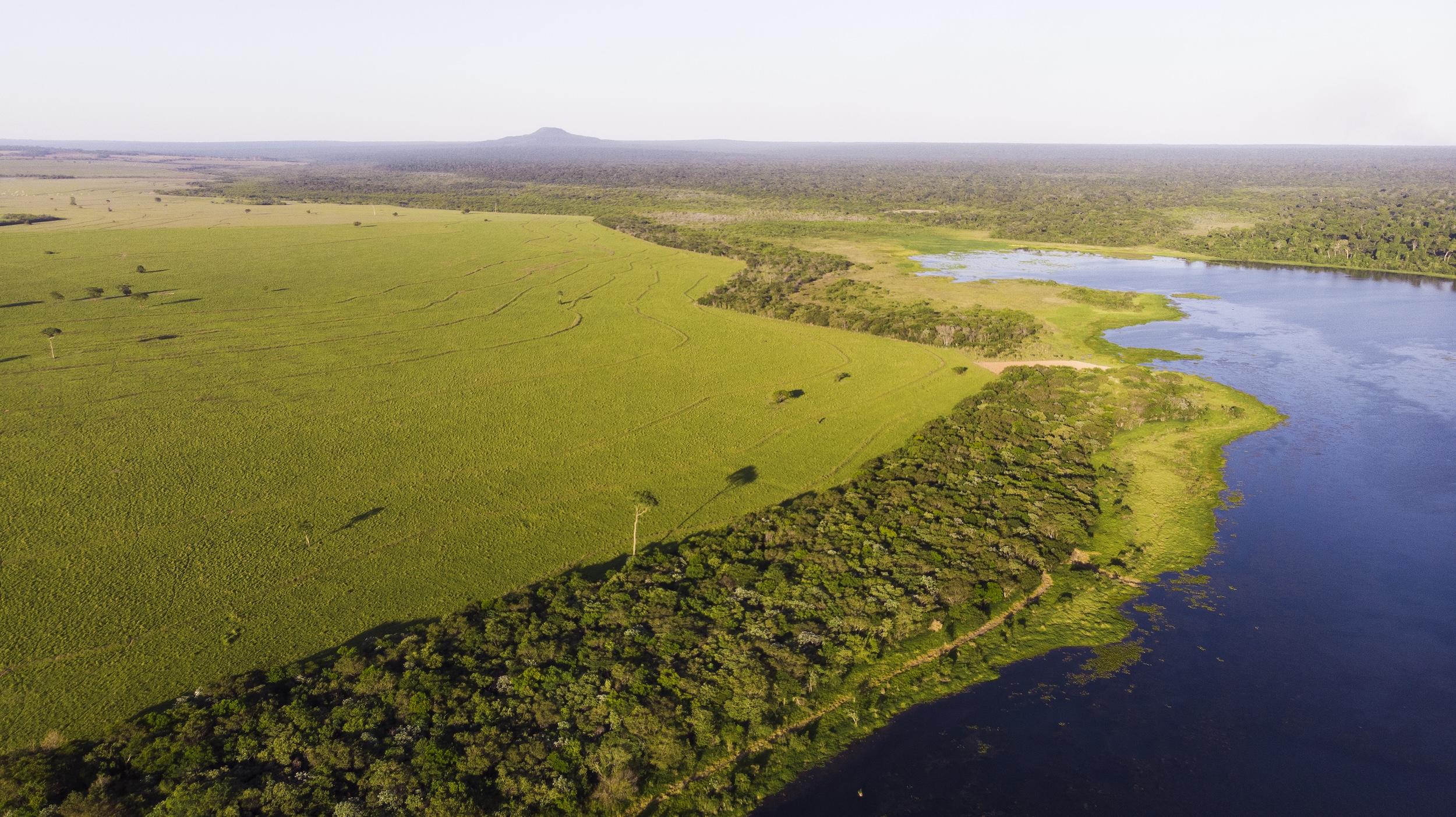 Aerial view of the Pontal do Paranapanema region, São Paulo state. Image courtesy of IPÊ archive.
Far beyond rebuilding forests, the sustainable initiatives underway in western São Paulo seek to restore the relationship between people and the territory where they live, according to those involved.
The work of settler families — and the meeting point between scientific research and hands-on practice — also forms a foundation for transforming environmental challenges into opportunities for regeneration.
“Conservation work is long-term. You need to become part of a region and its community and look at the landscape as a whole,” said Claudio Padua, co-founder of IPÊ. “Going there, conducting research and leaving achieves nothing. You need to belong.”
General coordinator Laury, in turn, looks ahead with optimism: “In 25 years, we will have achieved 6,000 hectares of reforestation. Of those, half occurred in the last three years.” For him, the ambitious goal of 75,000 hectares is, above all, “achievable.”
Banner image: A nursery worker displays seedlings used in reforestation efforts in the Pontal do Paranapanema region, São Paulo state. Image by Sibélia Zanon.
CITATION
Da Silva, L. G., dos Santos, S., & Moraes, F. (2015). FRAGMENTAÇÃO DA MATA ATLÂNTICA DE INTERIOR: ANÁLISE DE PAISAGEM DO CORREDOR VERDE SUL-AMERICANO E FLORESTAS DO ALTO PARANÁ. Boletim De Geografia, 32(3), 61 – 68. https://doi.org/10.4025/bolgeogr.v32i3.21881.
