
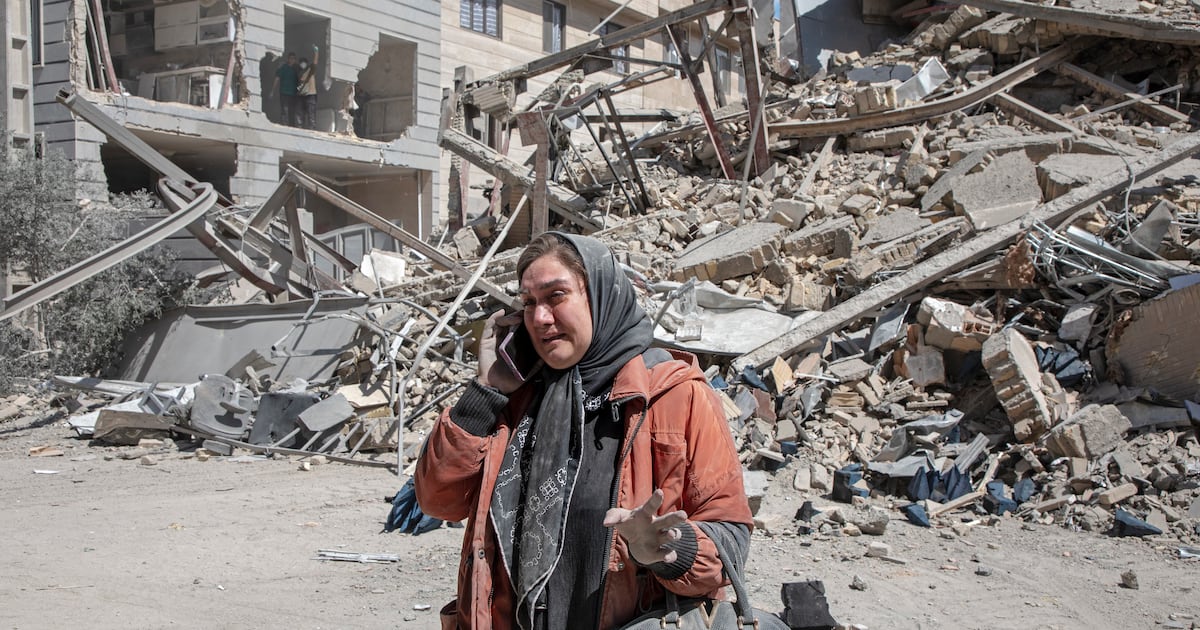
US president Donald Trump on Tuesday again criticised European allies for their refusal to assist in the Iran war, arguing they should “go get your own oil” from the Strait of Hormuz or buy from the US as global oil and fuel supplies have become strained during the conflict.
In a further indication that he was not linking the opening of the strait to ending the war, Trump said US allies will have to get involved in the fight for fuel in the strategic waterway without Washington’s assistance.
Naming the UK specifically, he said countries could “build up some delayed courage, go to the Strait, and just TAKE IT.”
Writing on Truth Social he said: “You’ll have to start learning how to fight for yourself, the USA won’t be there to help you any more, just like you weren’t there for us.”
Late on Tuesday night Irish time, Trump told NBC News that he believes the war on Iran is “coming to an end”.
In a phone interview earlier, he added, “We’re doing great,” and called himself a “truly great commander-in-chief”.
“The people we’re dealing with [in Iran] are much more reasonable and not as radicalised. We will not have an Iran with nuclear weapons … I have to go, I have a war to prosecute.”
Trump has repeatedly claimed he has “won” the war.
The Trump administration has also repeatedly claimed to be speaking with new Iranian leadership and has been consistently dismissive of the new supreme leader Mojtaba Khamenei.
Iran’s foreign minister Abbas Araghchi maintains that no direct talks have taken place, with all messages exchanged with Washington going through his ministry and intermediaries in the region.
France and Italy have pushed back against some US-Israeli military operations, highlighting how divisions between Nato allies have been exposed by the war.
Iran’s Revolutionary Guards have pledged to target US companies in the Middle East in retaliation for attacks on Iran.
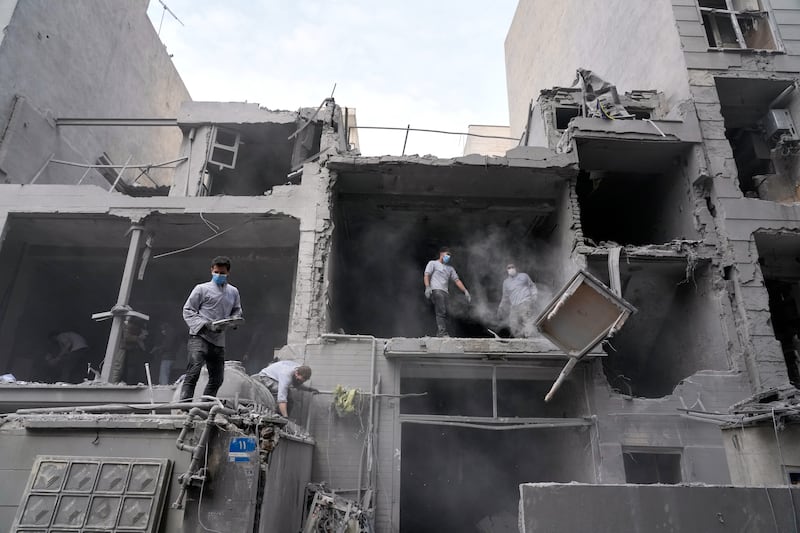 Volunteers clean debris from a residential building damaged when a nearby police station was hit Friday in a US-Israeli strike in Tehran. Photograph: Vahid Salemi/AP
The threat came as US defence secretary Pete Hegseth said on Tuesday the next few days in the war against Iran would be decisive and warned Tehran that the conflict would intensify if it did not make a deal.
In response, Iran’s Revolutionary Guards listed 18 companies at risk of attack from Wednesday including Microsoft, Google, Apple, Intel, IBM, Tesla and Boeing.
Iran earlier set ablaze a fully loaded oil tanker off Dubai, its latest attack on merchant vessels in the Gulf or in the Strait of Hormuz since the US and Israel attacked on February 28th.
Crude oil prices briefly spiked again after the attack on the tanker, which can carry around two million barrels of oil worth more than $200 million at current prices.
Higher oil and fuel prices have also started to weigh on US household finances and are a political headache for Trump and his Republican Party before the November midterm elections.
The US national average retail price of petrol crossed $4 a gallon for the first time in over three years on Monday.
The European Union is considering reviving crisis measures it used in 2022 when Russia slashed gas deliveries to address the unfolding disruption to energy markets caused by the war, the bloc’s energy chief said on Tuesday.
In comments on Tuesday, Trump said the war in Iran won’t last “much longer,” adding, “We’re obliterating the s**t out of them right now, it’s a total obliteration,” and that the Strait of Hormuz will “automatically open” when the US leaves.
In an interview with the New York Post he added that Tehran is not “going to have a nuclear weapon” and regime change has already occurred.
Trump also hinted it might be possible to declare victory without removing Iran’s enriched uranium stockpile.
The stockpile is “so deeply buried it’s gonna be very hard for anybody” to extract, he said.
Some analysts interpreted his comments as a prelude to a possible unilateral decision to end the war. Publication of the interview came just after Pakistan and China issued a five-point peace plan, calling for an immediate cessation of hostilities, the start of peace talks and ensuring the security of shipping lanes as soon as possible.
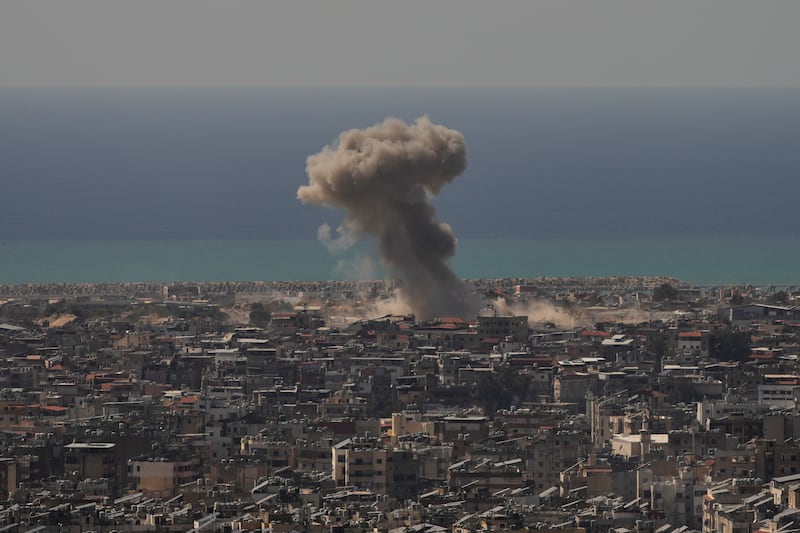 Smoke rises from the site of an Israeli airstrike in Dahiyeh, Beirut’s southern suburbs in Lebanon on Tuesday. Photograph: Hassan Ammar/AP
It is unlikely that Pakistan, a close ally of the US, would propose details of a peace plan without co-ordinating with Washington in advance.
Prime minister Binyamin Netanyahu said Israel and the US are “beyond the halfway point in terms of success” in their war against Iran, but cautioned that he didn’t want to “put a schedule on the timeline for ending the war”.
On Tuesday, day 32 of the war, US forces hit a target in the city of Isfahan with “bunker buster” bombs designed to destroy targets underground, while Israel attacked Iranian arms-producing facilities in Tehran.
After four more Israeli soldiers were killed in fighting in south Lebanon, defence minister Israel Katz declared that all houses in Lebanese villages near the Israeli border will be demolished and Israel will maintain a security zone in south Lebanon after the war ends. – Additional reporting: The Guardian