
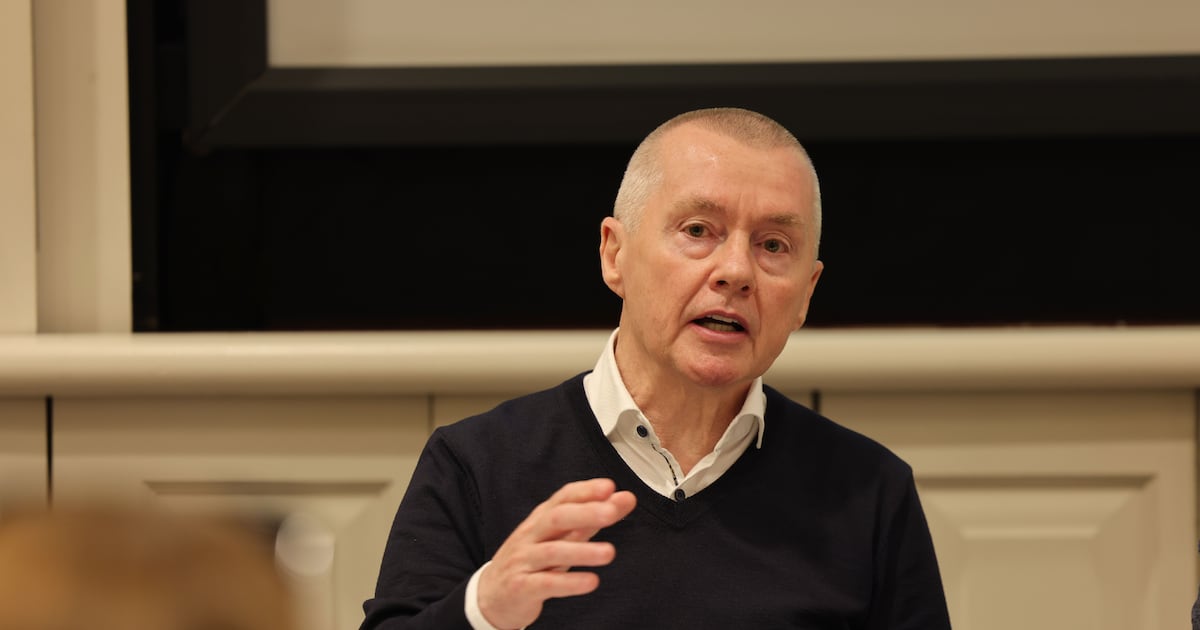
Former Aer Lingus and British Airways boss Willie Walsh has been appointed as chief executive of IndiGo, India’s biggest airline, in a high-profile return to the front line of the global aviation industry.
InterGlobe Aviation, the carrier’s owner, said the appointment was cleared by its board on Tuesday.
The role was vacant after Pieter Elbers suddenly stepped down three months after poor planning resulted in thousands of IndiGo flights being cancelled in early December, causing a meltdown for India’s aviation sector.
IndiGo accounts for almost two-thirds of India’s domestic air travel.
The billionaire co-founder of the airline, Rahul Bhatia, who is also a board member, had temporarily taken over after the exit of Elbers, a former chief of Dutch airline KLM.
Walsh is the director general of the International Air Transport Association, the global industry body. His appointment at IndiGo will need clearance from India’s civil aviation ministry. The airline said he was expected to join no later than August 3rd.
The Irish executive and former pilot led Aer Lingus from 2001 and BA from 2005, steering the British airline through the global financial crisis and its 2011 merger with Spain’s Iberia, before later becoming boss of its parent, IAG.
[ Willie Walsh criticises EU compensation policy for passengers over flight delaysOpens in new window ]
Walsh, who left IAG in late 2020, earned the nickname “slasher Walsh” for his tough stance in two decades of labour negotiations in the European airlines industry.
Most notably, unions and politicians attacked a decision to impose major job cuts at British Airways at the height of the Covid-19 pandemic in 2020.
 Are Government’s fuel measures betting on a quick resolution to the conflict in Iran?
Walsh earned industry respect for masterminding the creation of IAG through the BA-Iberia merger, and built the combined business into one of the world’s most profitable airline groups before the pandemic.
Walsh said IndiGo had a “strong foundation, a compelling vision and an exceptional reputation. The aviation landscape is evolving rapidly, and IndiGo is extremely well-positioned to be at the forefront of this change”.
Over the past three years, IndiGo and Air India have placed orders with Boeing and Airbus for more than 1,000 new aircraft to renew their fleet. The two airlines account for 90 per cent of domestic flights.
Air India is still recovering from the June crash in Ahmedabad that killed more than 250 people.
Meanwhile, IndiGo, which is in the midst of a major international expansion, is grappling with the disruption caused by the Iran war.
Analysts at Mumbai-based Motilal Oswal estimate that Middle Eastern routes account for about a fifth of IndiGo’s revenue. The airline is being hit by higher fuel costs, as well as a weakening Indian rupee that has sunk to record lows since the conflict started.
“This is also a double whammy as international travel acts as a natural hedge to the company’s forex [foreign exchange] exposure,” the analysts wrote in a report on the airline last week. – Copyright The Financial Times Limited 2026