
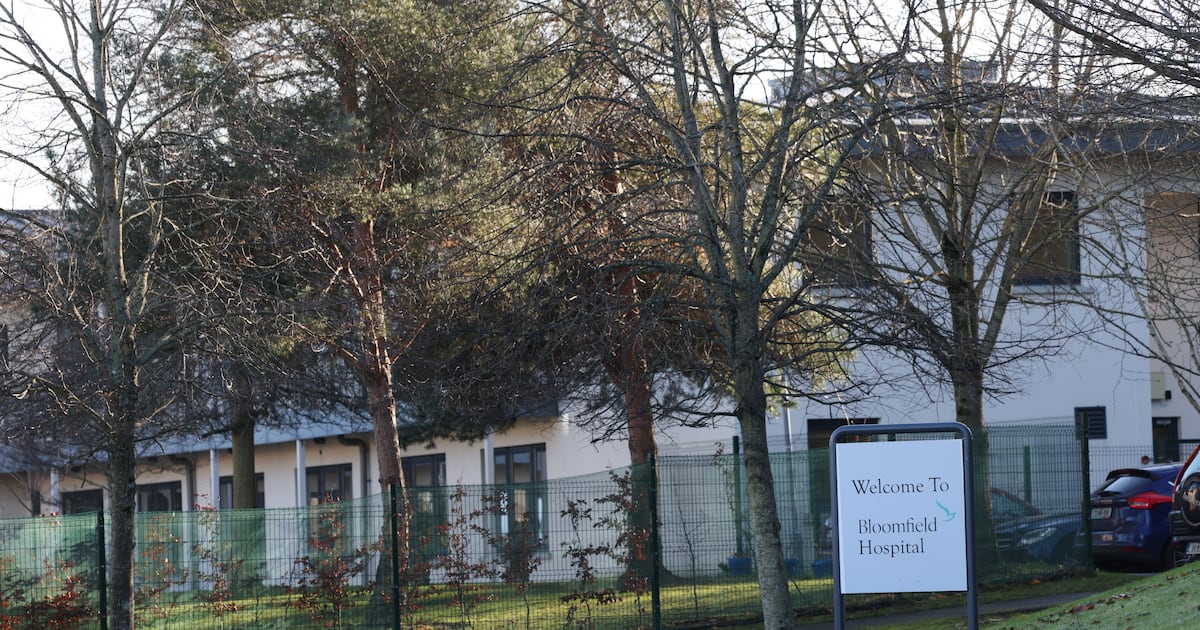
A south Dublin mental health facility closed to admissions “voluntarily” after an independent investigation report on mistreatment of patients at the facility was published by The Irish Times, documents show.
Late last year, an independent external report on a whistleblower’s claims found residents at Bloomfield hospital in Rathfarnham were left soiled for an “unacceptable period”, “slapped” on the leg, cursed at and threatened with an injection to improve co-operation with staff.
There were 11 trust-in-care reports relating to 17 patients last July, and the hospital, which is owned by the Quakers in Ireland, took immediate action – including internal and external reviews and disciplinary proceedings – upon receipt of the allegations.
However, the hospital did not inform the HSE, Department of Health or the Mental Health Commission (MHC) about these issues until they were coming to light through the media.
Internal documents, released under the Freedom of Information Act, show the way in which health officials scrambled to ensure the safety of residents after the concerns were publicised.
Just before 10.30am on December 16th, Joe Kelly, the hospital’s chief executive, called Kevin Brady, HSE’s head of mental health services at Dublin Midlands, to notify him “informally” of the trust-in-care incidents.
The report had been leaked, Kelly told the HSE, and an article would be published the following day.
Senior HSE officials, including chief executive Bernard Gloster, were then made aware of the safeguarding concerns. They requested an “urgent meeting with Bloomfield management” that afternoon, according to a briefing note prepared for the Department of Health.
Bloomfield was requested to provide formal written communication, including a copy of the report by end of day, but that information was not received by close of business, the briefing note said.
The following day, when the articles were published, there were two meetings between the MHC, the regulator and HSE officials to “discuss the developing issues”. The commission began an inspection the night before, it told the HSE.
[ Inside Bloomfield Hospital: what investigators found after whistle blown on patient care ]
Bloomfield also “voluntarily closed the hospital to admissions and have 113 residents, 50 of whom are 65+”.
Throughout the day there was a “series of meetings and calls” between senior regional and national HSE colleagues to understand the scale of the issues identified as well as the next steps to ensure the safety of residents.
The HSE agreed to set up a serious incident management team and for senior representatives to attend the hospital to start a “fact-finding process”.
At 2.12pm on December 18th, the MHC sent an email to the regional executive officer of HSE Dublin Midlands, which included “formal correspondence regarding urgent concerns” at the hospital and sought “urgent action”.
Health service representatives Kevin Brady and Brian J Higgins attended the hospital that evening and met senior Bloomfield staff, including the chief executive, deputy chief executive, clinical director, acting director of nursing and the head of people and head of quality.
The following day, December 19th, the HSE’s safeguarding team attended the hospital to review the safeguarding processes and documentation used at the hospital.
“The team noted that on initial review, it appeared that appropriate processes are in place, but at this early stage they were unable to comment on how well these are being used or the quality of the safeguarding assessments in the hospital at that point,” the team said.
Later that day, there was an online meeting with Gloster to give an update on the actions taken following notification of the incidents.
“The chief executive asked that a HSE presence be on site at Bloomfield every day until assurances can be satisfied,” the briefing document said.
On December 20th Gloster wrote to the Department of Health and its Ministers to provide an update from the chief social worker, stating “there are no active safeguarding issues in the unit”.
“This view has been supported verbally by the MHC, who note that their concerns relate to governance issues, not clinical ones,” it said.
In terms of the next steps, the chief social worker proposed that a “wider review and improvement plan” for safeguarding culture and practice should be “scoped out”.
“Bloomfield staff have expressed a strong interest in engaging in this as staff are understandably very upset by these events,” the email said.
Regular meetings between the hospital and HSE officials were also scheduled.
In a further update to the department later in December, the HSE said it was engaging with the hospital under the service arrangement and “will be considering all options open to it, and actions necessary, to ensure compliance”.
“Those actions will be informed by the information currently being sought and assessed, to ensure that the HSE response is the most appropriate one in the interests of residents,” it said.
The HSE documents confirmed the allegations highlighted in the independent report were later reported to gardaí.
Bloomfield hospital did not answer a question on whether it has resumed accepting admissions into the hospital.
“The staff and board of management at Bloomfield hospital have fully co-operated with the HSE and the Mental Health Commission in all the requests over the past number of months and are accommodating all of their requirements. We are not in a position to comment any further,” a spokeswoman said.