
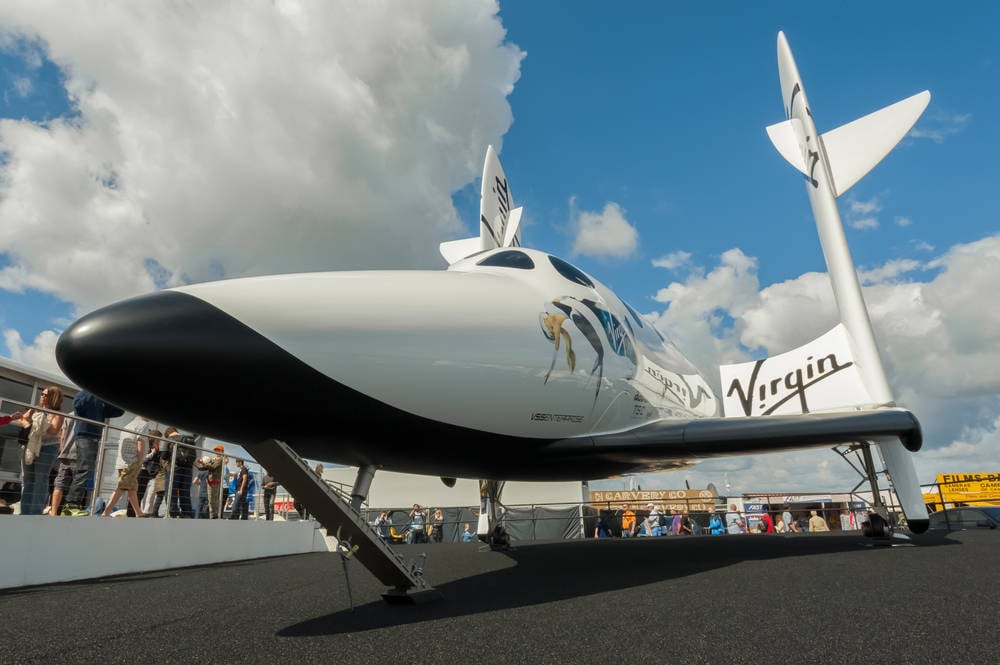
Virgin Galactic has reopened suborbital ticket sales with a price rise and a promise for commercial spaceflight operations in Q4 2026.
Tickets for a ride in Virgin Galactic’s spacecraft now run to $750,000 per seat, up from the $600,000 per seat the company was charging in 2023. In August 2021, after Sir Richard Branson’s test flight, the base price was $450,000.
Virgin Galactic’s VSS Unity flew its final flight (or so it said) in 2024, with commercial operations on hiatus until the less costly Delta Class ships enter service. According to the company, the flight-test phase of the first new SpaceShip is scheduled for Q3 2026, followed later by commercial operations.
During an earnings call earlier this week, CEO Michael Colglazier noted that it has “approximately 650 future astronauts with tickets at various prices.” However, he also said: “We will offer a limited number of tickets at a higher price to fly on the earlier flights.”
The plan is to get to ten or more flights per month by this time next year. The company intends to sell only 50 tickets at $750,000 each and expects to raise the price for the next batch.
Branson unveiled the company in 2004, envisaging a scaled-up version of Burt Rutan’s SpaceShipOne taking paying customers on a suborbital lob for a mere $100,000 a seat. In 2023, he announced that he would not pour any further cash into the enterprise, telling the Financial Times: “Virgin Galactic has got $1 billion, or nearly. It should, I believe, have sufficient funds to do its job on its own.”
As of December 31, 2025, the company’s cash position was $338 million. Its net loss for the year was $279 million, down from $347 million in 2024. The figures highlight the urgency for the company to resume revenue-earning flights.
Colglazier explained that the company’s pilots will begin flying the original SpaceShip, VSS Unity, on a series of glide flights over Spaceport America in May. The flight tests of the new vehicle will begin in Q3, with a series of glide and rocket-powered test flights before entering commercial service.
The company is also flying its launch vehicle, Eve, as part of pilot proficiency training. Colglazier said the aircraft had been improved to support 12–15 space flights per month, and the company expects its service life to extend to 2032 or beyond. Deployment of new launch vehicles is expected in 2030.
2026 and 2027 are shaping up to be crunch years for Virgin Galactic. In its 10-K filing, the company warned that it might struggle to remain a going concern. During the earnings call, CFO Doug Ahrens noted that the assessment did not include future cash flow from space flights or the $138 million remaining in the company’s existing At The Market (ATM) stock program.
Despite brave words from Virgin Galactic’s management, the situation could become precarious. Revenue-earning flights must begin soon, and the forecast demand must materialize before funds run out. ®