
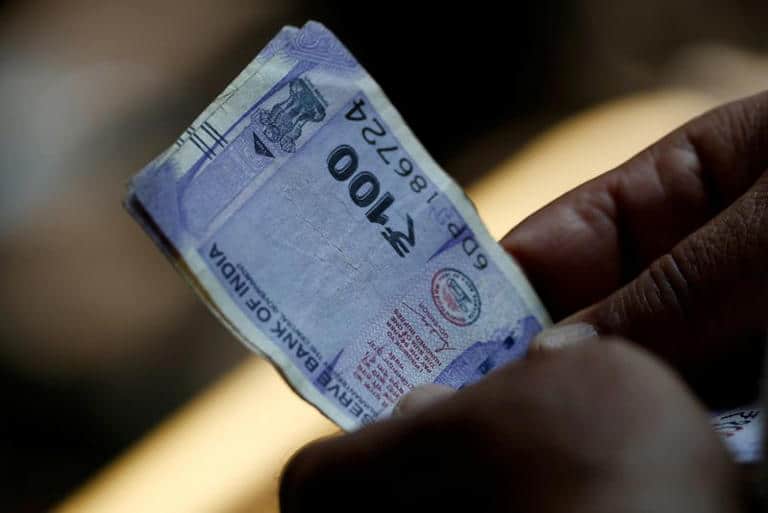
Will the ongoing conflict in the Middle East push the Indian rupee to unprecedented lows against the US dollar? Experts warn that if tensions persist, the rupee could depreciate to the 100-per-dollar mark or lower. The currency has already faced a significant decline, and analysts suggest that current policy measures may not provide the necessary support to stabilize it. As geopolitical uncertainties loom, the financial outlook for the rupee remains precarious.
Current State of the Rupee
The Indian rupee has recently experienced a notable decline, hitting an all-time intraday low of 95.22 against the US dollar before slightly recovering to close at 94.83. This represents the weakest closing level on record for the currency. Since the escalation of geopolitical tensions, the rupee has depreciated by approximately 4%. The ongoing conflict has intensified existing pressures on the currency, which was already grappling with widening external imbalances and persistent capital outflows. The situation is further complicated by rising oil prices, which pose additional challenges for India, the world’s third-largest crude importer. Analysts are concerned that a potential decrease in remittances from Indian workers in the Gulf could further weaken the rupee and dampen overall market sentiment.
Predictions for Future Depreciation
Financial analysts from Wells Fargo and Van Eck Associates Corp. have indicated that sustained high crude oil prices could accelerate the rupee’s decline. This situation is likely to exacerbate inflation and widen the current account deficit. Market signals, particularly from the options market, suggest expectations of further depreciation, with some traders pricing in a potential move toward the 100-per-dollar mark. The Reserve Bank of India (RBI) has implemented significant interventions to stabilize the currency, including capping banks’ end-of-day positions in the domestic currency market. However, these measures have shown limited effectiveness, as evidenced by the rupee’s sharp reversal after an initial strengthening following the announcement. Analysts warn that the scenario of the rupee reaching 100 per dollar is becoming increasingly credible if current conditions persist.
Impact of Geopolitical Tensions
The ongoing conflict in the Middle East has raised concerns about the future trajectory of the rupee. Aroop Chatterjee, a global macro strategist at Wells Fargo, noted that the rupee’s future will largely depend on the duration and extent of elevated energy prices. He drew parallels to the impact of Russia’s invasion of Ukraine in 2022, which saw a significant depreciation of the rupee. If the US-Iran conflict continues, analysts predict that the dollar-rupee exchange rate could surpass the 100 mark. Brent crude prices have surged nearly 44% since tensions escalated, reaching a peak of $119.50 per barrel. Some analysts caution that prices could rise even further if the situation in the Strait of Hormuz remains unresolved for an extended period.
Investor Sentiment and Market Reactions
Investor sentiment has been significantly affected by the uncertainty surrounding the conflict. In March alone, global investors withdrew approximately $12 billion from Indian equities, marking the largest monthly outflow on record. This trend reflects growing concerns about India’s economic stability amid rising oil prices and foreign capital outflows. Anna Wu, a cross-asset strategist at VanEck, emphasized the challenges facing India, particularly its vulnerability to oil price shocks and the lack of a clear policy tightening trajectory from the central bank. As the situation unfolds, market participants remain cautious, with many believing that even a resolution to the Middle East tensions may not be enough to halt the rupee’s decline. The outlook for the rupee remains uncertain, with analysts suggesting that it may continue to underperform in the face of ongoing geopolitical and economic challenges.
Observer Voice is the one stop site for
National,
International
news,
Sports,
Editor’s Choice,
Art/culture contents,
Quotes and much more. We also cover
historical contents. Historical contents includes
World History,
Indian History, and what happened
today. The website also covers
Entertainment across the India and World.
Follow Us on
Twitter,
Instagram,
Facebook,
& LinkedIn