

Wherever you work and in whatever industry that might be, if you’re responsible for keeping your subscribers up to date with the latest happenings in your business, you might have a love–hate relationship with email marketing.
You know you should be emailing your clients and prospects more often.
 Image credit: https://www.searchenginejournal.com/email-marketing-an-in-depth-guide/477489/
You’ve probably been told that ’email has the best ROI of any channel’. And yet, every time you sit down to write one, your brain turns blank, and you end up sending either:
A dry ‘newsletter’ no one asked for, or
A cringy salesy blast you don’t even want to open.
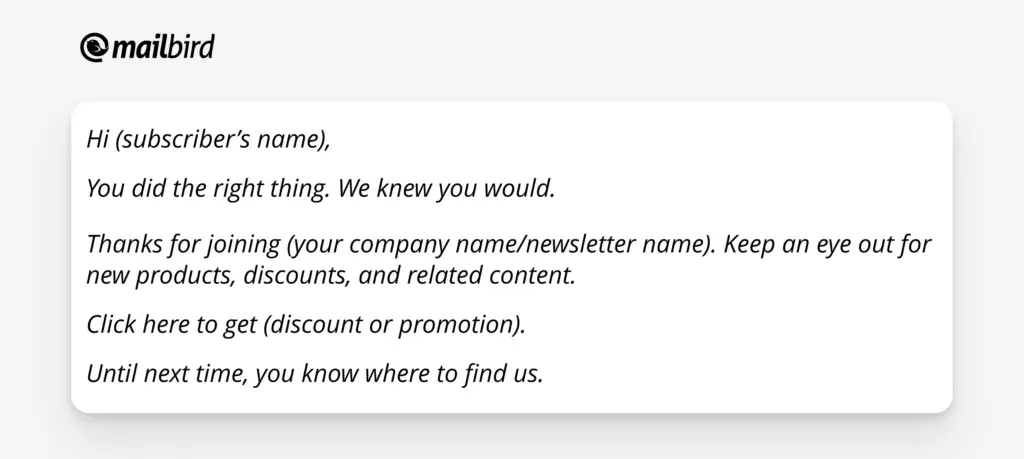 Image credit: https://www.getmailbird.com/how-to-write-a-sales-email/
So let’s fix that. Not with a technical guide to subject lines and testing (there are plenty of those out there on the tinterweb already), but with a more human look at what actually makes people open, read and act on an email.
Because your subscribers are not waiting patiently for ‘Q1 Insights from your company’. If they receive this kind of email, they’re likely to be scanning, skimming, and deleting at speed.
Your job is simple: make it easy for them to care about your company.
Winning emails are written in a way as if you are emailing just one person, not a list Most bad emails have one thing in common: they’re written to ‘Mailing List 2026’.
You can feel it in the tone. There’s no personality, no edge and no clear sense of who’s on the other side. Just ‘Dear all’ energy.
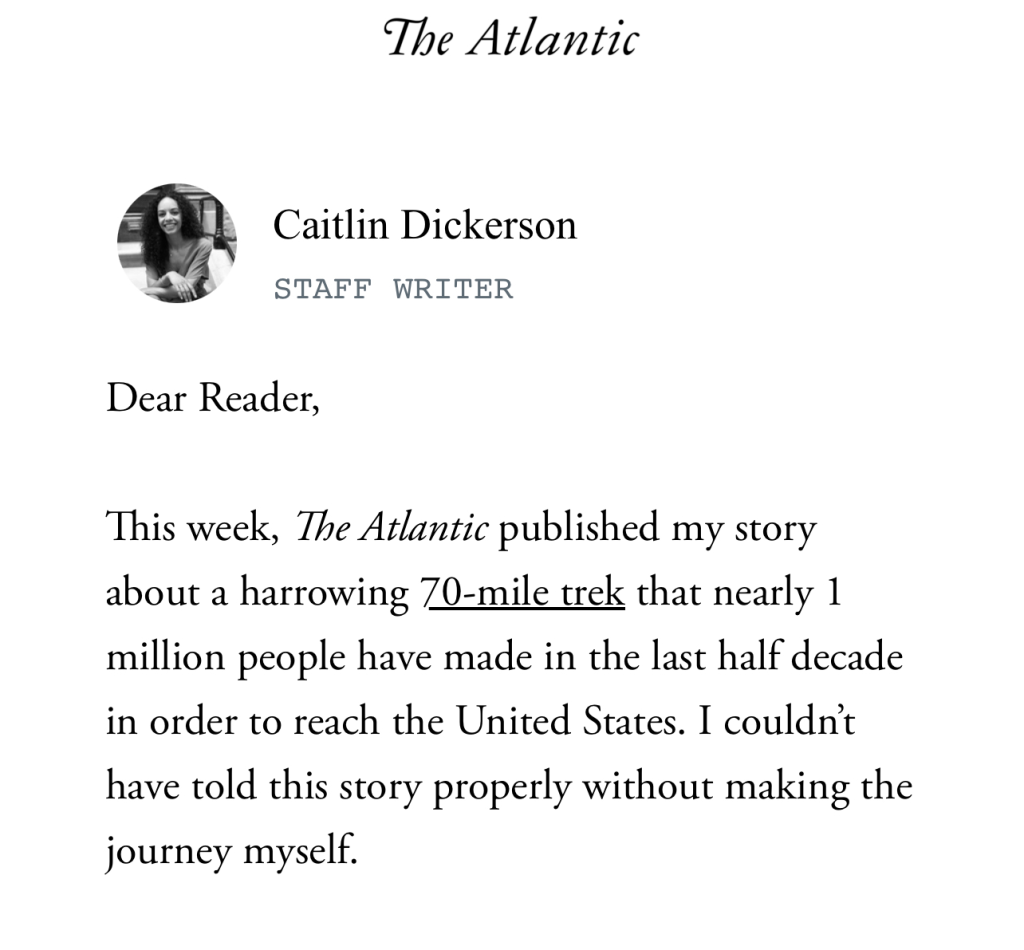 Image credit: https://www.constantcontact.com/blog/email-salutations/
Instead, try this:
Before you write a single word, picture one real client or contact. Someone you like. Someone who’d actually find what you’re sharing useful.
Now write to them.
Use the same language you’d use if you bumped into them in town. Explain why this email matters to their day, not your marketing calendar.
Keep asking: “Would they bother reading past this line?”
If the answer is no, don’t expect your broader list to behave any differently.
Lead with a hook, that’s the compelling first sentence, that makes them feel excited to read on. Nobody opens an email thinking, “I hope I get a detailed update about my adviser’s internal news today.”
They open because something in the subject and first line promises:
Help
Clarity
Relief
A shortcut
Or, occasionally, a good story
So instead of: ‘March Client Bulletin – Regulatory Update’, try something more direct, like:
‘Three changes this month your board will ask about’
‘What actually matters in this quarter’s update (and what doesn’t)’
 Image credit: www.notlessorequal.com/the-meeting-that-should-have-been-an-email-but-changed-everything-bdb1251ae3f3
Then, in the opening lines, resist the temptation to introduce your firm for the tenth time. Go straight to the pain or the payoff.
Think: what’s the ‘so what?’ in the first 2–3 sentences?
One email, one job.
A lot of professional services emails try to do everything at once:
Invite people to an event
Share three articles
Talk about a team promotion
Mention a new office
Remind you about their services
Result? People skim, get overwhelmed and do nothing.
A cleaner approach to a winning email would be this:
Decide what this email’s one job is, and then align everything else to that.
For example, if the goal is to get people to register for a webinar:
Make that the focus of the copy.
Include a clear, obvious button.
Remove anything that isn’t supporting that action.
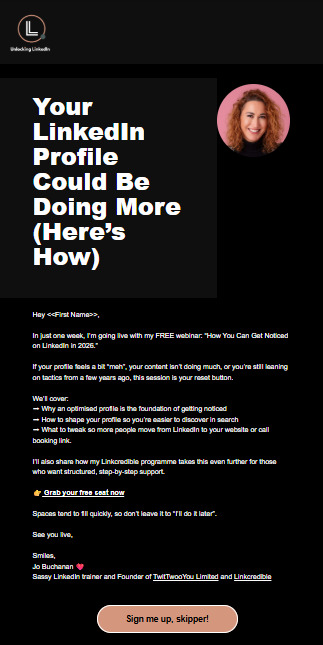 Image credit: www.linkcredible.online
You can still have small ‘by the way’ links in the footer, but don’t confuse your reader by shouting five different things at once.
Another useful tip is to use stories rather than statements. For example, “We’re experts in X” is a statement. “Last month a client came to us with Y… here’s what we did and what changed” is a story.
Which one do you think sticks the most?
We’re wired to remember examples, not abstract claims. So instead of bullet‑pointing your expertise, create an email that includes:
A mini case study in three lines
A quick ‘before/after’ snapshot
A client question you answered this week (with identifying details removed, to keep it anonymous)
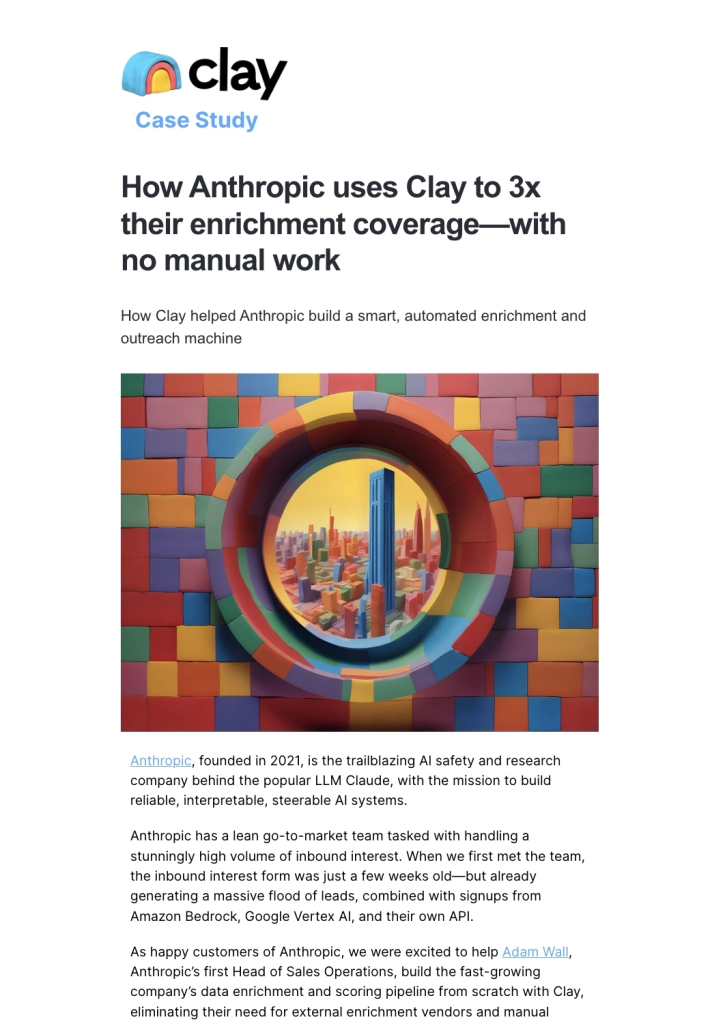 Image credit: https://userlist.com/blog/case-study-email-examples/
You don’t need war and peace. Just enough to help the reader say, “That sounds like a bit of me. Or, wow, they really understand my difficulties/obstacles/hurdles.”
It’s important to sound like a human. Too many professional services firms hide behind authenticity and a human approach while using stiff corporate speak that appeals to no one. In essence, remove the corporate fluff.
If your email reads like it’s been through 12 rounds of committee and legal sign‑off, your reader will sense it and switch off.
You can still be professional while sounding like an actual person:
Swap ‘utilise’ for ‘use’, ‘commence’ for ‘start’.
Use short sentences.
Ask the occasional question.
If it suits your brand, allow a touch of humour or warmth.
Remember: humans are reading this, not regulators.
Make your email feel easy (and safe). Even the best email falls flat if the reader isn’t sure what to do next.
Ask yourself these three questions:
Is there a single, clear next step? (Book a call, register, download, reply.)
Does the button or link copy finish the sentence “I want to…”? (“…book my place”,“…download the guide.”)
Have you reassured them about what won’t happen? (“No spam, no sales pitch, just a 20‑minute run‑through.”)
The more you de‑risk the action, the more likely people are likely to take action.
Respect their time (and intelligence). There’s a difference between ‘short’ and ‘concise’. A short but vague email still wastes time. A slightly longer email that gets to the point, adds context, and gives a clear takeaway can feel respectful.
To sanity‑check, ask yourself these three questions:
Can someone understand the main point of my email in 30 seconds?
Is there at least one thing the reader can do or think differently as a result of the email?
If this landed in your inbox at 8:30 am on a busy day, would you feel grateful or irritated?
If you’re not sure, trim, tighten and clarify.
The real secret? Send more, learn faster. The more emails you send, the better you will get at understanding what your subscribers want to read (cue open rate) and also what they’re most engaged in (cue click through rate). Trust me, you don’t learn what resonates by sending two emails a year.
 Image credit: https://www.sendblaster.co.uk/how-to-send-multiple-emails/
When you send emails frequently, you’ll begin to understand which topics, formats and subject lines get real responses.
And don’t just stall with your emails. It’s important to tweak your approach continually, so you eventually create winning emails that generate action and ideally sales.
But let’s be real here. Email will never be as shiny as social media, but it’s still one of the most powerful ways to build relationships, demonstrate thinking and quietly drive opportunities.
If you’re willing to sound more like a human, have a clear point, and respect your reader’s time, your emails won’t just sit in inboxes.
They might actually get read and acted on.