
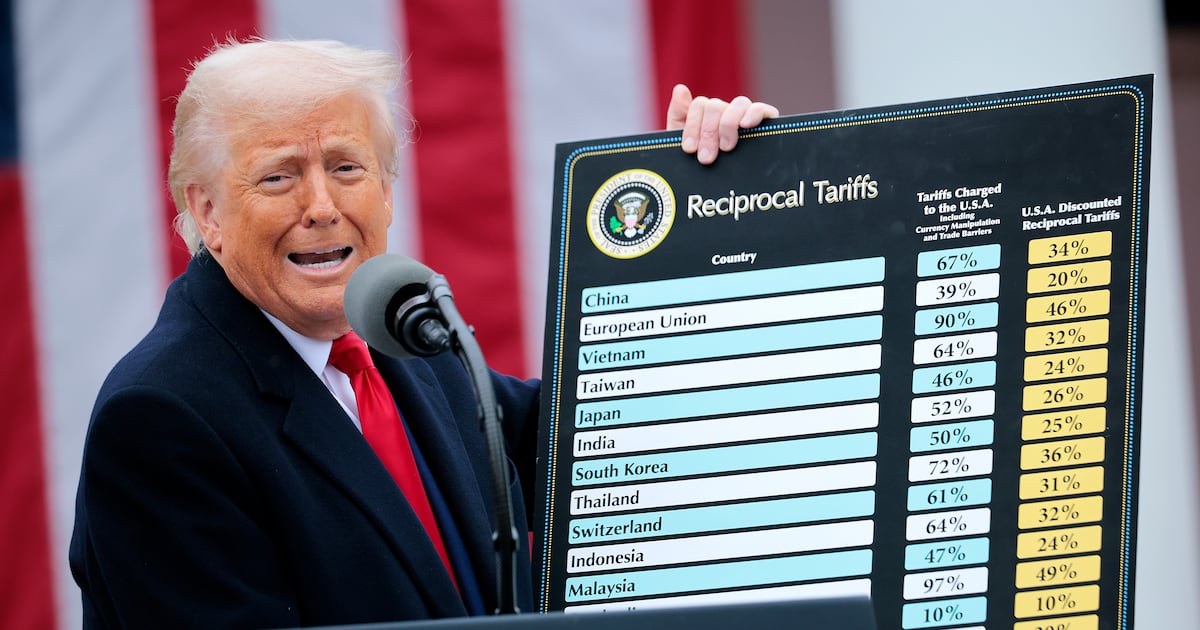
On April 2nd, 2025 US President Donald Trump had his famous Liberation Day tariff announcement.
It threatened a damaging jolt to Ireland’s economy. Twelve months on, two things are clear.
First, tariffs have hit some exports, but overall the impact on Ireland has been limited – and less than many other countries.
Second, the trade threats have not gone away and a new investigation by the White House specifically identifies Ireland’s trade surplus with the US as a problem. Uncertainty in trade with the US remains the new normal.
And new tariffs on branded pharma imports into the US announced on the anniversary of Liberation Day demonstrate this. These look likely to hit only a minority of Irish pharma exports, but the move shows the the US president is sticking with his tariff agenda.
Liberation Day
“It’s our declaration of economic independence.” So said Donald Trump as he stood making his Liberation Day announcement in the White House Rose Garden, in front of a makeshift board with tariff levels for different countries written on it.
 Iran’s cyber-attacks on Irish-based companies and the ongoing impact of conflict in the Middle East
Tariffs of 20 per cent were to be imposed on imports from the European Union (EU) – a 10 per cent baseline tariff and a 10 per cent “reciprocal” one, justified by EU barriers to US imports.
Ireland’s vital exports of pharma were excluded, but the message was that they would be dealt with as part of an investigation under separate legislation.
Other special tariffs on steel and aluminium and the car sector were also in place. Serious damage to the Irish economy seemed possible.
Partial retreat
A major adverse reaction on financial markets forced Trump to change his plans – and appears to have influenced his behaviour ever since.
By mid-April he had delayed the reciprocal tariffs – proceeding with the 10 per cent baseline – and a tariff war with China was under way, which later eased. More threats followed, but it was becoming clear that Trump’s tariff bark was generally worse than his bite.
Deals were being struck, including an outline agreement with the EU with a maximum 15 per cent tariff. And then, in late February, the US Supreme Court struck down tariffs imposed by Trump under the 1977 International Economic Emergency Powers Act – the reciprocal tariffs.
He then had to scramble by imposing 10 per cent tariffs under separate legislation – which can stay in place initially for six months – then increased it to 15 per cent and then brought it back to 10 per cent.
Historical tariffs in place under World Trade Organisation (WTO) rules were added to this, meaning the actual rate for companies subject to these earlier tariffs, such as many food firms, was a bit higher.
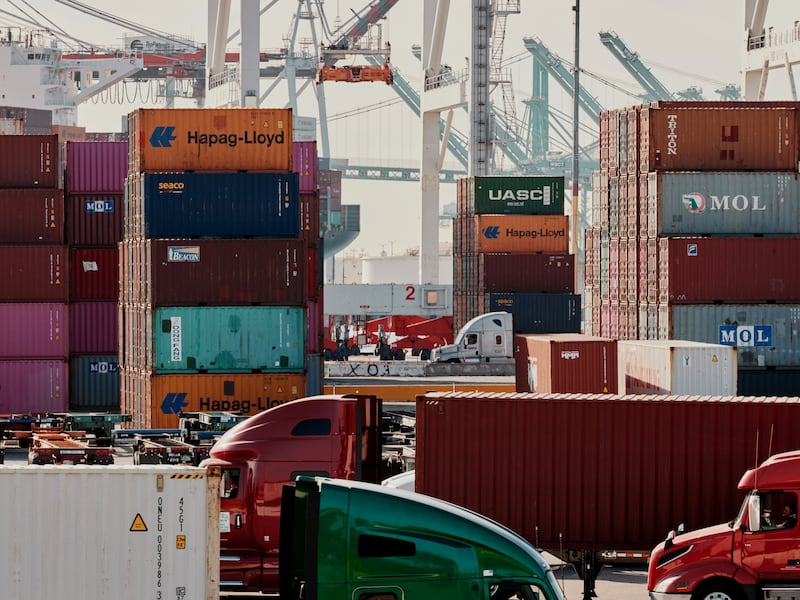 Port of Los Angeles. The average tariff on goods entering the US by early this year was just under 14 per cent Photograph: Adam Amengual/The New York Times
After all the ups and downs, the average tariff on goods entering the US by early this year was just under 14 per cent, according to the Yale Budget Lab, up from 2.5 per cent before he took office. A substantial change on any criteria, even if a lot less than threatened on Liberation Day.
Irish impact
Ireland has not escaped completely. Not by a long shot. Tariffs have risen in a number of areas over the past year and food and plastics have been affected by the more recent changes.
But Ireland has not been hit as hard as the deal done with the EU, while still to be implemented, has stayed Trump’s hand as he wants the deal to be completed. Ireland is not a major exporter in the sectors worst hit – car and car parts manufacture and steel and aluminium. And pharma had been largely excluded all along, including from the new tariffs announced in February, though charges will now apply in some cases after an announcement from Trump on Thursday, the anniversary of Liberation Day.
[ Irish exports to US fall 72% as trade turmoil linked to tariffs continuesOpens in new window ]
Trump has negotiated deals behind the scenes with major manufactures involving lower prices in the US and more investment at home. In return firms have reportedly received a three year guarantee of no tariffs.
Overall, Ibec, the business lobby group, points out that Ireland has benefited significantly from the “carveouts” for pharma and semiconductors.
It calculates that some 75 per cent of Irish exports by value have not been covered by tariffs (pharma is the main item here) while it puts the average effective tariff rate on all Irish imports into the US at 1.8 per cent.
These figures may now change a bit as some branded Irish pharma exports look set to be tariffed at 15 per cent under the latest announcement – though not the exports from the big players who have done deals with Trump. The US has published a list of branded drugs which will be tariffed. Generics – which are not under patent – are excluded from the new charge. Initial estimates from industry experts were that only a relatively small percentage of Irish pharma exports would be hit, but the detail will be worked through in the days ahead.
Future risks
So is it all largely settled? Not by a long shot. Carol Lynch, partner and trade expert at BDO, says Irish firms still face significant and problematic uncertainty.
For many things are not settled – it would be easier in many cases, she said, to know a fixed tariff of say, 15 per cent, was there and to deal with it. And even with the tariffs in place now, Lynch points to areas of complexity and uncertainty, such as the tariffs that apply to products that use heavily-tariffed steel or aluminium as an input. She said that the new tariff announcement by Trump on Thursday could increase the charge on Irish exporters using these metals as inputs in some cases.
And there are still key broader questions.
 The European Parliament voted this week for the US trade deal to go ahead. Photograph: Thierry Monasse/Getty Images Will the EU/US trade deal be finalised?
The European Parliament voted this week for the deal to go ahead, but put a range of conditions on it, including that Trump does not impose new tariffs above 15 per cent and that there is a “sunset clause” at end March 2028, meaning the parliament must then approve the deal again. Aspects of Thursday’s tariff announcement could lead to difficulties when compared to the parliament text, according to Lynch,
All 27 member states must sign up to a final text, as must the US. Amid transatlantic tensions over the Gulf, it is not clear how this will develop. And if the deal collapses, who knows how Trump might react?
What happens after July when the new tariffs imposed after the US Supreme Court decision run out?
They can be rolled over – it would probably require congressional approval. By then the EU/US deal may also be settled, one way or the other. But nobody knows.
More uncertainty here for Irish businesses particularly those in sectors like food and drink, currently paying 10 per cent plus historic charges often in the 5 per cent range.
What about the new investigation?
Trump has ordered a new investigation into the trade practices of 16 trade partners, including the EU. This is a vehicle to get legislative cover for reimposing tariffs under yet another piece of legislation, section 301 of the 1974 Trade Act.
Under EU section, the countries with the biggest trade surpluses with the US – Germany and Ireland – are picked out for special mention. This may come to nothing if the EU/US deal is ratified. Or if it is not could be used by Trump as a stick to beat the EU.
 Trump seems to have concentrated on the specific confidential deals with major players, including those with Irish operations like Eli Lilly. Photograph: Jakub Porzycki Getty Images What about the pharma sector – and semiconductors?
The results of a special investigation into the two sectors undertaken last year were never published. In pharma, Trump had up to recently been concentrating on the specific confidential deals with major players, including those with Irish operations like Eli Lilly – a huge contributor to exports and Irish tax revenue – and Pfizer.
This may see off the threat of major tariffs on these companies though the longer-term impact on Ireland of their major new investments in the US are hard to assess.
Might they involve, for example, a move in the manufacturing location of high value active ingredients from Ireland to the US in future years, or a shift in intellectual property assets back to the US.
Either could hit Irish tax revenues.
And tariffs now appear on the cards for other branded pharma companies who have not made “deals” involving new investment commitments in the US. On Thursday Trump announced new pharma tariffs on a list of branded drugs – and their active ingredients – made by companies who have not made investment commitments in the US as part of special deals . These is likely to mean a tariff of 15 per cent on some Irish pharma exports to the US – the headline rate is 100 per cent, but because Ireland is in the EU the maximum rate in the EU/US deal of 15 per cent applies. The extent of this exposure is not immediately clear but it will affect some domestic pharma producers selling to the US as well as exports back to the US from some multinationals here who have not done deals with the White House.
[ US launches new probes into EU and other trade partnersOpens in new window ]
The bottom line
As long as Trump is in power, uncertainty will continue. If the EU/US deal can be finally signed and implemented this will take some of the risk off the table for Ireland.
If not, all bets are off, even if Trump will probably try to avoid big new tariffs in the run up to the November midterm elections. Ireland’s massive tech service exports are currently excluded from tariffs, but there are tensions here, too, over regulation.
According to Lynch of BDO, there is no going back to the old world of trade certainty: “The global trade system will not revert to the familiar, and the open markets and low tariff era is no longer in place.”
As a country with a big trade surplus with the US, Ireland will remain in the spotlight and at some risk.