
A couple of days ago, I asked someone how they research things. The answer came almost instantly: “I just ask ChatGPT.” Without really being able to control myself, I rolled my eyes (but not for the reason I would have a year ago). Back then, it would have been the “AI” part that really got me. The entire premise of trusting AI with something as important as research felt reckless. This time, though, it was the ChatGPT bit.
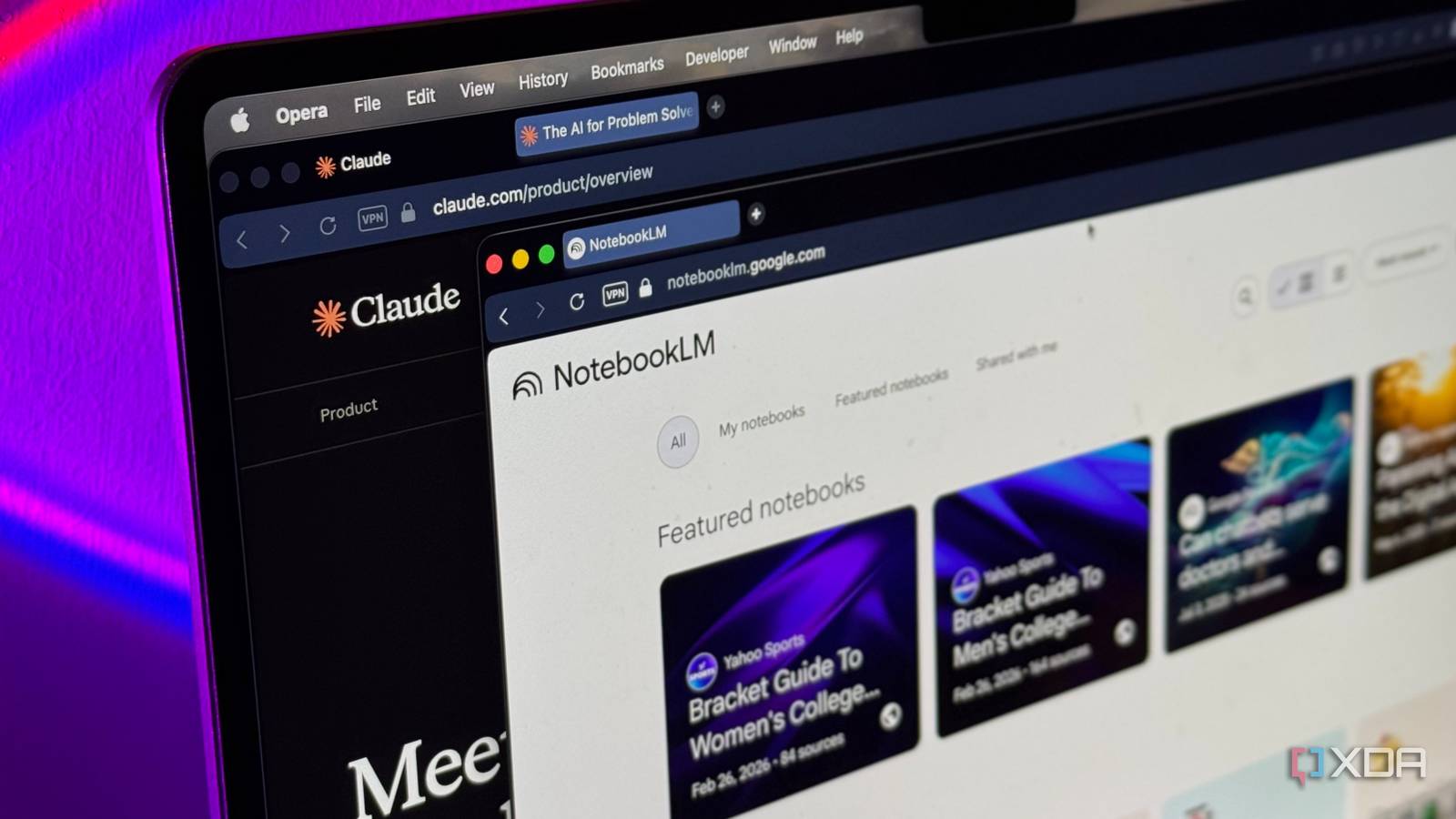
I simply couldn’t grasp why someone would still rely exclusively on ChatGPT and not even explore what else is out there. Two of the tools that finally made me believe that AI research isn’t just a gimmick are Google’s NotebookLM and Anthropic’s Claude, especially when you use the two together.
NotebookLM works with what you already have
Helping you deal with information overload
I’ve always thought that finding information is the easiest part of research. The difficult part is frankly everything that comes after. This includes actually making sense of your findings and comprehending them, seeing how one source supports or contradicts another, pulling out patterns across all your sources, synthesizing your sources, and simply working with what you already have. The biggest issue we currently struggle with is information overload. AI slop certainly plays into this, but there’s simply too much information to process.
From the first time I heard the term “AI-powered research,” my mental image of it was tools that help us actually make sense of the stuff we already have and cut through all the noise. This is exactly the problem NotebookLM was built to solve. The tool is powered by Gemini under the hood, but it essentially builds a self-contained, grounded knowledge base from whatever sources you feed it. These sources can be PDFs, research articles, YouTube videos, Word documents, webpages, eBooks, etc. Every knowledge base you create, which in NotebookLM’s terms is called a notebook, knows your sources and your sources only.
Related
Until NotebookLM, I never believed AI could be this game-changing for productivity
It transformed my view of AI, for the better.
Once your sources are uploaded, you’re greeted with an interface that’s largely similar to your traditional AI chatbot with a chatbox and a conversation thread. The similarities end there. Every time you ask NotebookLM a question, the response it gives you is grounded right within your uploaded sources. This means that hallucinations are considerably reduced, and you don’t need to worry as much about it confidently making things up. Of course, though, you can’t just blindly trust the output the tool gives you. This is why every claim comes with inline citations that link directly back to where NotebookLM picked up the information from.
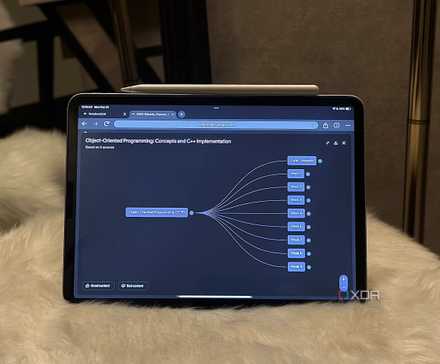
Beyond just interacting with your own sources by asking questions in natural language and getting fully-cited answers, NotebookLM also has a range of Studio outputs that have genuinely transformed the way I approach research. With a single click, you can generate reports, Slide Decks, Infographics, Data Sheets, Video Overviews, and NotebookLM’s most viral feature yet — Audio Overviews. The Mind Maps feature is specifically excellent for finding connections across your sources.
The reason I mention these features here is because they give you the opportunity to see your sources from a different angle. That’s exactly what a huge part of research is. Before NotebookLM, you’d need to do all of this manually. You’d need to revisit the same information until you see something you didn’t see before.
Claude makes for an excellent thinking partner
It doesn’t constantly praise you
You have your sources — you’ve already done that part of research. NotebookLM will certainly help you with actually understanding them, but at some point, you need to move beyond understanding what the sources say and start figuring out what you actually think about all of it. You need to form an argument, identify what’s missing, and turn it into something coherent. That’s something you need to do. It isn’t something you can outsource to AI, but I think there’s a lot of value in using it to think with you.
Rather than AI reading your sources and giving its thoughts on them, you can use it as a surface to think against. Claude is so far the most conversational chatbot I’ve used, and it’s great at exactly the type of back-and-forth I’m talking about. You can bounce between half-formed ideas, ask it to criticize your argument, explore angles you haven’t considered yet, and just talk conversationally through them.
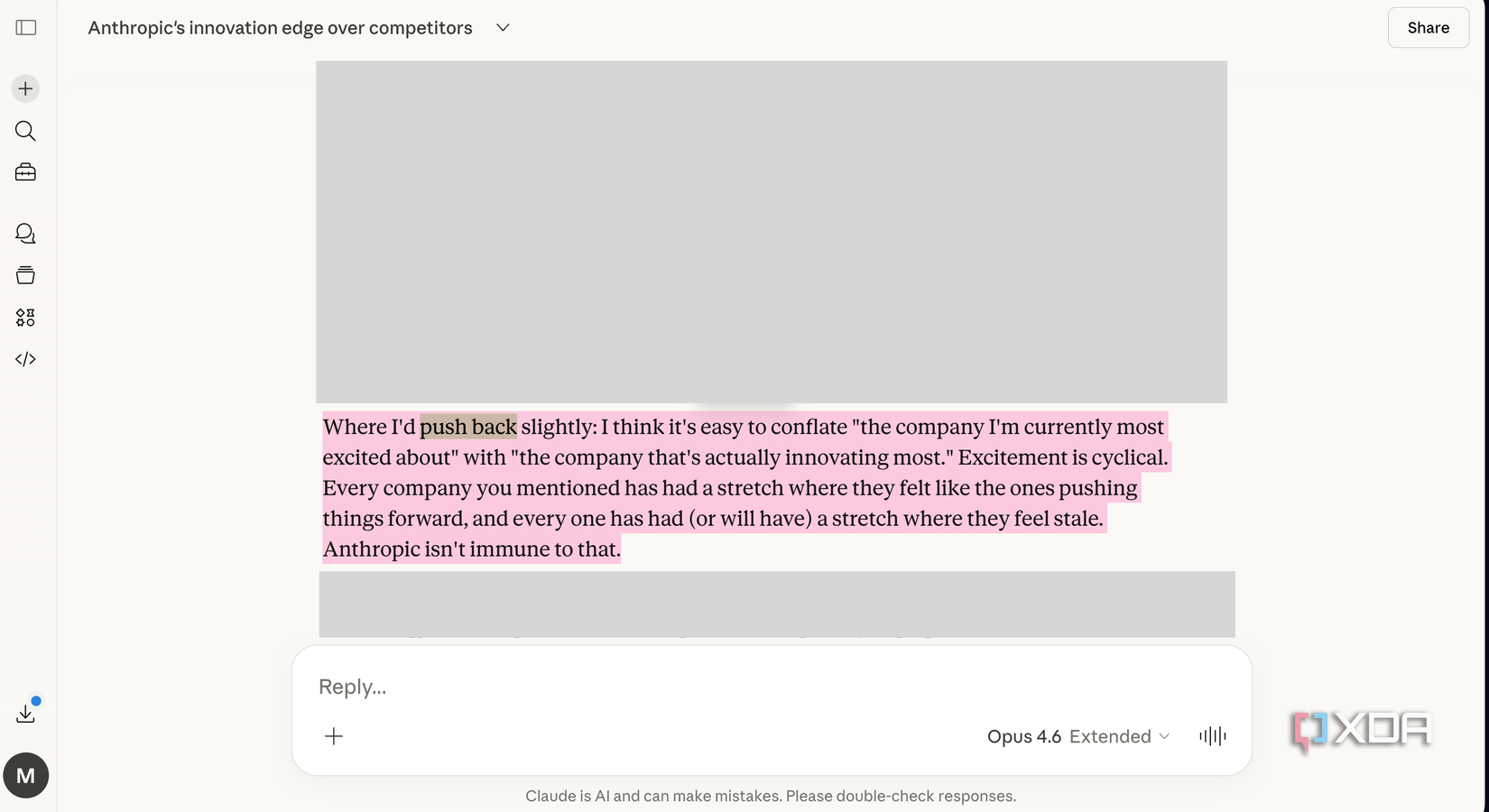
The reason why I don’t recommend ChatGPT, Gemini, or even NotebookLM for this is because Claude is one of the few tools that has a bigger tendency of pushing back on you. If it doesn’t agree with you, it won’t glaze you and keep telling you that you’re doing great. It’ll actually push back and tell you where your reasoning falls short.
When you’re forming an argument, the last thing you need is someone or something just validating every single thing you say. Of course, Claude can also bring in fresh perspectives beyond what’s in your sources. So, the way NotebookLM and Claude work are practically inverse!
It all comes down to how you actually use these tools
AI tools are here. They were here yesterday, and they’ll be here tomorrow. You can either keep ignoring them while others don’t, or find ways to meaningfully integrate them into your workflow. NotebookLM and Claude are the two tools that genuinely showed me what meaningful integration actually looks like.