
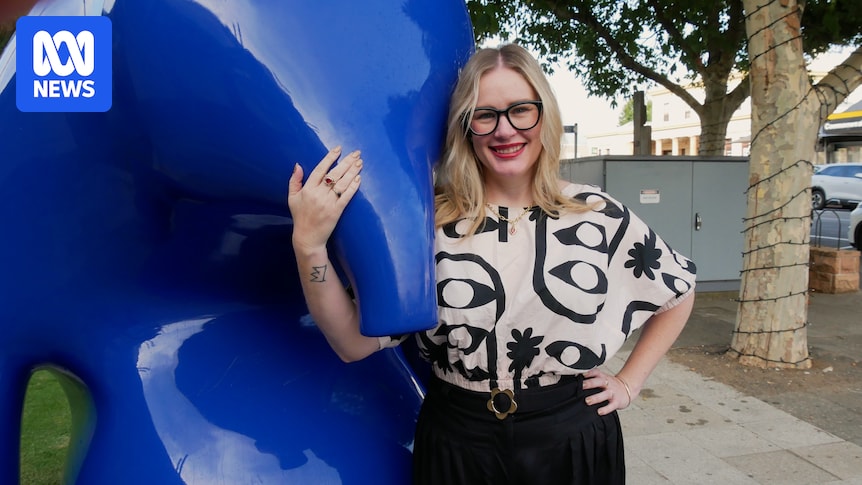
A peculiar blue structure — with a long nose and extended belly — sits on the main corner in Mount Gambier.
Drivers and walkers pass by, wondering what it is, with some questioning whether this type of art has a place in the city.
Cast in Blue, which the community has nicknamed the “Blue Blob”, depicts a mystical megafauna that emerged from deep aquifers below the region.
It symbolises the Limestone Coast’s patchwork of aquifers, sinkholes and the Blue Lake.
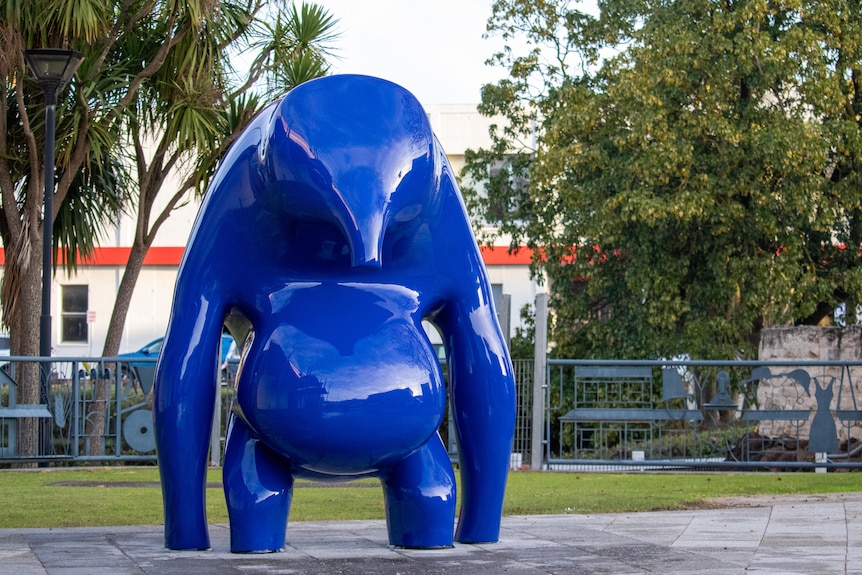
The Cast in Blue sculpture was installed in July last year and cost the City of Mount Gambier $136,000. (ABC South East SA: Josh Brine)
While art is meant to evoke diverse opinions and feelings, Cast in Blue sparked fierce backlash from the local community when it was first announced and unveiled.
But 10 months since its installation, community opposition appears to be fading as tourists and locals flock to see the sculpture.
Cast in Blue was the result of the City of Mount Gambier’s Beacon Art Project, designed to bring more public art to South Australia’s second-largest city.
A dedicated panel helped select which artwork to install, with the design by Huna Studio winning out.
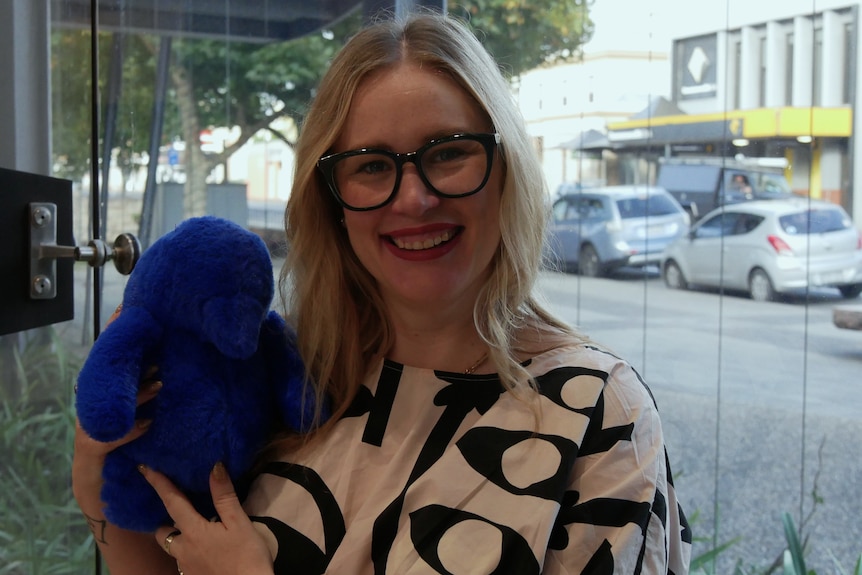
Ashleigh Whatling holds a Cast in Blue plushie, which has been become a favourite souvenir. (ABC South East SA: Samuel O’Brien)
Riddoch Arts and Cultural Centre director Ashleigh Whatling was one of the panel members who made the decision.
“When we selected that work, my personal reaction was, ‘Here we go,'” she said.
She was not wrong.
Significant attention
Since its unveiling, the $136,000 sculpture has been scrutinised, mocked, decorated and damaged — and at times made international headlines.
Last week, 20-year-old Amelia Vanderhorst was ordered to pay $2,000 to the town’s council and complete 60 hours of community service, after supergluing googly eyes to the sculpture in September last year.
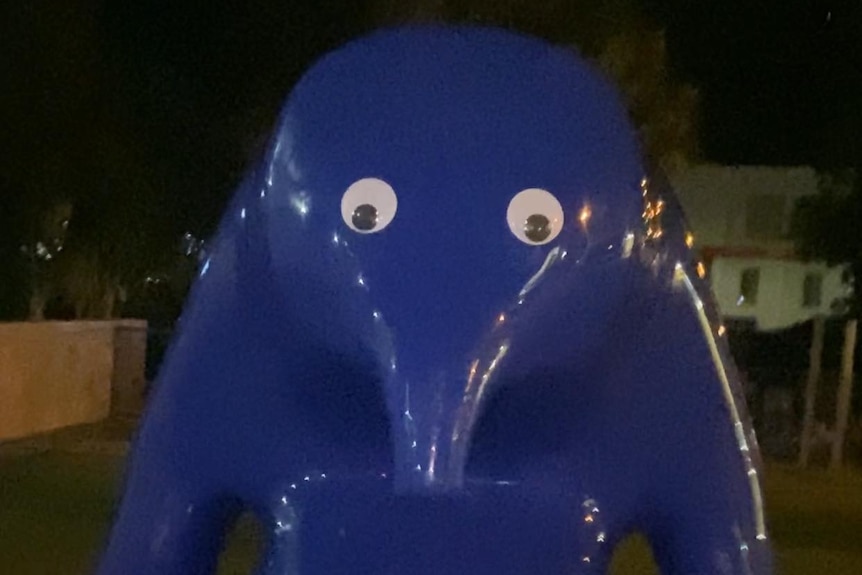
Amelia Vanderhorst stuck googly eyes to Cast in Blue, bringing international attention to the sculpture. (Supplied: Facebook/Amelia Vanderhorst)
The artists who created the unique installation have been among those most affected by the attention it has attracted.
In a statement, Huna Studio said they knew the sculpture would attract criticism from the start.
“We wanted to create something that was playful, approachable, and easy for people of all ages to engage with,” Huna Studio said.
“We received a large amount of negative commentary [after the googly eyes incident], including claims that we were responsible for legal action and that the work was poorly made.
“Some of the commentary was quite personal and often based on incorrect information.”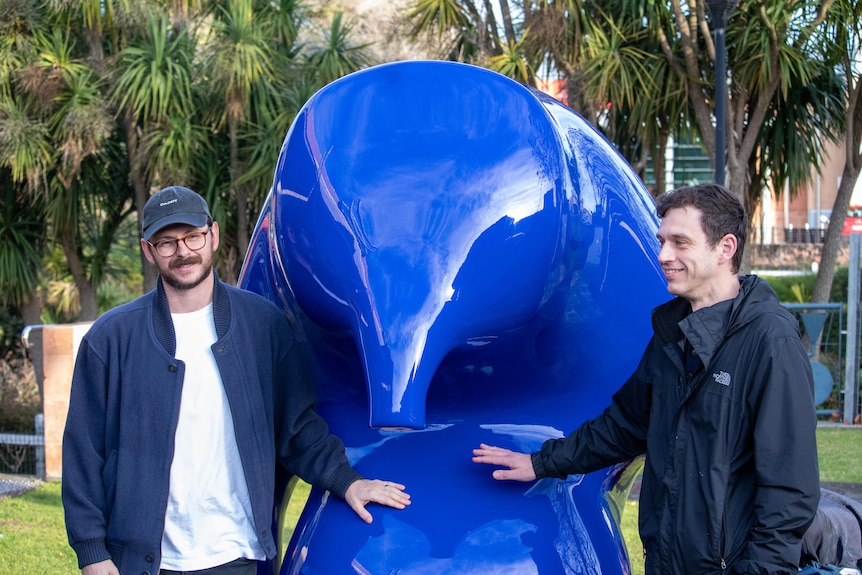
Cast in Blue designers Tom Proctor and Mitch Walker say they have received abusive messages about the sculpture. (ABC South East SA: Josh Brine)
Huna Studio said the attention had soured what would otherwise have been a positive experience.
“It has also made us more cautious about stepping back into the conversation publicly,” Huna Studio said.
“Despite this, we are still proud of the work.”
While negative sentiments were pervasive online, Cast in Blue did have some early supporters.
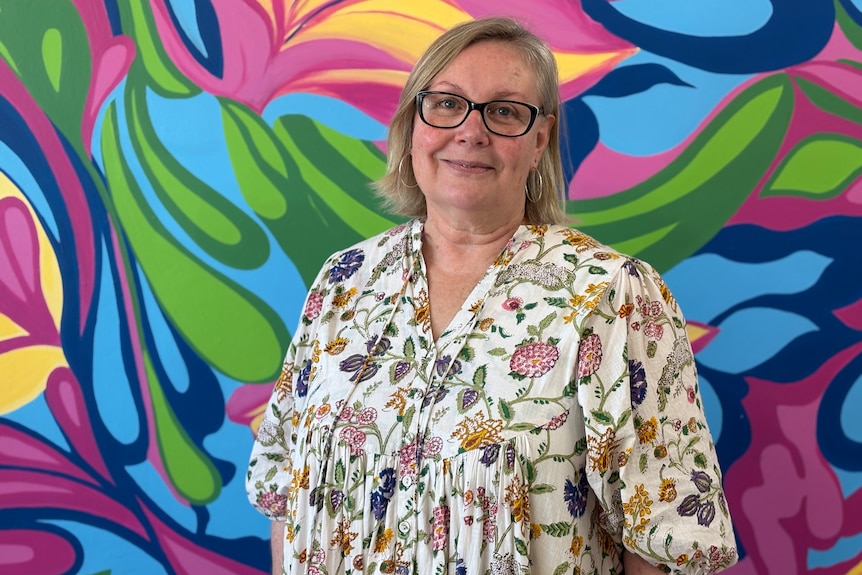
Ruth Stephenson publicly spoke about her support of Cast in Blue before it was installed. (ABC South East SA: Samuel O’Brien)
Ruth Stephenson, a Mount Gambier art educator and small business owner, spoke publicly in support of the sculpture before it was unveiled.
She said many people contacted her after she spoke about how she liked the artwork.
“What they liked about what I was saying was, it was not, ‘You are all awful people because you don’t like it,'” Ms Stephenson said.
“It was, ‘Come on, this is a project designed to create discussion and to bring people into the town, and that’s what we need.’
“I had a lot of support from that point of view.”
In Ms Stephenson’s experience, the more that people learned about the sculpture, the more they grew to like it.
“As soon as you actually engage in rational conversation without the emotion behind it, it gave a lot of space for people to be able to [understand it],” she said.
A deliberate strategy
According to Ms Whatling, leaning into the controversy became part of the council’s plan to increase the visibility of Mount Gambier.
“We wanted to get people excited,” she said.
“We wanted to share the story. The idea of this project, it wasn’t just another public artwork; it would be a beacon … it would be our version of the ‘Mall’s Balls’.”
Mall’s Balls is the affectionate name given to a public artwork in Adelaide called The Spheres — two large, shiny, metallic globes stacked vertically in the city’s Rundle Mall.
While the tone of the commentary around Cast in Blue was negative early on, Mount Gambier Mayor Lynette Martin said it had already begun to shift, with many recognising the impact the sculpture was having on tourism.
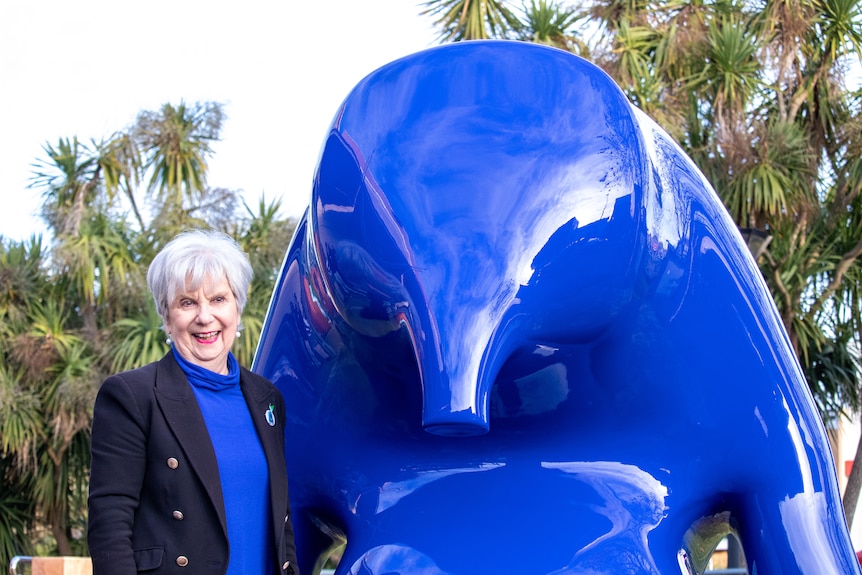
Lynette Martin says Cast in Blue has grown on the town since it was installed last year. (ABC South East SA: Josh Brine)
“I hear many people say to me around the city that not a day goes by when they don’t see people interacting with Cast in Blue,” she said.
“It’s wonderful to see.”
The council has released a line of merchandise that has quickly sold out, including pins, key rings and even a plush version of the new blue landmark.
It said the plushies were a fan favourite, with more than 300 sold so far.
“It certainly has turned into being an overall good thing for the town because we’ve received national and international media [attention] that money couldn’t have bought for us,” Cr Martin said.
Mount Gambier resident Angela Sullivan said she thought Cast in Blue had got people talking.
Angela Sullivan says Cast in Blue has been a point of conversation in the community. (ABC News)
“As time’s gone on, I actually think that it’s quite ingenious and I think it’s wonderful for the town,” she said.
Dali Lee disagreed, saying he would have liked to have seen the money used for other projects.
“Something that doesn’t sit there as a blob [and] does nothing for anyone,” he said.
A common trend
Adelaide University associate professor of contemporary art Gretchen Coombs has seen many public art projects across Australia that were poorly received when first unveiled.
“The public artwork in Melbourne — terribly called Yellow Peril but [officially known as] The Vault — the controversy around that artwork created a halt to public art funding for many, many years,” Dr Coombs said.
“Now, it’s considered to be part of the Melbourne public art tour, right out in front of the Australian Centre for Contemporary Art.
“There’s an initial rejection [of public art], and that’s often because people don’t really understand it.”
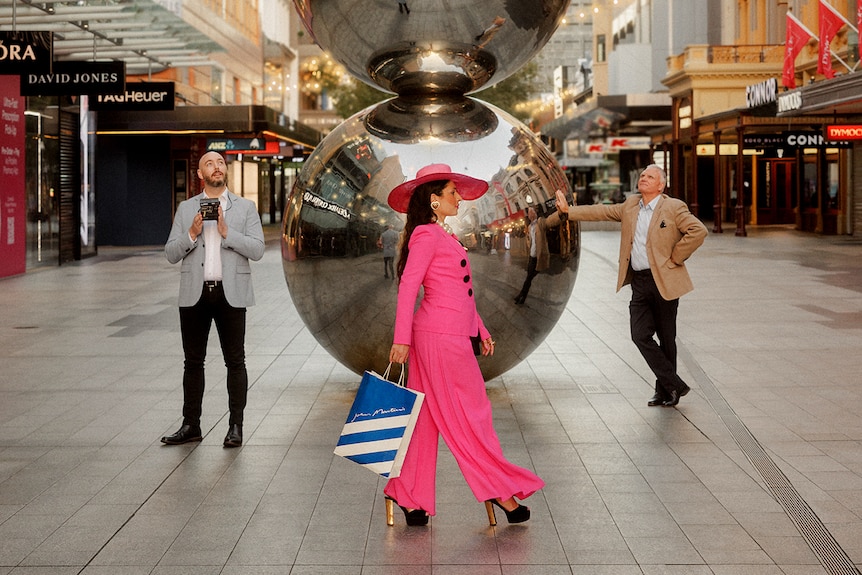
Adelaide’s iconic Mall’s Balls were controversial when they were first installed in Rundle Mall. (Supplied: History Trust of SA)
She said while publicity came with risks, it could also lead to positive results.
“Controversy courts awareness and curiosity,” Dr Coombs said.
“I don’t like the fact that it has to be controversial for people to have art at the forefront of their mind.
“But I think the controversy is also good because it can be a catalyst for conversations about what we value and how we want to be represented.”
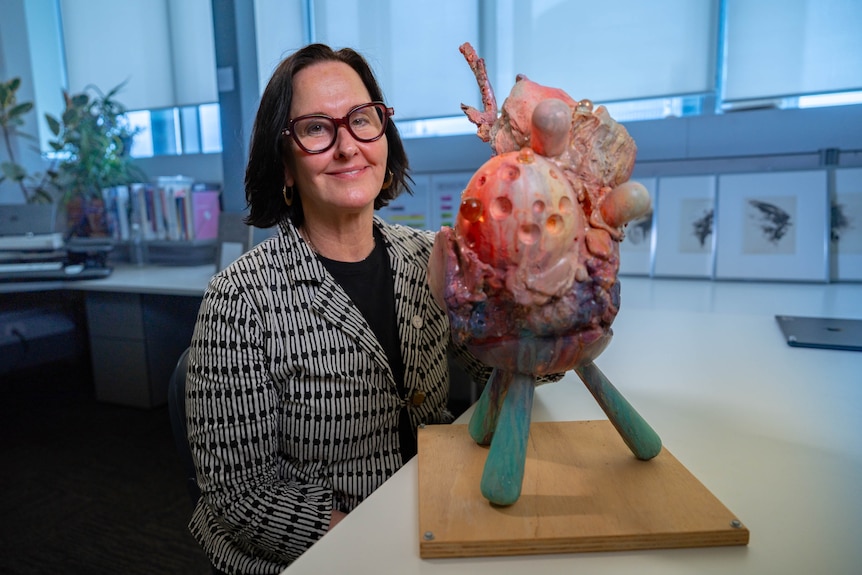
Gretchen Coombs says controversial artworks like Cast in Blue can often increase tourism. (ABC News: Lincoln Rothall)
For the team at the City of Mount Gambier, the gamble has paid off.
Ms Whatling said support for the sculpture had been positive for the staff at Riddoch Art Gallery, which was next to Cast in Blue.
“Every time I go outside, I see somebody having a photo with it, or I see a kid having a cuddle, or I see somebody just giving it a questioning stare,” she said.
“I definitely think it’s doing its job in terms of attracting people to the CBD.”