
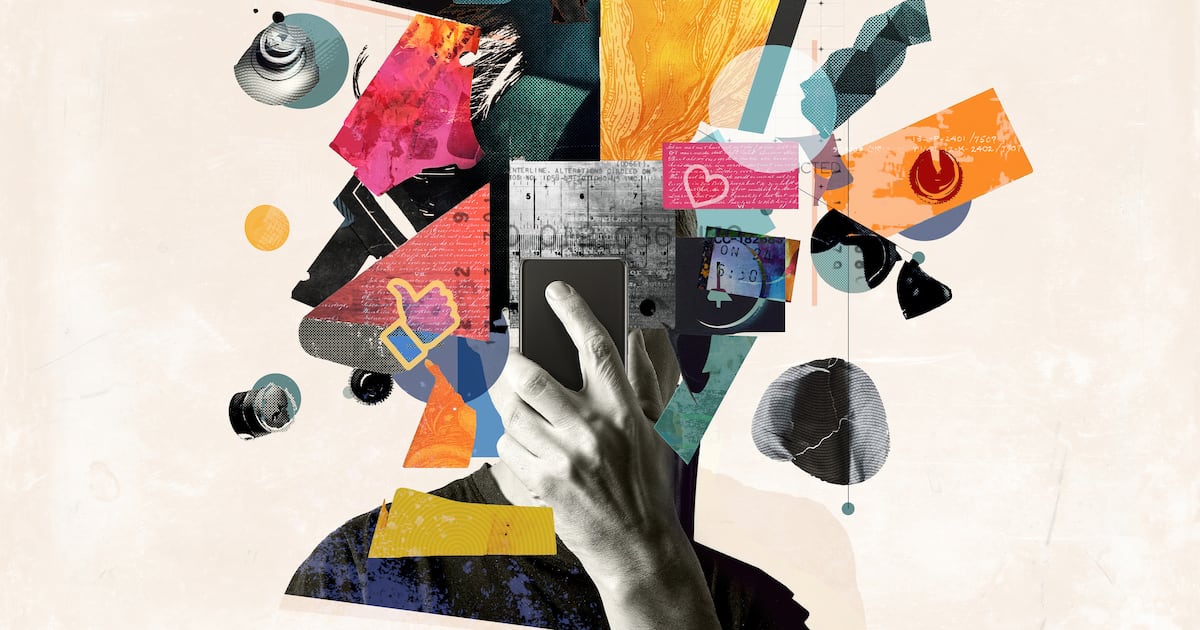
After years of overlapping crises, Irish people have “run out of shock” and are “emotionally checking out”, according to the latest Sign of the Times survey published by Ipsos B&A.
The war in Iran and accompanying fuel price hikes are just the latest big world events to affect the lives of ordinary people, and 74 per cent of adults now expect the global economy to worsen over the next year. That is up 10 percentage points on the proportion of respondents who said the same two years ago.
Instead of panicking, the public has accepted chaos is no longer temporary and they are increasingly choosing to tune out, the researchers said. Once-shocking headlines – a pandemic, an energy crisis, geopolitical chaos – have begun to feel routine.
Focus-group research, which was conducted in the weeks before the United States and Israel began their air campaign against Iran, found there has been a significant shift away from “cautious optimism”, where people pushed through in the hope of light at the end of the next few months. This has made way for a form of “resigned resilience” that geopolitical and financial turbulence is here to stay.
Luke Reaper, chief executive of Ipsos B&A Ireland, says the Irish are a “pretty battle-hardened bunch” after a succession of crises.
“If you think about the Irish population, over the last number of years we have gone through a financial crisis and come out of that. We have gone through a pandemic, an energy crisis, cost-of-living crisis, and there has then been upheaval across the world.”
People are realising the chaos in the world “is not going to end any time soon, that they are in it for the long haul”, says Reaper. “With these overlapping crises they have literally run out of shock.”
This mindset is interesting, he says. “It is not that they are apathetic … They are emotionally checking out a bit because this is quite draining. They are looking for a bit of light relief and they are trying to block a bit of bad news.”
In focus groups, participants described creating “bubbles of normalcy” around their kitchen tables, with one saying: “We just don’t talk about all that awful stuff happening out there … instead we talk about our holidays, good food, we laugh.”
The researchers said conversations have shifted to the “tangible and controllable”, with participants mentioning an unspoken family agreement of “not here, not now” when it comes to distressing geopolitical events.
But although optimistic distraction is a technique used by many of the focus-group participants, one in five of people surveyed last February said they were struggling to get by, rising to one in four among blue-collar workers.
Researchers said there was a countercultural movement growing towards slowing down and being intentional about consumption
Nearly a third of the 1,042 respondents said they could not afford to pay an unexpected but necessary expense of €1,000. This is similar to the number who answered this way in 2022, but a split trend has emerged between blue-collar workers and managerial/professional classes.
More blue-collar workers felt unable to pay such an expense two years ago (41 per cent) than did in February (one in three). The proportion of managerial/professional workers unable to meet a €1,000 rainy-day cost rose from 23 per cent in 2022 to 28 per cent this year.
Reaper says people have their usual coping mechanisms for inflation and financial pressures, such as turning to own-brand goods and cutting out big-ticket items. It is important to remember certain cohorts of people are “under pressure”, and if things get “worse and worse” people will become more stressed, he says.
A separate consumer survey of some 1,000 individuals last month found inflation and the cost of living were by far the most pressing issues in people’s minds, with 60 per cent of respondents mentioning these to surveyors. This is up from 54 per cent who raised these issues in February, before the Iran conflict.
Housing, the next most common worry, was mentioned by 40 per cent of respondents, while healthcare and immigration control were worries for a third and a quarter of people respectively.
Just five months ago, military conflicts between nations were not on the minds of many, with only 5 per cent of people mentioning war as a concern. But this year, global unrest is causing more concern, with 16 per cent worried about it in January and nearly a quarter (24 per cent) concerned by March, in a clear sign the Iranian conflict was seeping into the public consciousness.
Just over a third of people aged 16 and above surveyed in February said Ireland should prioritise developing a strong alliance with the US. This is far below the three-quarters of respondents who favoured focusing on developing Ireland’s relationship with the EU.
More than half (57 per cent) wanted a strong allegiance with the UK, while 38 per cent wanted to align strongly with Canada, whose prime minister, Mark Carney, has urged building a “new order” amid a “rupture” to rules-based geopolitics caused by a lack of constraints on the main powers. China was viewed as a key Irish ally by a quarter of respondents.
The Ipsos B&A focus-group research found people held significant emotional disappointment with the US. Still, their moral dismay was tempered by economic pragmatism and knowing Ireland’s economy is deeply tied to US multinationals.
There has been a revival of Irish cultural traditions, with #Gaeligetiktok trending on the Chinese social media app and “learn Irish online free” rising by 40 per cent on Google searches. League of Ireland soccer games saw an 11 per cent rise in attendance during 2025, the researchers noted.
The housing crisis has never been as significant for people. Many younger adults perceive they need two good salaries plus financial assistance from parents, in the form of free or low rent or through a contribution, to work towards a house deposit.
There are “unspoken tensions” in homes shared by parents and their adult children, the researchers said.
Although offspring are generally really appreciative of being able to stay at home, those participating in the focus groups reported feeling a degree of embarrassment and often feel infantilised and that their privacy and autonomy are limited.
Some parents feel they still have an outsize role in washing and cooking, while others feel they need to dip into retirement savings to help their children amass house deposits.
There are delayed milestones, with older people extending their parenting responsibilities and grandparenting responsibilities, the researchers said.
For the younger generations, particularly those born between 1997 and 2012, who are sometimes referred to as “Gen Z”, there is a pressure to “perform” online, the study suggests.
Two-thirds of Gen Z survey respondents agreed with the statement: “I feel pressure to optimise everything in my life.” A quarter of people in this age group were neutral on this, while just 10 per cent disagreed.
Reaper observes “contradictions” in the pressures on young people to “perform” online. The trend is for people to be highly productive and present; ambitious and at peace; crushing goals and practising gratitude; and having experiences while also progressing life goals.
Focus-group researchers noted a rise in “trophy travel”, says Reaper, with the language used to describe holidays becoming a telling indicator of its growing performative nature: “We did Vietnam, and then we did Cambodia.” The researchers said people are “mentally composing captions while standing at Angkor Wat or at the Fuji mountains”.
“Trophy holidays have been there for a while, but they have grown,” says Reaper. “We found people were looking for experiences before. Now it is about accomplishment.”
“There is pressure on all parts of life: your sleep regime, your exercise routine, what you eat. Everything seems to be a performance, and the younger you go the more you are impacted. You are having to put your perfect self forward,” he said.
Amid all this, however, researchers said there was a countercultural movement growing towards slowing down and being intentional about consumption.
With technology continuing to advance, some feel left behind. More than half of people saying they would not feel confident in their ability to identify a “deepfake” video or artificial intelligence (AI) image.
Men were more likely than women to say they feel confident identifying AI-generated images. Younger people were also more confident, with two-thirds of Gen Z males satisfied they could spot such imagery compared to just one-third of older men and women.
Nearly half of survey respondents were unsure they could spot misinformation or fake news.
Survey respondents were nearly evenly split three ways when asked about the long-term benefits of AI for society, with a third believing it will have a positive impact, just under a third neutral and just over a third disagreeing.
Half of people availing of AI use it as an alternative to search engines such as Google, while 46 per cent use it for learning and research. A fifth of 16- to 24-year-old AI users reported using the technology for emotional support or companionship.
The February nationwide survey included a representative sample of 1,042 people who were quota-controlled in terms of gender, age, socioeconomic status and region. In addition, fieldwork and five focus groups were conducted in February 2026.
This article was amended on April 4th, 2026 to correct a calculation.