
(Credits: Far Out / Alamy)
Sun 5 April 2026 17:30, UK
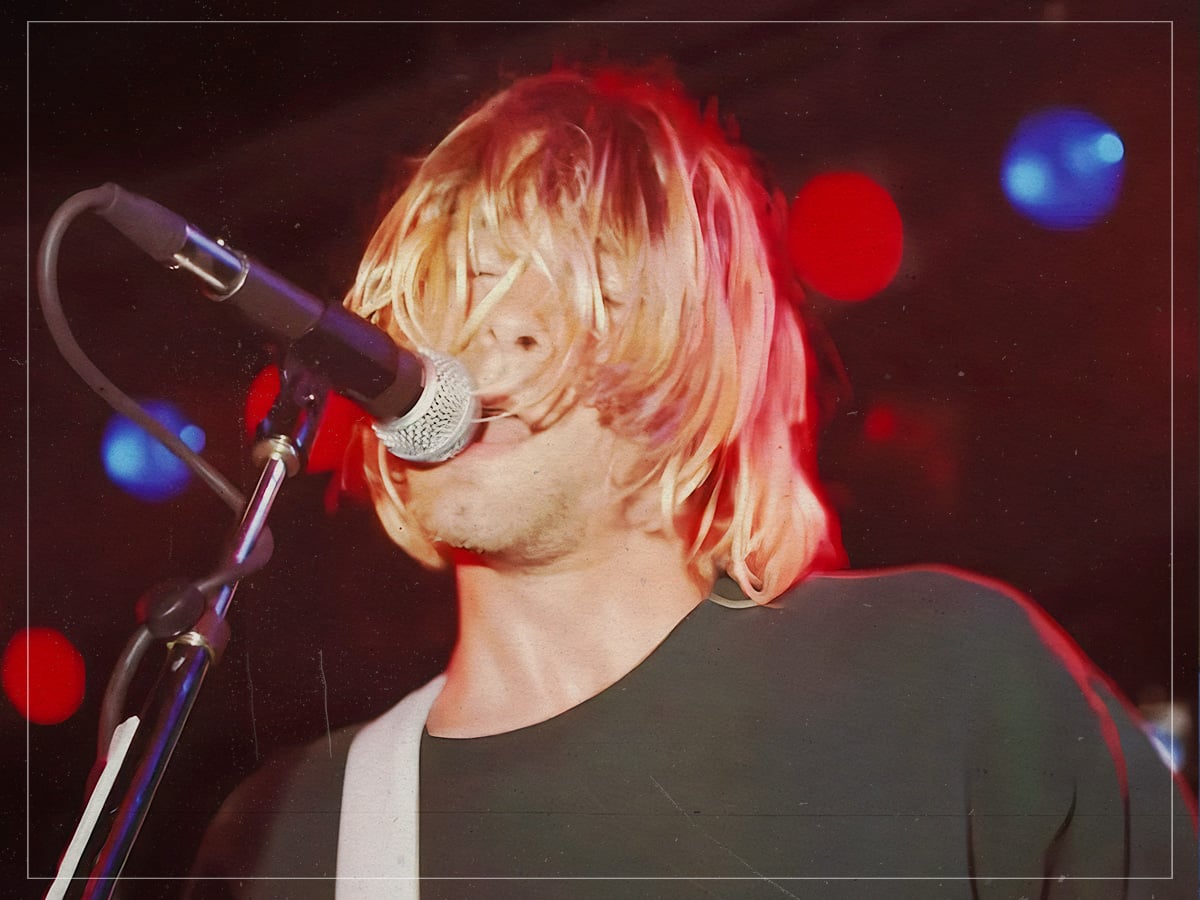
Kurt Cobain and grunge seem like the perfect pairing, but in reality, the Nirvana frontman never liked the genre label.
Cobain was disillusioned before many of his contemporaries, and saw the wormy hands of capitalist pigs oinking their need for profit and consumption all over the word in order to sell more records, make more money, and buy bigger houses. Simple as, really.
His rejection of the word has often been charted as it seems so at odds with his greasy-haired, give no-fucks image. In one interview, the musical superhero is cool as ever in too-small blue sunglasses, deeming it laconically an “OK” word to describe the kind of “guitar rock” Nirvana were going for. However, ever the complex star, in other interviews, he distances himself from the act of nomenclature altogether. Speaking to Much Music in 1993, the ‘Marigold’ singer deems it “really boring”.
Yet, as is the case with many great artists, they are trapped in the golden case of nostalgia that early works often shimmer seductively within. Though “boring” to him, Cobain had enough brains on his shoulders to understand that forcing a separation between the label and the band would be a fool’s errand: “We’re not going to stop playing the old songs live, but our tastes are just changing so rapidly that we’re really experimenting with a lot of stuff, and it might get a bit too indulgent and really embarrassing for the next album, but we can’t put out another album.”
Still, if grunge died a death, Cobain would be the first to celebrate. And it turned out, one of their huge hits, the fist-slamming ‘Smells Like Teen Spirit’, might’ve just provided the foundational fodder for an experimental, satirical project to turn the genre to goo for good. At least, in his eyes.
Muzak was the enemy of real music, an American brand of background music often playing royalty-free tunes in retail stores, elevators, and other nondescript public areas in and around the liminal spaces of the States. Who better to be the slayer of the grunge dragon, then?
The distillation of the “grunge” raw, messy unpredictability and human spirit into the dreary, predictable, and lugubrious elevator music was, to Cobain, no surprise. “It’s an obvious thing to happen, something you’d expect,” he told an interviewer in 1992, before releasing that they’d misconstrued their wires and were commenting on two different things.
Still, aware that Cobain’s cultural critic brain was fired up, the interviewer let him add an extra thought or two on the topic of grunge’s unceremonious death: “It’s the last chapter on the book of grunge,” he shared wishfully.
Not quite. The Grunge Lite compilation featuring a cover of the Nirvana classic might just be eye-wateringly bad, but Cobain’s influence within and across a genre he had no hope for persists today, with plenty of American bands filling in with the bending guitars and scuzzy sonic walls Cobain and co had mastered. Thankfully, the Muzak rendition has all been forgotten. Forgetting killing grunge: that cover might’ve just killed elevator music.
