
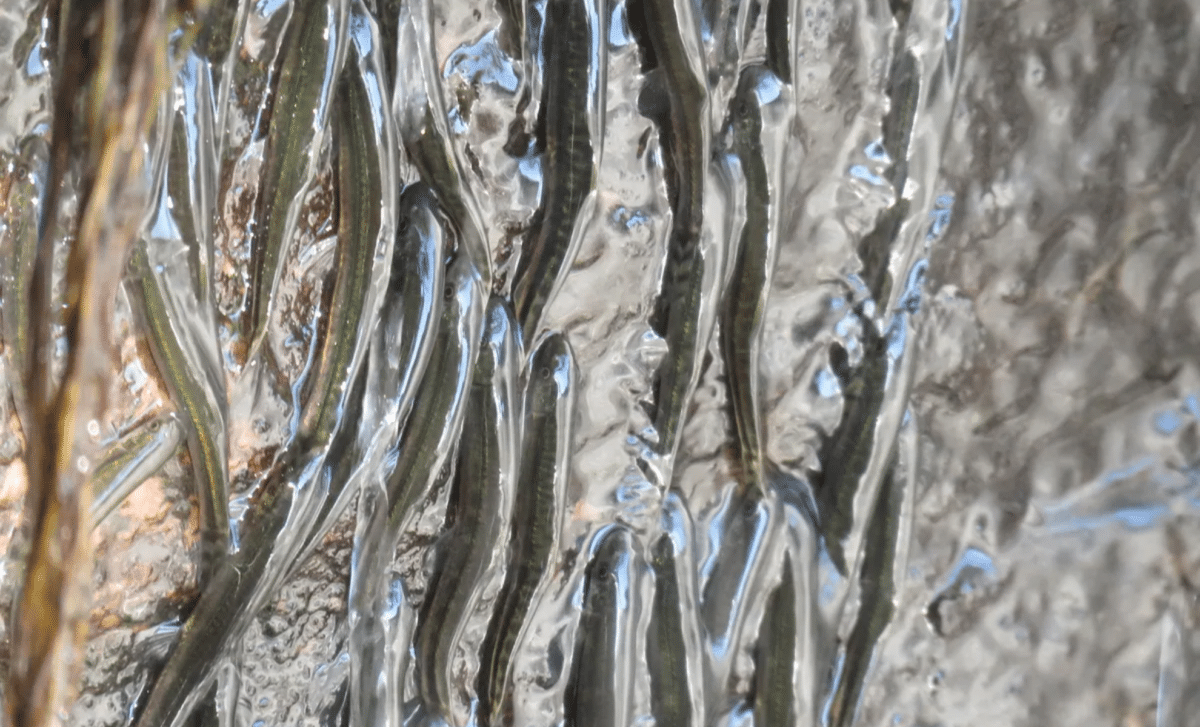
For decades, local myths in Central Africa described tiny fish climbing waterfalls, a behavior that seemed too extraordinary to be true. But now, a new study published in Scientific Reports has confirmed these claims, revealing that the shellear fish (Parakneria thysi) are capable of scaling a 50-foot waterfall in the upper Congo Basin.
The Extraordinary Journey of the Shellear Fish
The shellear fish, which measures just 37–48 millimeters in length, have been observed performing the near-impossible, climbing waterfalls. Researchers documented these behaviors over two years, from 2018 to 2020, in the Democratic Republic of the Congo. During this time, shellear fish were seen navigating the Luvilombo Falls, a towering 50-foot waterfall, in an effort to migrate upstream.
Their climb is an arduous, energy-draining process. Researchers discovered that these fish use a series of small, hook-like projections on their fins to cling to wet rock surfaces. The journey is slow, requiring the fish to pause frequently, sometimes for up to an hour on horizontal ledges. As they climb, they face the constant threat of falling, especially when navigating under overhangs or when water jets knock them down.
“To overcome a vertical surface one meter in height, for example, fish need an average of 30–60 seconds of movement, at an average speed of about 1.5–3.0 cm/sec (0.9–1.8 m/min),” the study explains. “However, they will also need eight to nine short pauses [~120–480 seconds], making the total journey up the waterfall take almost a full day or night.”
This detailed study, led by researcher Pacifique Kiwele Mutambala from the University of Lubumbashi, and, published in Scientific Reports, sheds new light on this previously unknown migration technique. The shellear fish must rest frequently to conserve energy, with each climb totaling approximately 9 hours and 45 minutes of movement and rest combined. Despite their small size, these fish are capable of making this vertical journey during the seasonal flooding period.
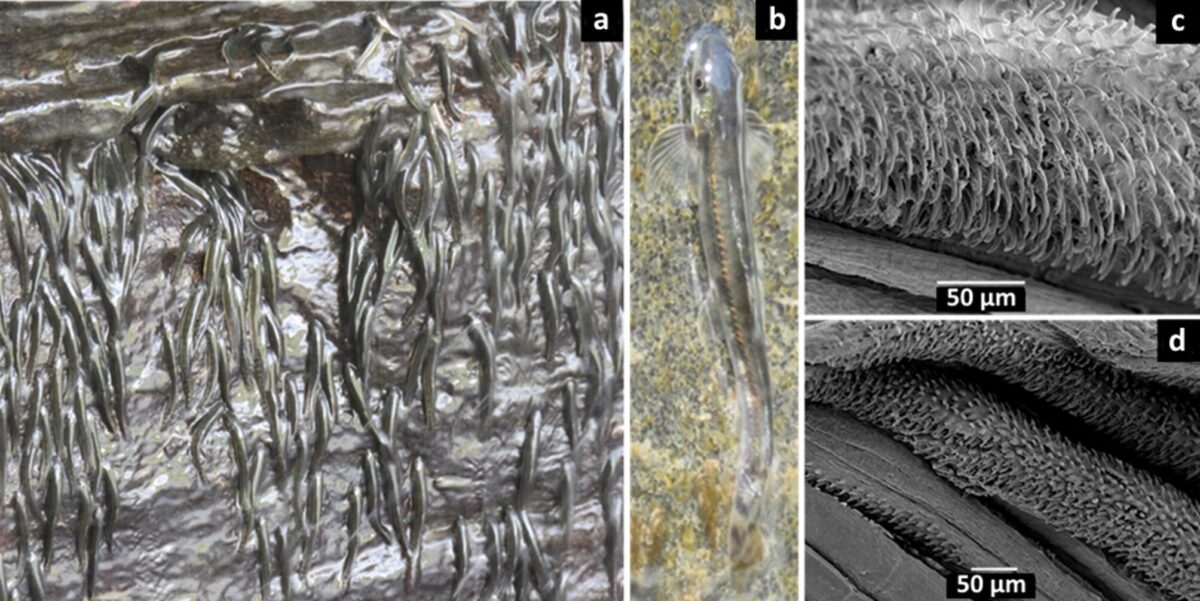 Evidence supporting the climbing ability of Parakneria thysi.
Credit: Scientific Reports (2026). DOI: 10.1038/s41598-026-42534-8
The Motivation Behind the Ascent: Migration or Survival?
The purpose of the shellear fish’s waterfall ascent is still not fully understood, though several theories exist. One possibility is that they are migrating to avoid predators and find better food sources upstream. The fish may be responding to the seasonal floods, which wash them downstream, forcing them to climb back to their upstream habitats.
In fact, this migration pattern shares similarities with other species, such as the Hawaiian climbing gobies and certain Brazilian fish, who similarly make vertical migrations during flooding periods to find new habitats.
“In the present case, migrants may include fish washed downstream during previous major rains and those born downstream in the same year, which migrate upstream together to (re)occupy suitable riffle/rapid habitats upstream of the falls,” the study notes.
The research also suggests that the climbing behavior could be linked to the avoidance of predators. Evidence points to a higher number of predators downstream, where food availability is lower. By migrating upstream, the shellear fish may be securing a safer environment and a more abundant food supply.
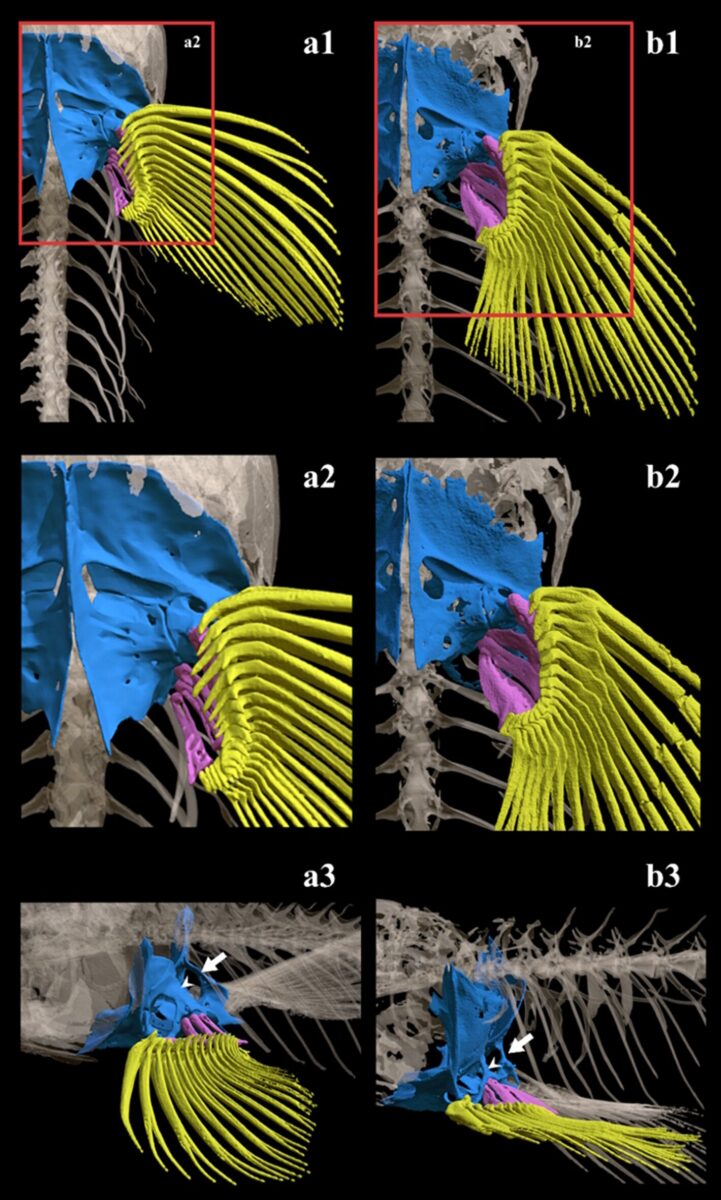 CT osteology scans of the pectoral girdle structures of Parakneria thysi [left hand side (RMCA P-154385: ~ 50 mm SL)] vs. Kneria stappersii [right hand side (RMCA P-152619: ~ 55 mm SL)].
Credit: Scientific Reports (2026). DOI: 10.1038/s41598-026-42534-8
Human Threats and Conservation Implications
While the shellear fish’s climbing behavior is extraordinary, they face several anthropogenic threats that could jeopardize their survival. One of the primary risks is illegal fishing, with fishermen using mosquito nets to catch the fish as they gather before their ascent. This practice, though illegal, still poses a significant danger to the species.
The researchers explain that “Parakneria specimens, which congregate there to prepare for their ascent, are easily caught by fishermen using mosquito net seining. This fishing technique, however, is forbidden by both the Democratic Republic of the Congo law and the Congo Safari Kyubo Lodge concession holders, which prohibits, in all its forms, the use of fishing nets with mesh sizes below 5 cm.”
Additionally, human activities are further endangering these fish. The river is diverted for irrigation purposes, drying out critical habitats. This is particularly problematic during the dry season (May–September), when water levels drop, leaving the fish vulnerable.
“Just after this migratory period, especially in years of low rainfall, the river is diverted upstream of the falls, at Sangala Village. This water is used to irrigate land for cultivating off-season crops, mainly beans and peanuts. This results in the downstream section of the river drying out completely,” the study reports. This disruption could have long-term consequences on the fish population and their ability to complete their migratory journey.