
The Middle East is again on the brink after Iran on Monday rejected a ceasefire plan aimed at preventing a dangerous escalation threatened by US president Donald Trump to force Tehran to open the Strait of Hormuz.
In response, Iran presented a 10-point plan which included an end to the war, the establishment of a mechanism to ensure safe passage through the Strait of Hormuz, reconstruction in Iran and the lifting of international sanctions.
Trump claimed Iran’s response to the ceasefire proposal was “significant, but not good enough”. “The war can end very quickly if they do the things they need to do,” he said, adding that if he had his choice he would “take the oil” from Iran.
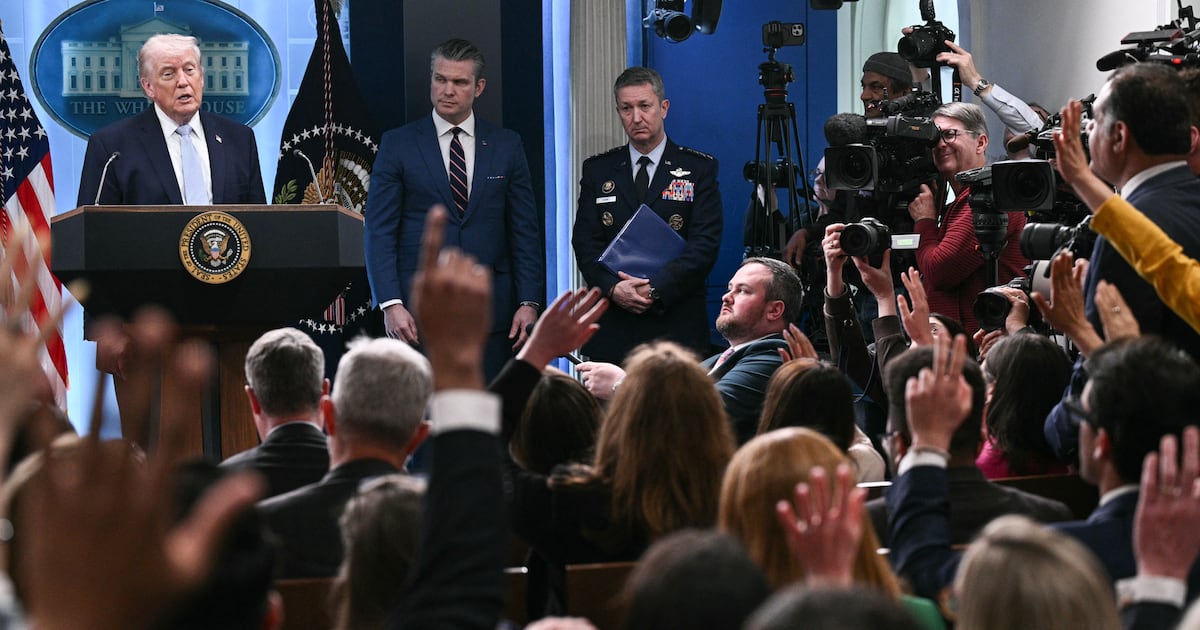
Speaking at a White House news conference on Monday night he warned “the entire country can be taken out in one night and that night might be tomorrow night”.
He had previously extended his ultimatum to attack Iranian energy facilities, saying this time it was final, setting a new time of 8pm Tuesday, US eastern time (1am Wednesday morning in Ireland) for what he termed “power plant and bridge day”.
The ceasefire plan rejected by Tehran was drawn up by Pakistan, Egypt and Turkish mediators. It proposed an immediate 45-day ceasefire and the reopening of the strategic waterway while talks continue for 15-20 days on other elements. These elements reportedly include a commitment from Tehran not to pursue nuclear weapons in return for sanctions relief and the release of frozen assets.
A senior Iranian official said Tehran would not reopen the strait as part of a temporary ceasefire and would not accept deadlines.
[ Trump threatens to escalate strikes on Iran unless it opens Strait of HormuzOpens in new window ]
Anwar Gargash, an adviser to the United Arab Emirates president, said any settlement must guarantee access through the Strait of Hormuz. He warned a deal that failed to curb Iran’s nuclear programme and its missiles and drones would pave the way for “a more dangerous, more volatile Middle East”.
European Council president António Costa warned against strikes on civilian targets, stressing that “only a diplomatic solution” would end the war with Iran. “Any targeting of civilian infrastructure, namely energy facilities, is illegal and unacceptable,” he said.
Meanwhile, the war rages on. On Monday, day 38 of the conflict, the US and Israel attacked an Iranian petrochemical complex in the southern Fars province.
Israel’s defence minister Israel Katz said in a statement the Israel Defense Forces had struck “the largest petrochemical facility in Iran”. He said that together with another facility hit last week, the two sites “are responsible for roughly 85 per cent of Iran’s petrochemical exports and have now been put out of operation”.
He called the strikes “a significant economic blow” and said the industry was a key source of funding for the Islamic Revolutionary Guard Corps (IRGC).
The Israeli air force also attacked dozens of Iranian air force aircraft and helicopters overnight on Sunday at three airfields in Tehran.
Israel said a strike on Sunday in Tehran killed Asghar Bagheri, the commander of Iran’s Quds Force’s special-operations unit.
Four bodies were extracted from an apartment block in Israel’s northern city of Haifa, hit by an Iranian cluster rocket on Sunday night. The IRGC claimed to have targeted a US amphibious assault ship, forcing it to retreat into the southern Indian ocean, and a container ship, which they said belonged to Israel.
The International Atomic Energy Agency on Monday confirmed recent impacts of military strikes close to Iran’s Bushehr nuclear power plant, but said the plant itself had not been damaged.