
You never forget the taste of petrol. That repulsive tang as it hits your lips, when you’re sucking on a hose pipe to siphon some out of a car. A lot of kids from the 1970s have that memory, from when we were trying to get some fuel into a bottle to help someone else get their car home – or as far as the next filling station.
For anyone who remembers those times, the recent statement from the International Energy Agency that this latest energy crisis will be far bigger was alarming. It may become worse than the 1970s because this time gas is also cut. It could be bigger than the Russian crisis because it involves more oil.
Even if the war ends tomorrow, it is going to take months to get supplies back. If the Strait of Hormuz stays closed for much longer, then we are in a different world altogether.
Last Thursday, European energy ministers met to consider our collective response. Their first call was rightly about how we can reduce our fossil fuel use by increasing efficiency and behavioural measures, but public attention was much more on how much governments might give in emergency supports.
The answer, it seems, is a lot less than four years ago.
Governments simply do not have the same resources available to them. Even in Ireland, with our budget surplus, supports are likely to be more limited and targeted. It is hard to justify energy credits when public transport projects are being put on hold due to a lack of funding. The focus instead will be on how we can come out of this situation with a reduced dependency on imported fuels for good.
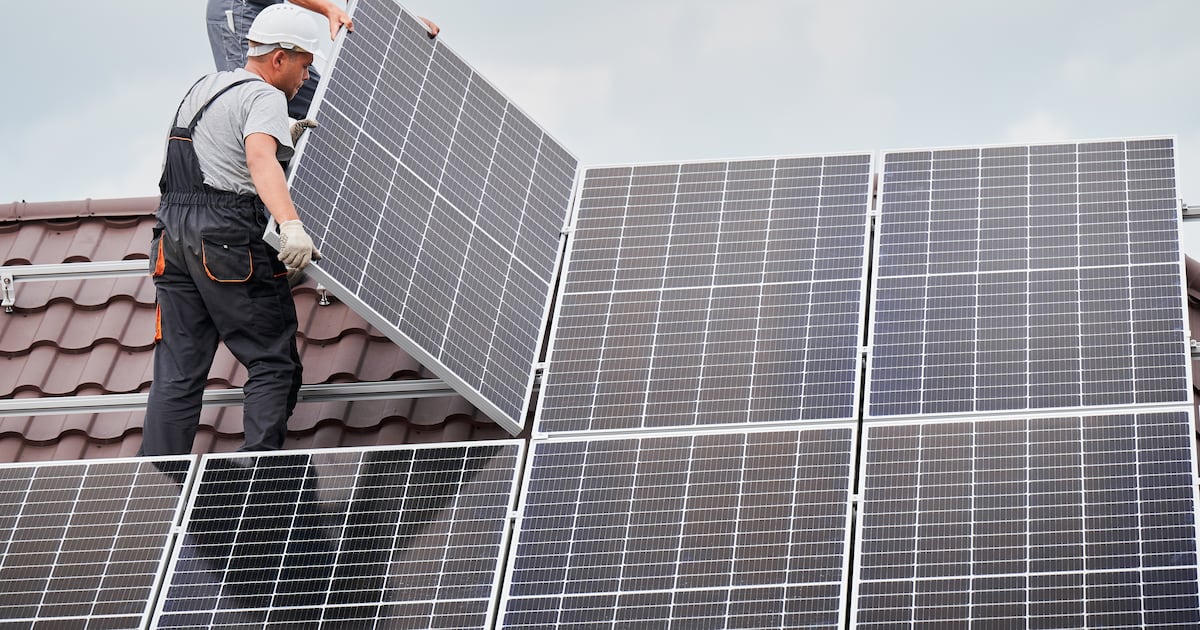
The legacy of the 1970s oil shocks was more fuel-efficient cars coming from Japan, a move to coal-fired generation here, while France built nuclear and Denmark turned to wind power and district heating for the first time. The immediate outcome of the war in Ukraine has been a switch from Russian gas to spending more on expensive and equally problematic liquified natural gas (LNG) from the United States and Qatar. The crisis also helped promote a massive expansion in the importation of photovoltaic – or solar – panels and batteries from China.
This leaves Europe feeling insecure about our own economic future: if we buy all our software from the West and all our hardware from the east, how do we pay our own way?
In answering that question, the first certainty is that we are never going to be competitive or secure while buying and burning other people’s fossil fuels. Our future has to be in the electrification of everything: in transport, in industrial heat, in the digital economy and in our homes. The mainstay of our electricity supply is going to be renewables, backed up with batteries and by managing variable demand to meet variable power supplies. Nuclear will also play a role, although the reality is that new plants are very expensive and take ages to deliver. The critical effort must now be in balancing renewables and nuclear so we have a competitive, secure and affordable energy system.
[ The Irish Times view on Europe’s energy: a credible plan is neededOpens in new window ]
This strategy will still see us importing a lot of capital equipment, particularly from China, but we must also make sure a lot of the components are made in Europe, so we are never overly dependent on any one other source.
Two critical pieces of draft legislation to deliver such a strategy have recently been presented by the European Commission. The first is the Industrial Accelerator Act, to help bring industrial production back to Europe. The second is the grids package, which is designed to promote a more flexible, innovative and efficient electricity grid.
The most important outcome has to be lower electricity prices, so we can scale up new clean industries and rapidly roll out heat pumps, solar panels and electric vehicles.
The Irish Government has a vital role to play. It was expected we would progress both pieces of legislation during our EU presidency and that final agreement would run into next year when the Lithuanians take over. However, the war in Iran means we have to act faster.
We now need to pull everyone together: the Germans who still obsess about gas, the French protectionists, the recalcitrant car makers, the digital companies who have to run cleaner data centres, and the British – who we need to bring back into the European energy fold. It is well within our power to do it as we have an excellent team of civil servants in place. We may not have made the World Cup this summer, but in energy politics we are going to be centrally placed.