
 3 min read
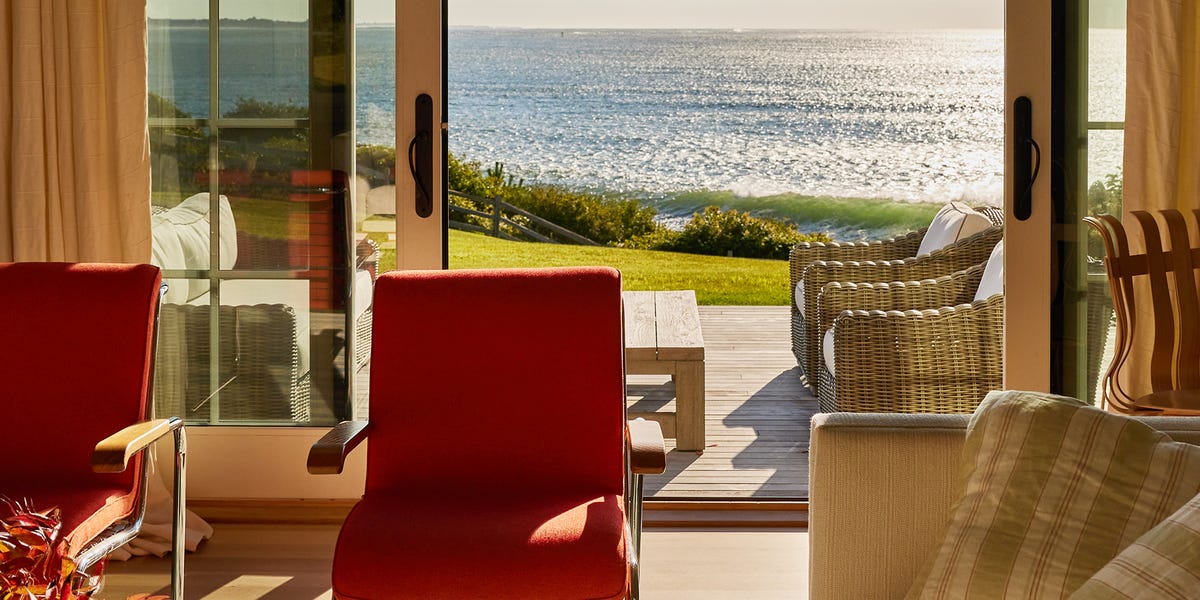
Ask just about any designer and they’ll likely tell you that the biggest coastal design trend right now is to make spaces that feel not as obviously coastal. Gone are the heavy-handed nautical interiors and fish motifs. In their place is a look that’s lighter, fresher, and far more elevated.
“Coastal design is evolving into something more refined and architectural, rather than literal or theme-driven,” say Kilian Camp and Alison Green, founders of Élan Design House, via email. But there are a number of ways designers can translate this style into reality. Here’s what the experts are seeing.
Departure From Coastal Motifs
The biggest coastal trend involves a shift away from more traditionally beach-themed ornamentations. Gone are ropes, anchors, and blue-and-white stripes, and in their place are pieces that Ashley Wilkins of Islyn Studio says feel more “personal and sensory.” “This shift reflects a deeper instinct toward context, storytelling, and the emotional character of a place,” she notes. Michelle Murphy of DEMI RYAN Interiors agrees, noting this departure marks a desire to make coastal spaces feel less themed. Instead, they’re more grounded in their organic atmosphere through “abstract, textural nods to the coast.”
How exactly this shift takes shape looks a little different depending on the designer and client. Ghislaine Viñas, for example, is looking to the shoreline for inspiration. Inspired by her walks on the beach and the plastic she sometimes encounters, Viñas has started using more recycled materials in her projects.
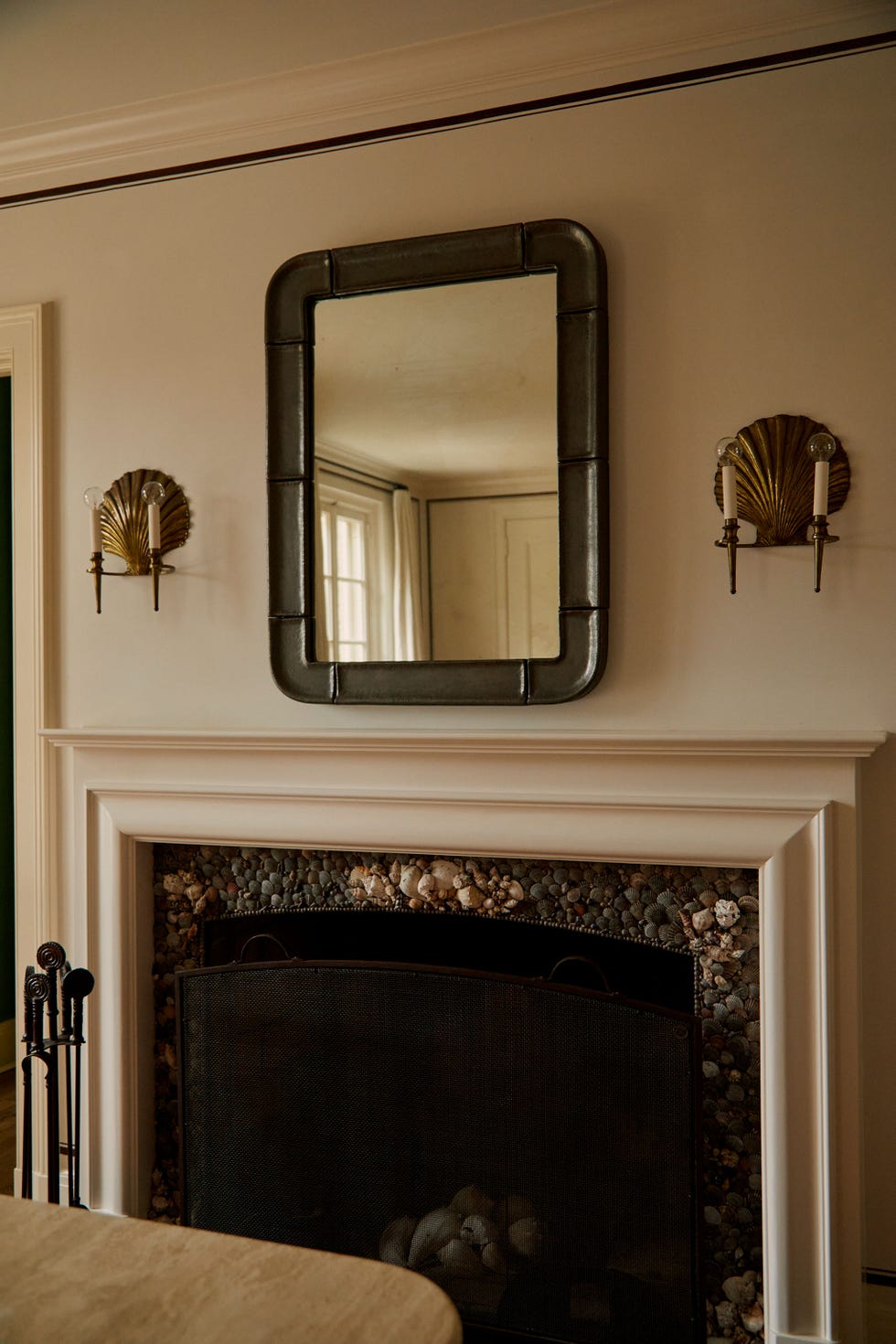 Billal TarightA fireplace inlaid with seashells in an East Hampton home that was designed by Todd Hellmuth.Elevated Shell Art
While the heavy-handed use of nautical and coastal motifs is largely considered outdated, Danielle Balanis of Danielle Balanis Design emphasizes that shift doesn’t render some details, such as shell art, entirely obsolete. To make it feel current, she says, one should find “discipline in your color palette and editing choices to really create a refined one-of-a-kind product.”
Shifting Color Palettes
In some cases, coastal color palettes are becoming more daring, according to designer Emma Corner. While Camp and Green of Élan Design House say the go-to blue-and-white scheme is still relevant, many are reinterpreting it through “warmer, more nuanced tones.” Clients are using deep navy, sand, and creams layered with wood finishes like walnut and mixed with lighter, weathered textures. Justine Wolman of Justine Wolman Interiors highlights muted blues and earthy neutrals, while Dvira Ovadia of Dvira Interiors specifically recommends warmer whites like CC-70. This particular shade then sets the stage for walls “treated with plaster, faux finishes, or subtly textured wallpapers.”
Wood Paneling
This style has roots in retro surf shacks, where sandblasted basic wood structures were the norm simply because they were easiest. Now, according to David Ries of design firm Ries Hayes, that functionality is becoming in vogue. “There’s a sense of nostalgia to it, but reinterpreted through a more modern lens—defined by cleaner lines, tighter detailing, and a greater sense of restraint,” he says. As for the wood, Corner is seeing an increased use of pronounced grain and warmer tones rather than the heavily bleached finishes of the past.
 Photography by Tim Lenz
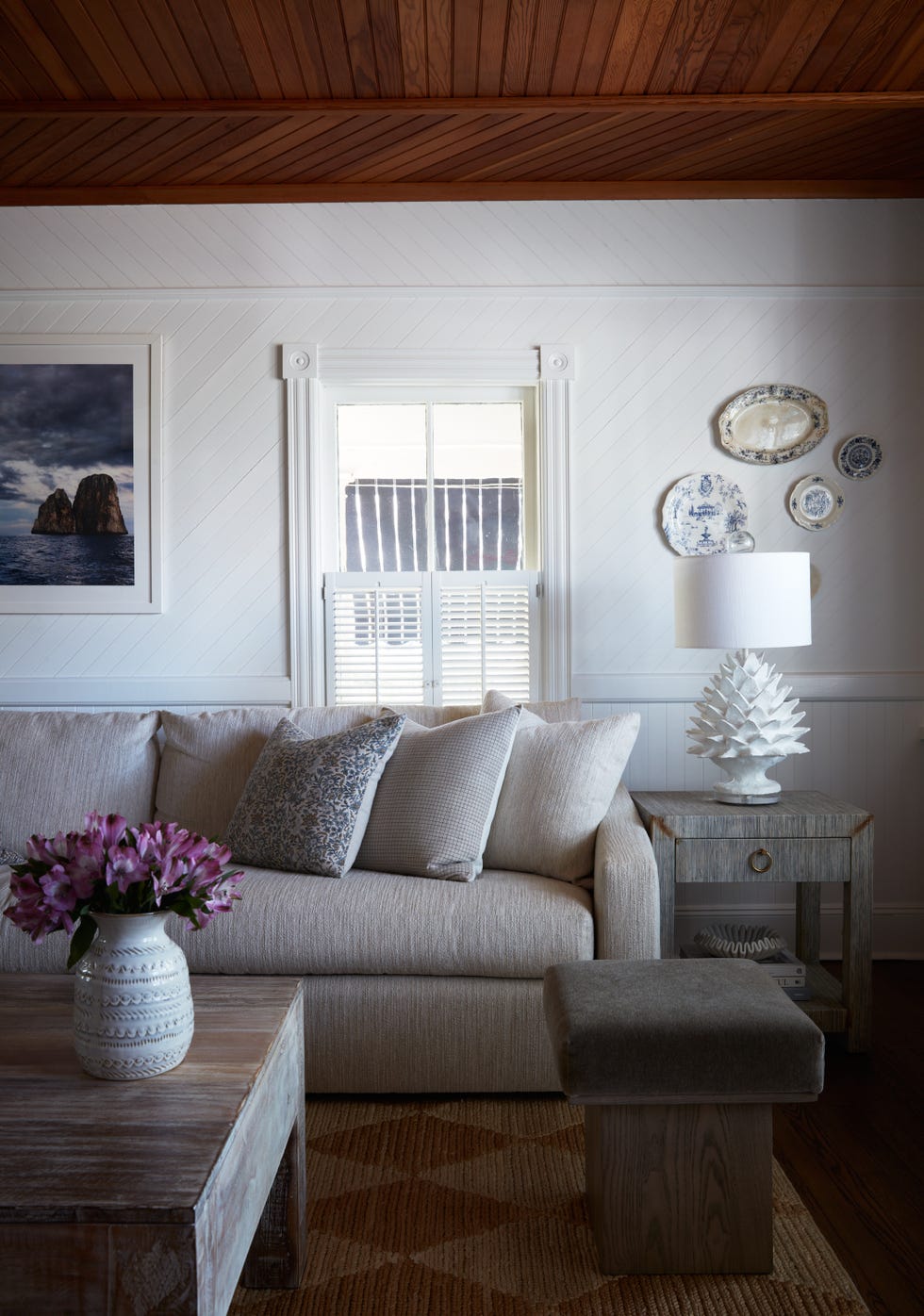
A home designed by Trish Lynn of Colette Interiors.
Layered Interiors
“What we’re seeing now is a far more layered, expressive approach; one that embraces depth, texture, and a sense of individuality,” says Corner.
Once again, the interpretation of this layering varies by designer. For Emily Del Bello, a layered look manifests in the use of limewash, Roman clay, and plaster finishes—which “create a soft, calming atmosphere that evokes the natural ease of the coast.” Brianna Untener echoes the use of plaster and limewash—and adds lacquers, light woods, and textiles to her rolodex of materials. Trish Lynn of Colette Interiors cites white oak or deeper-stained woods, painted paneling, honed stone, linen, and woven textures as a favorite combination.
The Beach House as the Main House
For James “Ford” Huniford of Huniford Design Studio, the biggest shift he’s seeing in coastal homes is approaching their design less as the “secondary” house but instead with the “same level of intention as a primary residence.” This inspires a more curated approach to designing, especially when it comes to art, picking pieces “designed to frame both the collection and those incredible views.”