
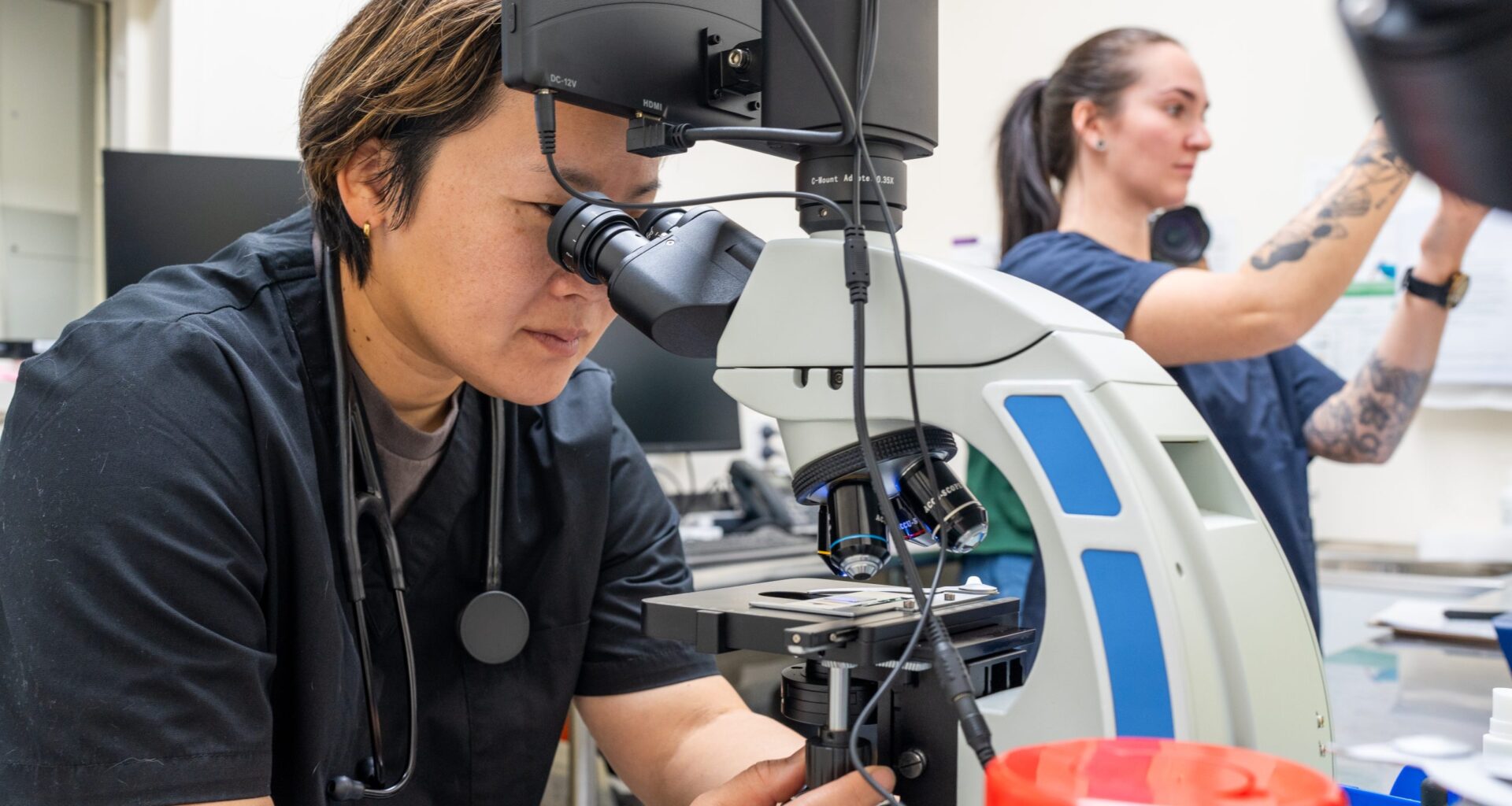
Comment: The debate about prescribing puberty blockers highlights the lack of peak institutions for medicine and healthcare in New Zealand. The Government’s plan to abolish the Health Research Council will make things worse.
While we await battles in the High Court about scientific evidence, the Australian government has asked the National Health and Medical Research Council to develop new guidelines for the care of people under 18 with gender dysphoria.
Australia could have called on other bodies to generate independent advice. The Australian Academy of Health and Medical Sciences is an “expert representative voice for health and medical sciences”. The Australian Medical Association also produces “position statements” on health matters.
New Zealand does not have a body equivalent to the Australian Academy of Health and Medical Sciences. Our national academy, the Royal Society Te Apārangi, covers the whole range of science, technology, and the humanities. Although it includes some medical Fellows, there are few who are active clinicians.
We did have a Medical Association for 136 years, but this collapsed in 2022. New Zealand must be one of very few countries that do not have a professional association for all doctors. There are 118 national associations affiliated to the World Medical Association, and probably others not affiliated.
The Health Research Council
Formerly called the Medical Research Council, the Health Research Council has a distinguished history starting in the 1930s. Nearly all the major advances in health research and discovery in this country have depended on its support. Yet now the Government intends to disband it, with its “functions transferred” to a new committee, Research Funding NZ; the Ministry of Business, Innovation and Employment; or the Ministry of Health.
This decision follows advice from a group that was asked to review our whole science system. One can see some attraction in having all research funding disbursed by a single body. But the Health Research Council, which is a Crown entity, has important statutory functions apart from awarding research grants. These include advising the Minister of Health on national research policy, fostering the training and retention of people engaged in health research, encouraging initiatives in priority areas, confronting ethical issues arising from new areas of health research, and promoting the results of research in ways that contribute to healthcare delivery.
Research Funding NZ is described as “a new independent board”. The Government has announced the names of the eight members. These include eminent scientists and engineers, but only one of them has any experience of clinical medicine.
There will be “four pillars of national importance” focused on the economy, environment, health and society, and technology. Presumably these will be served by advisory committees, but the secretariat will be in the MBIE.
As Research Funding NZ will be only a committee (three of whose members are not resident in the country), it is hard to see how its “independence” will be other than notional. I have chaired a comparable body that had its secretariat in a Government ministry: despite goodwill on all sides, we had to struggle to be anything more than a rubber stamp.
The Government statement says the Ministry of Health may assist. For example, the development of the health research workforce will be taken over by MBIE, MoH, and Health NZ.
Personnel in ministries are often changing. The Health Research Council and its predecessor had a secretariat comprising individuals who developed, over decades, an intimate knowledge of our health research portfolio, its strengths and weaknesses, and international trends. They fostered the development of whole new fields of research, as in Māori health, Pacific health, injury prevention, and nutrition. Many of our leading health researchers are here only because of targeted schemes, such as training and repatriation fellowships.
I have no confidence that government ministries, such as MBIE or MoH, could provide such stable and effective guidance, despite their best intentions. The arrangement proposed is certainly not what was envisaged by the Science System Advisory Group, which recommended the establishment of a body with functions like those of Research Funding NZ.
One risk of the current proposal is that Research Funding NZ will be expected to favour research that may have an economic payoff. Last week it emerged that many millions of dollars of funding for health research will be diverted to other areas. No one would dispute the need for research in areas such as advanced technologies, but this should not be at the expense of research in fields as vital as health. We need to remember that the main purpose of health research is not to make money, but to improve the health of the people. If we do not study our own health problems, and the working of our health services, nobody else will.
Training and funding biomedical and clinical researchers have another important function. They are essential if our medical schools and postgraduate units are to be able to attract and retain high-quality specialists. Without such leaders, often with both clinical and teaching roles, New Zealand will not keep up with advances in the diagnosis and treatment of diseases such as cancer, or childhood infections, or multiple sclerosis. There is already difficulty in filling posts in many fields, and this will be an even greater challenge with the establishment of a new medical school in Hamilton.
The way forward
The proposal to disband the Health Research Council was met by a deafening silence. Is this a sign that our health researchers and academics are so demoralised that they have lost their mojo? Some of us can remember the huge – and often acrimonious – debate in 1989, when the Medical Research Council was to be replaced by the HRC, with a greater emphasis on public health, Māori health, and ethics. That reform was minor tinkering compared with the current proposal.
The HRC board has been chaired, for more than a decade, by Dr Lester Levy. I have seen no public comment from him on the proposal to close the organisation. Some health researchers have suggested to me that one reason for their muted reaction is that they have become disillusioned by the performance of the HRC in recent years. Apparently the funding for evaluation of research proposals has been slashed. This means that previous peer review processes are now skipped, with funding decisions made by members of assessing committees who cannot possibly have expert knowledge on all the research proposals they have to consider.
If the HRC has problems, the solution is reform, not abolition. Because this is a statutory organisation, it can be disestablished only by an Act of Parliament. I trust that a select committee process will enable interested parties to put forward their views, on what is a very radical proposal.
In particular, I hope the Government will not run down the organisation before Parliament has made its decision. Premature actions by earlier governments, in disbanding Crown entities such as the Public Health Commission, have lent weight to the suggestion that the New Zealand system of governance sometimes seems like dictatorship by the executive.
In recent decades, New Zealanders have proved adept at demolishing organisations, but not so clever at replacing them with institutions that are effective and enduring. Nowhere has this been more evident than in the health system. We should think carefully before accepting that, unlike other developed countries, New Zealand has no need for a national body dedicated to fostering health research.